• Skip to primary navigation
  • Skip to main content
  • Skip to primary sidebar
  • Skip to secondary sidebar

The Lincoln Squirrel – News, features and photos from Lincoln, Mass.

  • Home
  • About/Contact
  • Advertise
  • Legal Notices
    • Submitting legal notices
  • Lincoln Resources
    • Coming Up in Lincoln
    • Municipal Calendar
    • Lincoln Links
  • Merchandise
  • Subscription Info
    • My Account
    • Log In
    • Log Out
  • Lincoln Review
    • About the Lincoln Review
    • Previous Issues
    • Submit Your Work
    • Subscribe/Donate

agriculture and flora

Fair celebrates 40 years of three town institutions

April 13, 2016

40 years fair logoLincoln is gearing up for the “40 Years of Community” Fair packed with activities, art, music and history on Saturday, April 30 to recognize four decades of the Council on Aging, Parks and Recreation and the Lincoln Review.

The fair will feature children’s games and activities including a live animal demonstration, games and activities, storytelling, crafts related to Lincoln’s architectural heritage, a photo booth with a frog cutout, reading by “grandparents,” a scavenger hunt, a trackless train, 18th-century games, a sewing project, carnival games, a sketching demonstration and chance to meet a canine author, an activity table, and seed bomb and pollinator habitat making.

Lincoln’s history will be front and center, with displays on Lincoln history and iconic Lincoln buildings and landscapes. The Lincoln Minute Men will demonstrate aspects of life in Lincoln in the 18th century. Local organizations will provide information and demonstrations on such important topics as energy efficiency, agriculture, heirloom plants, nature and pollination. They’ll also have valuable information about their activities, programs and services.

Lincoln and Lincoln-associated artists will show their best work in the Pierce House, which will also feature historic photos from the Town Archives. The exhibit in Pierce House will also be open on Saturday, April 30 from noon to 5 p.m. and Sunday, May 1 from noon to 3 p.m.

What’s a fair without food? The Lincoln Police Department will host a barbecue while the Minute Men will offer baked goods and cider for a small cost. You’re also welcome to bring a picnic basket and blanket and enjoy a meal or a snack on the grass in the park.

While you’re enjoying all the activities, exhibits and art, you’ll be regaled by music by some of Lincoln’s many virtuoso musicians. Bands and performing groups will play outside on a stage while more musicians will play and sing classical and other musical genres inside the Pierce House. The Lincoln Minute Men musicians will also be on hand.

Among the groups participating are the deCordova Sculpture Park and Museum, Drumlin Farm, First Parish, Food Project, Friends of the Lincoln Public Library, Green Energy Committee, Historic New England, LEAP,  Lincoln Council on Aging and Friends of the Lincoln Council on Aging, Lincoln Family Association, Lincoln Garden Club, Lincoln Historical Society, Lincoln Minute Men, Lincoln Parks and Recreation, Lincoln Police Department, Lincoln PTO, Lincoln Review, Lincoln School Foundation, Magic Garden, METCO Coordinating Committee, Old Town Hall Exchange, People for Pollinators, and the Town Archives.

For more information about the fair, call Carolyn Bottum at the Council on Aging at 781-259-8811 or Dan Pereira at Parks and Recreation at 781-259-0784. Local businesses interested in donating goods are also welcome to call Carolyn or Dan.

Category: agriculture and flora, arts, features, food, history, kids, seniors, sports & recreation 1 Comment

Letter to the editor: state’s bee pollinator plan is ‘a disgrace’

April 4, 2016

letter

Editor’s note: The Boston Globe ran a story on March 11 on the following issue.

To the editor:

So what does the Massachusetts Pollinator Protection Plan change for the better? Well, nothing really. It’s 14 pages of carefully crafted waffle to avoid mentioning the crux of the problem: “neonicitinoid” insecticides. There are so many independent scientific studies showing this class of pesticide as highly toxic to honey bees and pollinators in general that it’s hard to keep count. France just banned neonicitinoids (neonics) altogether; we can’t even mention their name.

The EPA says beekeepers don’t manage mites properly, and therein lies a large part of the problem. However, scientific research shows sub-lethal exposure to neonics increases mite infestations, reduces brood, increases broodless periods; and decreases winter survival rates for honey bees. The gut pathogen Nosema ceranae, another significant cause of winter mortality, is triggered by both pesticides and fungicides. The reality in the field and Science overlap—what a remarkable coincidence—but still our unelected officials can’t understand.

Meanwhile our local pollinators are being decimated. Many, like bumble bees and monarch butterflies, are proving more susceptible than honey bees to the toxic effects of neonics. According to the USGS, 90 percent of the nation’s water ways and streams are polluted with insecticides and herbicides, including neonics, despite the catastrophic effect neonics have on aquatic life as well. The truth is neonics are killing off all invertebrate life forms.

Laughably, the EPA’s solution is to teach commercial pesticide applicators how to apply these pesticides more sensitively. However, no regulation of the 100s of gallons of these insecticides stacked up in garden supply shelves across the state that residents can apply anyhow; no reduction in the application rates of these lawn products that use higher doses of neonics than conventional agriculture; no labeling for packs of potted “pollinator friendly” plants pre-treated with neonics, turning food into death traps for pollinators. In fact, the EPA won’t even ask manufacturers to disclose all the ingredients in pesticides, something eminent bee scientist Marla Spivak has requested for years.

One has to ask, who exactly is the EPA protecting? Fifty million pounds of insecticides a year pollute our lands. They are persistent, systemic and accumulate in the soil. Furthermore, when combined, pesticides have been shown up to 1,000 percent more lethal. Nonetheless, with over 1,200 agrochemicals approved, it is evident the EPA hasn’t yet found a chemical it doesn’t like—especially neonicitinoid insecticides.

In 2009 the EPA scientists conducted an assessment of clothianidin, a neonic used as a seed treatment on corn and many other crops. In their damning 101-page report, EPA scientists concluded that “acute toxicity studies to honey bees show that clothianidin is highly toxic on both a contact and an oral basis.” Instead of suspending or withdrawing the registration of this insecticide like the European Union did, the EPA is waiting until 2018 to “review the data.” Yes, read that again.

I actually spoke to Jeff Herndon, Director of Pesticide Registrations at the EPA, on January 31, 2010 about this report and three other studies showing the catastrophic effects of neonicitinoid pesticides on honey bees. I asked him bluntly what part of “it’s killing the bees” he didn’t understand. His response was surprisingly honest: “We’ve always known.”

Yes, we’ve always known, but we still pretend we don’t. This Pollinator Protection Plan is 14 pages of empty words masquerading as “doing something,” when we’re doing precisely nothing. It’s a boondoggle, a joke, a disgrace!

Sincerely,

Charlotte Trim
108 Codman Rd.

P.S. In Middlesex County, we lost over 90 percent of our managed hives over the past two winters, not the 29 percent loss mentioned as “the problem” in the MDAR plan.

P.P.S. Has anyone seen a bumblebee this year?


Letters to the editor must be signed with the writer’s name and street address and sent via email to lincolnsquirrelnews@gmail.com. Letters will be edited for punctuation, spelling, style, etc., and will be published at the discretion of the editor. Letters containing personal attacks, errors of fact or other inappropriate material will not be published.

Category: agriculture and flora, conservation 2 Comments

Nature events include vernal pool and bird encounters

March 29, 2016

natureThe Lincoln Land Conservation Trust announces several events this spring offer educational encounters with local animals and plants.

Peer into a Pool: Vernal Pool Exploration with Matt Burne
Sunday, April 3 at 1 p.m. — meet and park at the far end of the parking lot beyond Donelan’s.

Matt Burne, a herpetologist and conservation director for the Walden Woods Project, will lead a walk to explore vernal pools in Lincoln. Participants will visit some local wetlands for signs of spotted salamanders, wood frogs and fairy shrimp. Learn about the importance of vernal pools and how to protect them. Listen for the wood frogs’ duck-like calls and the high-pitched chorus of tiny spring peepers, a species of tree frog. Please wear footwear for a one- to two-mile walk. Co-sponsored by the Lincoln Land Conservation Trust, the Walden Woods Project and the Lincoln Conservation Commission. Free and open to all.


A Storm of Angels: Creating Habitat for Migratory Songbirds
Tuesday, April 5 at 7 p.m. — Bemis Hall

Join us for a visually stunning and engaging evening with fine art photographer and ecologist Brooks Mathewson. Due to loss of natural habitat, backyards have become a last refuge for many migratory songbirds. In this talk, Brooks will share his photography of migratory songbirds that visit our backyards and will discuss ways we can provide better habitat for these critical members of our ecosystem. Co-sponsored by the Lincoln Garden Club and the Lincoln Land Conservation Trust. Free and open to all.


Who’s Watching You? Owls of the World
Sunday, April 10 from 4-5:30 p.m. — Bemis Hall

Perhaps you’ve glimpsed the shadowy form of a great horned owl in the headlights as you’ve traveled a back road at night. Ever scanned a frozen salt marsh or farmer’s meadow in winter, hoping to find that Arctic hunter, the Snowy Owl? How about a mob of noisy crows circling a white pine tree—have they found an owl? Join naturalist Marcia Wilson and photographer Mark Wilson in sharing their passion for owls. They will introduce you to the owls of New England and beyond. Each owl presented has a permanent disability which prevents them from surviving on their own in the wild. These non-releasable owls are captivating ambassadors from the world of wildlife. Mark and Marcia will share the field marks, signs, and naturalist’s skills that you can use to find wild owls without disturbing them, while introducing you to six live owls up close.  Everyone is treated to a hooting lesson, as well as tips on how to attract and protect owls near you. All who attend are in for some fun with close-up views of these secretive birds of prey. Suggested donation: $5.


Spring Birding in Lincoln: A Spring Walk Series

Spring mornings are glorious! Find out why birders love early mornings in spring as you learn to identify birds by sight and song, and explore some birding “hot spots” in Lincoln. Dress for the weather (e.g., wet grass and cool early morning temperatures) and please bring binoculars. At least two of the following local birding experts will lead each walk: Vinny Durso, Nancy Hammond, Norman Levey, Gwyn Loud and Nancy Soulette. The walks will not take place if it is raining. All walks take place from 7:30-9:30 a.m. Free; all are welcome.

  • Sunday, April 24 — Lindentree Farm and fields behind St. Anne’s Church. Park on Old Concord Road.
  • Sunday, May 1 — Baker Bridge Fields. Park at the Food Project on Rte. 126.
  • Sunday, May 8 — Harrington and Twin Pond trails. Park in the turnout on Rte. 117 on the Weston town line.
  • Sunday, May 15 — Browning Fields and Pigeon Hill. Park by the riding ring in Browning Field on Weston Rd.

Annual Meeting of the Lincoln Land Conservation Trust
Thursday, May 12 from 7-9 p.m. — Walden Woods Project (44 Baker Farm Road, Lincoln)

We invite you to join members and friends of the Land Trust at its annual meeting at the handsome estate of the Walden Woods Project. Guest speaker Sara Lewis, a professor of biology at Tufts University and longtime Lincoln resident, will discuss her fascinating new book, Silent Sparks: The Wondrous World of Fireflies. For centuries, the ethereal beauty of fireflies as evoked wonder and delight, yet for most of us, these insects remain shrouded in mystery: How do these creatures make light? What are they saying with all their flashing? Are fireflies disappearing? In this talk, noted biologist and firefly expert Sara Lewis dives into the mysterious world of fireflies and reveals the most up-to-date discoveries about these charismatic insects. Copies of Lewis’s book will be available for sale and signing. Refreshments served beginning at 7 p.m.; meeting convenes at 7:30 p.m. All are welcome, though only members may vote.


Invasive Plant Species Walk
Sunday, June 12 at 1 p.m. — deCordova Sculpture Park and Museum

Join Anna Wilkins, stewardship coordinator of the Lincoln Land Conservation Trust, on a walk on deCordova grounds. We will explore the common misconceptions and long-term impacts of invasive control, as well as how we negotiate the aesthetic beauty invasive plants lend our landscape in relation to the damage that they pose to our local ecosystem. Sturdy shoes recommended.

Category: agriculture and flora, conservation, nature, sports & recreation 1 Comment

Letter to the editor: information on Japanese knotweed

March 21, 2016

letter

To the editor,

At Town Meeting on March 19, there was discussion of Japanese knotweed and using chemical herbicide to deal with it. The Gardens section of the March 18 Financial Times has a fascinating article on the global history of the plant. Two excerpts for your info:

“This is a plant that is perfectly adapted for world domination. It grows rapidly from an incredibly strong rootstock, so robust it is capable of pushing through tarmac and, reputedly, through concrete and building foundations. Try to dig it out and you’ll find the roots go down deep and are near [sic] impossible to remove by hand.  Leave a tiny fragment of root behind and—boom—back it comes.  Allowed to spread unchallenged, it can colonize vast areas, not only potentially causing damage to the built environment but also wiping out native plants and displacing the wildlife that relies on them…

“How to beat the pest: if Japanese knotweed is on your property, seek specialist know-how…. Control of the pest often involves chemical herbicide whose application requires careful timing to coincide with flowering if it is to work effectively. One cycle of herbicide is unlikely to make any significant impact and, typically, treatment can continue for two or three years…”

I wish our Conservation Commission luck and hope they will consider posting sightings of the pest so neighbors can be on the lookout.

Sincerely,

Roy Harvey
Stonehedge Road


Letters to the editor must be signed with the writer’s name and street address and sent via email to lincolnsquirrelnews@gmail.com. Letters will be edited for punctuation, spelling, style, etc., and will be published at the discretion of the editor. Letters containing personal attacks, errors of fact or other inappropriate material will not be published.

Category: agriculture and flora, government 1 Comment

Codman Farm has new farming family

January 7, 2016

Pete and Jen xxx and their two-year-old son Abraham. Photo courtesy Angela Klempner Phtography

Pete and Jen Hashley and their two-year-old son Abraham. (Photo courtesy Angela Klempner Photography)

Editor’s note: This is an edited version of an item that appeared in the most recent Codman Community Farms member newsletter.

The new year brings new faces and changes to Codman Community Farms (CCF) with the arrival of Peter Lowy and Jennifer Hashley as the farm management team at Codman.

For the past decade, Pete and Jen have operated Pete and Jen’s Backyard Birds in Concord and Sudbury, growing vegetables and raising pasture-based livestock. They’ve moved their mini-store to CCF, so visitors will notice a new look at the Codman Farm Store, including a selection of Backyard Birds products alongside Codman’s. Pete and Jen are committed to growing high-quality, tasty food for Lincoln and surrounding communities, so they’ll be expanding production, revamping the Farm Store, and supplying area restaurants and farm stands.

[Read more…] about Codman Farm has new farming family

Category: agriculture and flora, features, news 2 Comments

Letter to the editor: town working on zoning rules for small farmers

November 30, 2015

letter

To the editor:

These remarks were intended for presentation at the State of the Town Meeting on November 14. Unfortunately, time constraints prevented us from getting to them.

At the Annual Town Meeting in March 2011, the town passed “The Right to Farm” bylaw, a new section of the town’s general bylaws. This was done to broadly inform residents of state law regarding agriculture and to recognize the town’s general support of farming. Since that time, the Planning Board has been working together with the Agricultural Commission to bring our zoning bylaws (ZBL) into conformance with state law, while making refinements that reflect our local needs and circumstances.

State law provides for very modest local control over agriculture practices on properties greater than 5 acres. Therefore, our efforts have largely been focused on properties less than 5 acres. We are also respectful of rights currently held by residents, especially those enjoyed for personal use, such as keeping a backyard pony, a few beehives, or a small flock of chickens.

Our ZBL already allows for the raising and sale of produce (defined by our Zoning Board of Appeals as plant-based—vegetables, fruit, etc.) by an owner or tenant. But what should be done regarding the small farmer raising livestock and selling animal products, on less than 5 acres? These include sheep farmers, beekeepers, and poultry raisers, among others.

Our primary focus has been attempting to craft a permitting process under a definition of commercial agriculture, possibly based on sales per acre. This is still very much a work in progress. We are trying very hard to strike a balance between the needs of small farmers and non-farming residents. Public hearings on our proposed amendments will be scheduled in the near future and we look forward to your feedback. We hope to be ready for the March 2016 Town Meeting.

I would especially like to thank Lynne Bower, Jim Henderson and Ari Kurtz of the Agricultural Commission for their hard work. Please feel free to contact any of us if you have questions or concerns.

Bryce Wolf, Planning Board vice chair
52 Birchwood Lane


Letters to the editor must be signed with the writer’s name and street address and sent via email to lincolnsquirrelnews@gmail.com. Letters must be about a Lincoln-specific topic, will be edited for punctuation, spelling, style, etc., and will be published at the discretion of the editor. Letters containing personal attacks, errors of fact or other inappropriate material will not be published.

Category: agriculture and flora, government Leave a Comment

Truck instead of cowboys used in this Lincoln cattle roundup

October 30, 2015

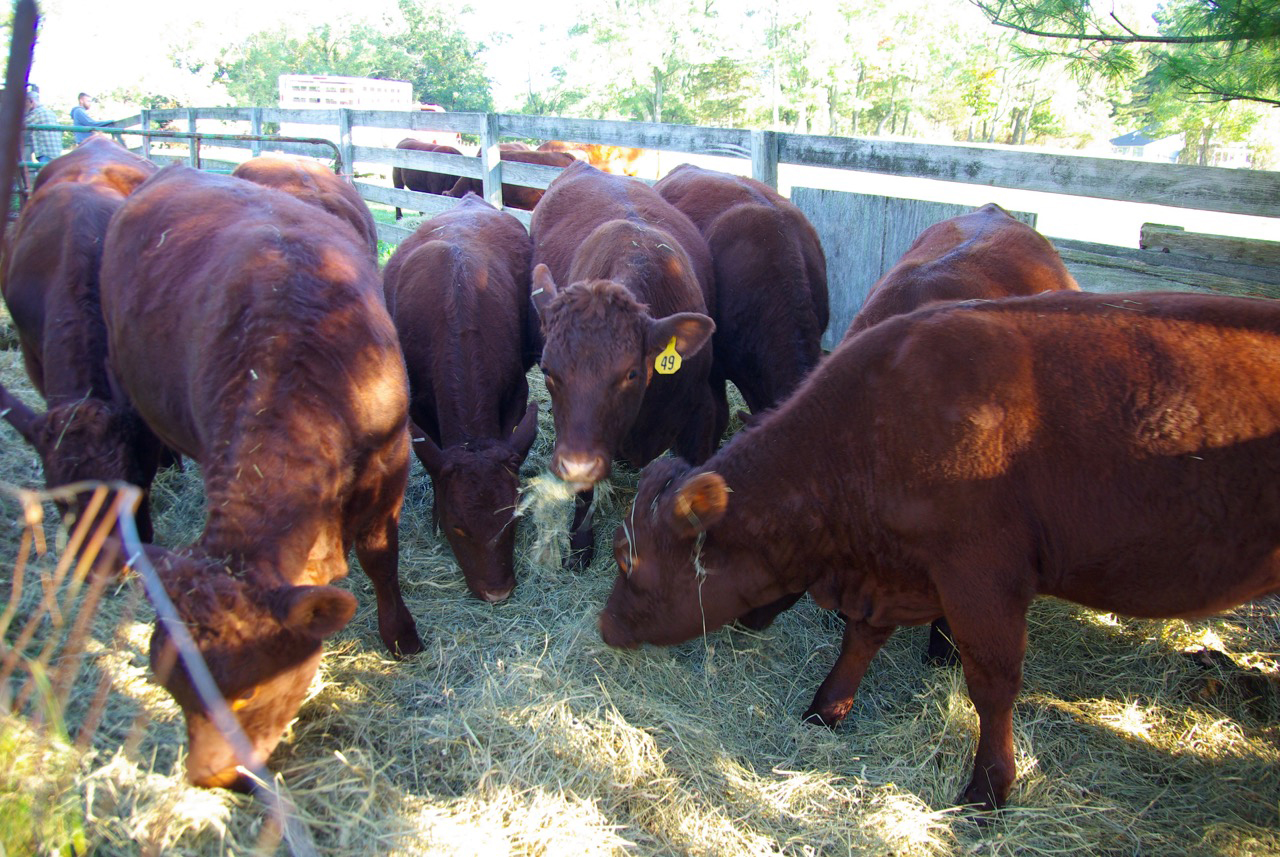
The Red Devons have their last Lincoln meal before heading out west.

The Red Devons have their last Lincoln meal before heading west (click to enlarge).

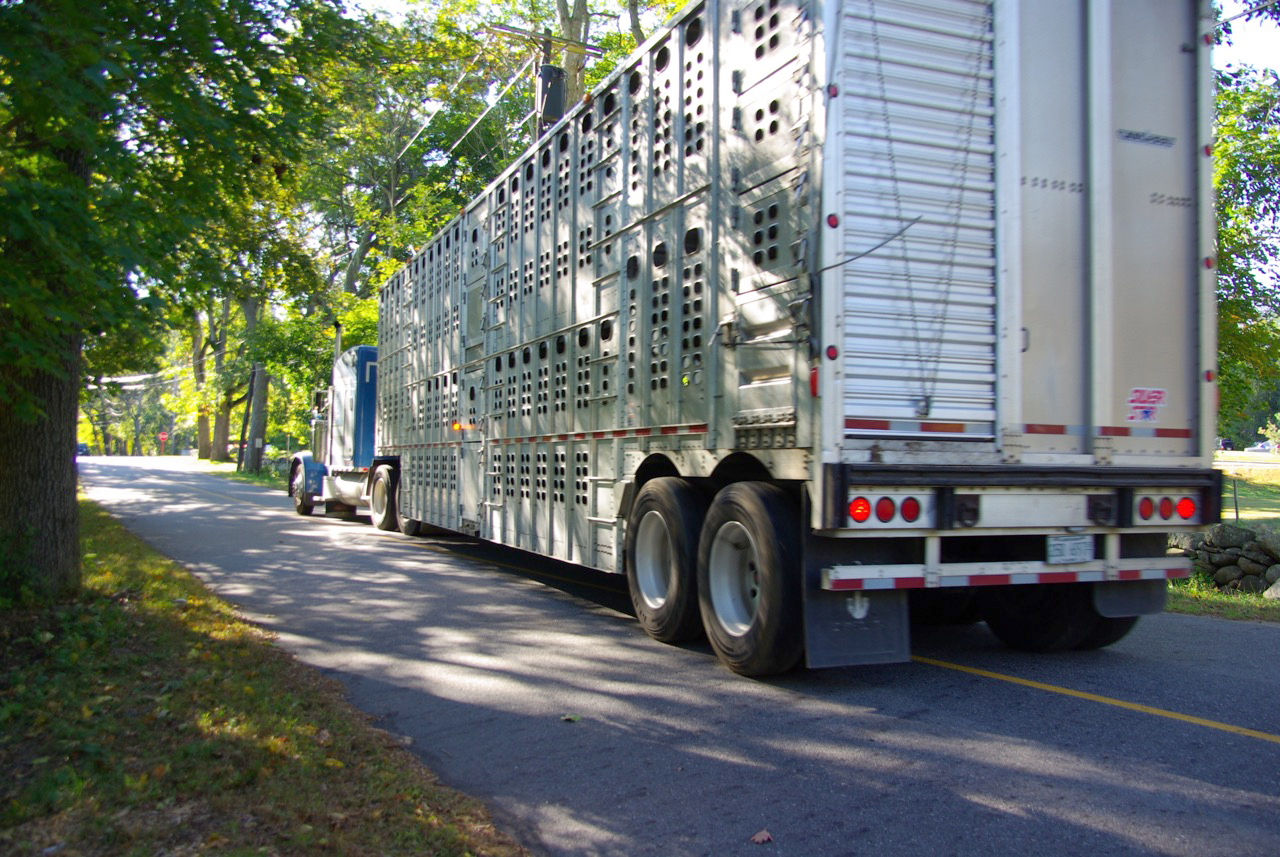
The truck...

The cattle truck leaves Page Farm Road in Lincoln (click to enlarge).

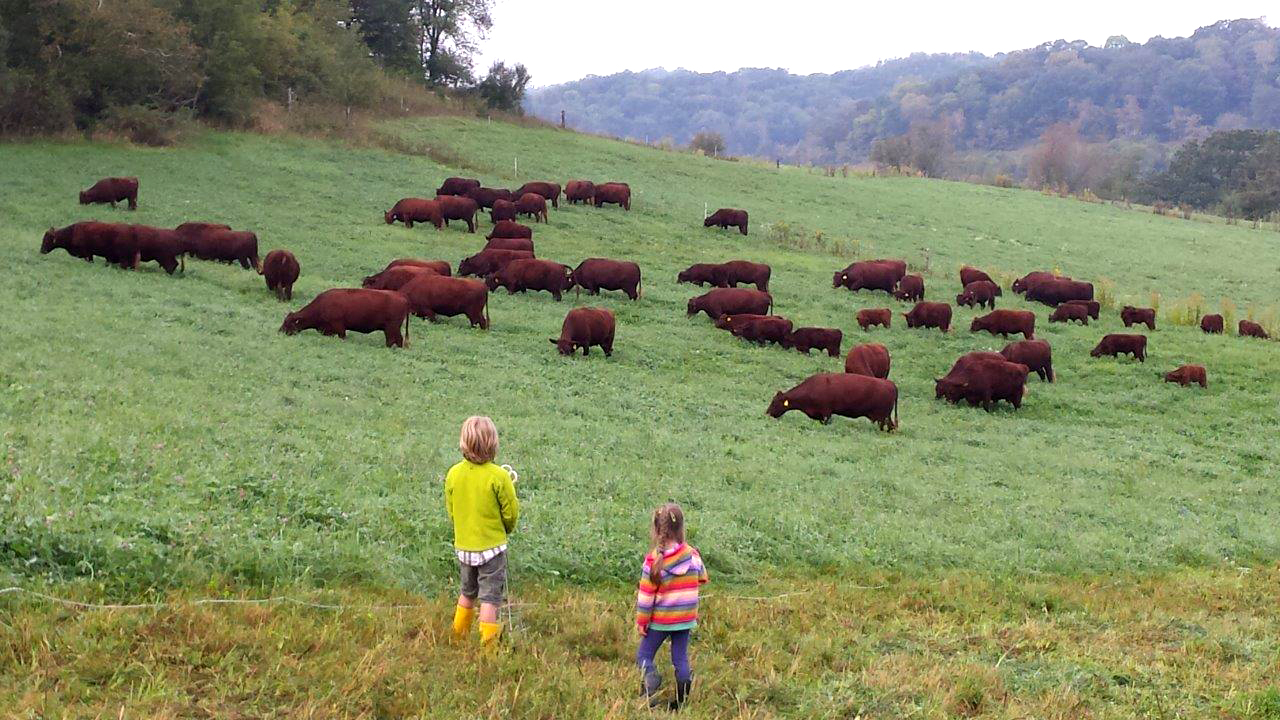
Some of the purebred Red Devon cows that have been part of the Lincoln agricultural scene for over 25 years now have a new forwarding address in Wisconsin, where they should feel right at home.

The cattle, which are owned jointly by Codman Farm along with Ken Bassett and his wife Mary Helen Lorenz, have been gazing on public fields around town since the first handful came from a herd in Maine in the late 1980s. The herd eventually grew to number more than 40. Earlier this month, eight yearling heifers, four adult cows and three calves were sold to a Red Devon farm in Spring Green, Wis., to expand its breeding program.

Though some of the Lincoln cows are now Midwesterners, the Red Devons have deep New England roots—their ancestors came here from England in the 1600s close on the heels of the pilgrims. Examples of the breed can be seen as oxen pairs at historic sites such as Mt. Vernon and Sturbridge Village, Bassett said. As a breed, they’re known for their gentle disposition, ease in calving, and ability to thrive on grass without supplemental grain or other diet supplements, so they are an excellent source of grass-fed beef.

One might wonder if the cows will miss the architectural as well as agricultural atmosphere in Lincoln, which boasts the Gropius House among its stock of historic homes. Not to worry, though—the relocated bovines are now grazing on idyllic Lincoln-like pastures that happen to abut the farm/estate know as Taliesin East, the home and studio of legendary architect Frank Lloyd Wright.

(Perhaps in the future, some adventurous Lincoln cows will make a longer trip in a rocket rather than a truck, all the way into Earth orbit… which would make them the herd shot ’round the world.)

The Lincoln cows in their new home in Wisconsin being admired by the grandchildren of their new owner.

Gazing and grazing… the Lincoln Red Devons joined this herd in Wisconsin, who are admired by the grandchildren of their new owner. Photos courtesy Ken Bassett

Category: agriculture and flora Leave a Comment

Garden Club beautifies Station Park with native plants

October 9, 2015

Left to right: Lincoln Garden Club members Cathy Moritz and Ann Park, NEWFS intern Lauren Weeks, NEWFS Horticulture Director Mark Richardson, and club members Janet Ganson and Patty Hilpert.

The Lincoln Garden Club recently created and installed a new flower bed with over 400 plants native to Massachusetts at the town-owned Station Park where Lincoln Road meets Ridge Road.

“This native plant bed is a great example of how we can apply more sustainable landscaping practices at our homes without  giving up on beauty. The choice of plants will bring different colors to Station Park at every season,” said club co-President Belinda Gingrich.

“Native plants attract pollinators, such as insects, birds and mammals, which restores nature to a more heathy state,” added co-President Agnes Wiggin.

The Lincoln Garden Club (LGC) paid for the project with donations from people who supported the LGC Garden Tour in June.  Installation was made possible through the combined efforts of club members; New England Wildflower Society staff; students and teachers from the Minuteman High School; and the town of Lincoln.

The new flower bed at Station Park.

The new native flower bed at Station Park.

The transfer of the existing plants, the design of the new bed and its installation was done during July, August and September. The design and list of native plants can be found on the LGC website. Lauren Weeks wrote a maintenance plan that Club members will use in the future, when caring for the bed as it grows.

New England Wildflower Society intern Lauren Weeks, who designed the bed, will give a short talk and answer questions about native plants at the Park on Saturday, Oct. 17 at 2 p.m.  The public is invited to attend. For other questions about the project, please contact LGC member Cathy Moritz at 781-259-3161 or cathymoritz@gmail.com.

Category: agriculture and flora, conservation Leave a Comment

Keeping things sheep-shape (Lincoln Through the Lens)

October 6, 2015

This photo of Lincoln resident Ellen Raja on her farm was featured at #23 in September’s Photos of the Month gallery in the Boston Globe.

Ellen Raja repaired a fence where sheep graze in Lincoln. (Photo by Joanne Rathe/Boston Globe Staff)

Ellen Raja repaired a fence where sheep graze in Lincoln. (Photo by Joanne Rathe/Boston Globe Staff)


Readers may submit photos for consideration for Lincoln Through the Lens by emailing them to lincolnsquirrelnews@gmail.com. If your photo is published, you’ll receive credit in the Squirrel. Photos must be taken in Lincoln and include the date, location, and names of any people who are identifiable in the photo. Previously published photos can be viewed on the Lincoln Through the Lens page of the Lincoln Squirrel.

Category: agriculture and flora, Lincoln through the Lens 1 Comment

Letter to the editor: be on the lookout for the Lindentree robin

July 14, 2015

letter

To the editor:

At the end of one of the June rains, I found a very “dead” little juvenile robin in our storm drain—except that he wasn’t, as I discovered when fishing him out. I dried him off, scraped off the unseemly gob of blood and something smooshing together the toes on his right foot, and took care of him. He willingly survived and became a personality at the farm for adults and children alike as they fed him worms, stepping around him as he hopped on the ground doing robin-like things. He was named Albert.

On the night of July 3, several days into his adolescent freedom stage, he disappeared, and we hoped he wasn’t part of someone else’s meal. However, I received a call from our neighbors several days later describing the visit of a robin who landed on their guest’s head, causing consternation and entertainment as he stayed for awhile. And then he moved on—so we are hoping that he’s appeared elsewhere in Lincoln.

Albert’s habits may change as he grows older and more birdlike; however, he is prone to landing on heads and shoulders and seemed to be comfortable with people.  If he visits you, we all here at Lindentree Farm would love to know where he has been—sort of tracking him. He has deformed toes on one foot and slightly bent ones on the other where one of them has healed up. Please drop us a line at lindentreecsa@gmail.com if you should happen to see him. Thanks!

Sincerely,

Moira Donnell (co-owner, Lindentree Farm)
10 Old Concord Road


Letters to the editor must be signed with the writer’s name and street address and sent via email to news@lincolnsquirrel.com. Letters must be about a Lincoln-specific topic, will be edited for punctuation, spelling, style, etc., and will be published at the discretion of the editor. Letters containing personal attacks, errors of fact or other inappropriate material will not be published.

Category: agriculture and flora, nature Leave a Comment

  • « Go to Previous Page
  • Page 1
  • Interim pages omitted …
  • Page 6
  • Page 7
  • Page 8
  • Page 9
  • Page 10
  • Interim pages omitted …
  • Page 14
  • Go to Next Page »

Primary Sidebar

Recent Posts

  • News acorns April 21, 2026
  • Service in June for Tim Barclay April 21, 2026
  • Legal notice: Conservation Commisson public hearing (29 Lincoln) April 21, 2026
  • News acorns April 19, 2026
  • Police log for April 3–15, 2026 April 19, 2026

Squirrel Archives

Categories

Secondary Sidebar

Search the Squirrel:

Advanced search

Privacy policy

© Copyright 2026 The Lincoln Squirrel · All Rights Reserved.