• Skip to primary navigation
  • Skip to main content
  • Skip to primary sidebar
  • Skip to secondary sidebar

The Lincoln Squirrel – News, features and photos from Lincoln, Mass.

  • Home
  • About/Contact
  • Advertise
  • Legal Notices
    • Submitting legal notices
  • Lincoln Resources
    • Coming Up in Lincoln
    • Municipal Calendar
    • Lincoln Links
  • Merchandise
  • Subscription Info
    • My Account
    • Log In
    • Log Out
  • Lincoln Review
    • About the Lincoln Review
    • Previous Issues
    • Submit Your Work
    • Subscribe/Donate

arts

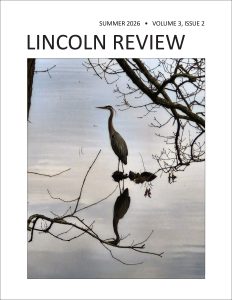
June 1 deadline for submitting creative work to the Lincoln Review

May 19, 2026

The deadline for submitting stories, poetry, artwork, photos, and other creative work for the next issue of the Lincoln Review is Monday, June 1. Anyone who has a Lincoln connection (current or former residents, extended family, employees, etc.) may submit — for details, click here. Email your stuff to lincolnmareview@gmail.com or lincolnsquirrelnews@gmail.com to share your work and have it preserved online in the Lincoln Review! Questions? Email or call 617-710-5542.

Category: arts Leave a Comment

DeCordova galleries to remain closed for two more years

May 13, 2026

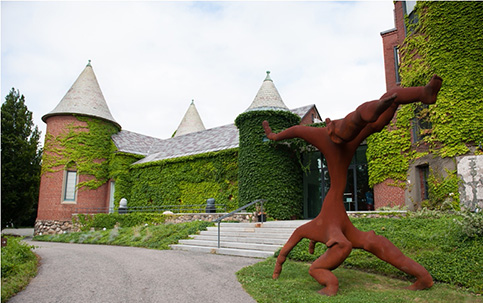
The deCordova Musuem building (2013 photo).

The galleries inside the deCordova Sculpture Park and Museum — closed for extensive HVAC renovations in 2023 and originally slated to reopen after two to three years — will now remain shuttered until 2028 as the organization works through major structural changes.

“We look forward to improving climate control in our gallery spaces, devising new, creative ways of integrating indoor and outdoor locations, and enhancing educational and community spaces,” said the invitation to the deCordova’s annual fundraising gala on May 9 in describing future plans.

“DeCordova and the Trustees have experienced significant change since 2023 that has prepared us for this moment,” D.A. Hayden, vice president for the MetroWest region, said in an email to the Lincoln Squirrel. In June of that year, the organization named Katie Theoharides (who served as the state Secretary of Energy and Environmental Affairs under Gov. Charlie Baker from 2019–22) as its president and CEO.

The Trustees laid off 10% of its staff in February 2024 to address “an ongoing multimillion-dollar structural deficit,” according to several news reports. The organization then “restructured… shifting to a regional model,” Hayden said, which apparently means organizing staff, resources, and stewardship efforts into specific geographic regions across Massachusetts rather than managing each of their  properties in isolation. The Trustees owns and manages about 27,000 acres on 122 reservations in Massachusetts and holds conservation restrictions on another 410 parcels totaling 20,500 acres

At the deCordova, The Trustees promoted Sarah Montross to museum director and chief curator  while also launching a new five-year strategic plan in 2025. Montross has worked at the deCordova since 2015, advancing through a succession of curator roles.

“The launch of the strategic plan gave us an opportunity to step back and look at deCordova in a more holistic manner,” Hayden said. “Rather than focusing simply on HVAC in a building, we looked at how to update our facilities while also focusing on targeted improvement to our campus for visitor experience. Elevating stewardship of our land and buildings is a key pillar of the strategic plan, as is inspiring climate hope and welcoming and connecting people.”

The current plan is to begin inside construction in the winter of 2026-27, with galleries to open to the public in spring 2028. “This work will not expand the existing footprint of the building; rather it will improve how these spaces function for art and people. We look forward to building improvements which share the beauty of the outdoors with the indoor spaces,” Hayden said.

The building is open for visitor programs including the Rappaport Art Prize lecture and Cronin lecture, and it also continues to host private events and operate a retail store and cafe in separate buildings.

Category: arts Leave a Comment

Gropius House bathroom competition announces a winner

May 7, 2026

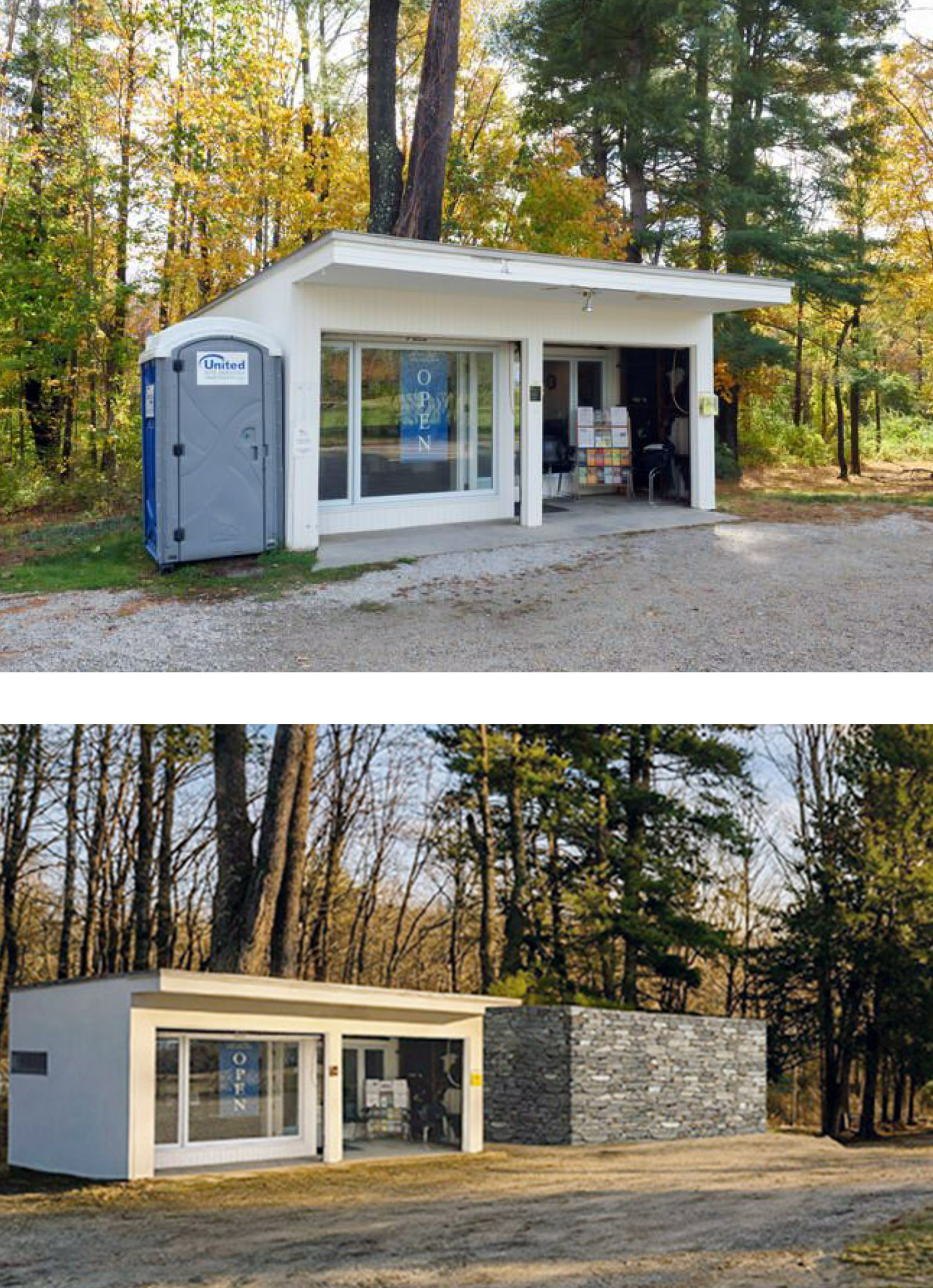
The current Gropius House “restroom” next to the visitors’ center (top), and a drawing of “One Bathroom After Another.” (Photos courtesy Historic New England)

“One Bathroom After Another” is the winning entry in the Historic New England design competition to “reimagine the visitor experience of Gropius House” by adding an accessible permanent public restroom close to the visitors’ center.

Since it became open to the public 45 years ago, the only restroom for Gropius House visitors has been a porta-potty. The new structure will address that need and will “also play a critical role in creating a sense of arrival for visitors to the site and framing the viewshed to the main house,” HNE said in a release.

The winning proposal by architectural designer Isabel Strauss was selected from more than 280 submissions received from 40 countries across six continents. Nearly a quarter of entries came from outside Europe and North America. “Strauss’ proposal introduces a twin volume that echoes the form of the existing garage, while differentiating it through material and orientation, to create a clear, yet contextually sensitive, addition to the site,” the release says.

“My design starts with what is already here, rather than imposing a completely new aesthetic, and draws on vernacular materials and reinterprets them through a contemporary lens. This project, in the spirit of the Bauhaus, uses common materials in new ways to create something that feels both of its time and as though it could have always been here,” Strauss said.

Strauss is assistant professor of architecture at Smith College. Previously, she was a curatorial contractor at the National Museum of African American History and Culture, where she assisted in collecting and exhibition projects related to architecture and design.

“Isabel Strauss’s proposal stood out as both deeply thoughtful and emotional — a quiet approach grounded in her nuanced reading of the site’s iconography, and one that also proved to be among the most buildable,” said Vin Cipolla, President and CEO of Historic New England.

The other shortlisted teams include AUYON BACHAR, based in Los Angeles; Payette (Boston); Tomas Sachanowicz and Monika Puchala (Szczecin, Poland); and Mohsen Laei (Tehran, Iran). AUYON BACHAR reimagined the existing garage as a contemporary welcome center with an integrated restroom addition and distinctive glass block façade, while Payette conceived the restroom as a precise architectural instrument within the landscape, contrasting planar and curved geometries to guide arrival and movement. Sachanowicz and Puchala proposed a restrained intervention that extends the site’s existing stone wall to enclose the restroom. Laei’s proposal offered a compact, efficient design focused on functional performance, with a strong connection to the surrounding environment.

Walter Gropius, founder of the Bauhaus and one of the most influential architects of the 20th century, designed the home in 1938 as his family residence while teaching at the Harvard Graduate School of Design. Conceived as both a living space and a teaching tool, Gropius House exemplifies Bauhaus principles of functional design while responding to the surrounding New England landscape. In 1979, Gropius’s wife Ise donated the property — complete with its original furnishings, artwork, and personal belongings — to Historic New England. The house opened to the public in 1984 and was designated a National Historic Landmark in 2000. Today, it is among the most visited sites under Historic New England’s stewardship.

The submissions were reviewed by a jury including Antoine Picon (Harvard Graduate School of Design), Nader Tehrani (NADAAA), Philip Kennicott (the Washington Post), Suzanne Stephens (Architectural Record) and Tanja Hwang (Museum of Modern Art).

“Historic New England is committed to building a permanent public restroom at Gropius House in the coming years, with timing dependent on funding,” the release said. The organization also plans to present the finalists’ designs in a public exhibition. The five finalist proposals will ultimately become part of the organization’s permanent archives, and Historic New England is also exploring opportunities for publication.

Category: arts, history 1 Comment

Photo exhibit of Mt. Misery beavers opens Friday

April 22, 2026

One of Barbara Peskin’s photos of Mt. Misery beavers.

Images of beavers in their natural habitat on Mt. Misery by four photographers including Lincoln’s Barbara Peskin will be on display in Concord starting on April 24.

“Beaver Life” is a show running through May 24 with an opening reception on Friday, April 24 from 5:00–7:00pm at Wright Tavern (2 Lexington Road, Concord). It’s sponsored by OARS (the Organization for the Assabet, Sudbury and Concord Rivers) as part of their 18th annual Wild & Scenic Film Festival.

Once the Mt. Misery beavers were discovered by Sudbury Valley Nature Photographers club member Jean Fain, she shared her find with three other members (Peskin, Nicole Mordecai, and Phyllis Neufeld), and they returned several times to photograph the animals.

“Barbara has a particular affinity with the Mt. Misery beavers, and has spent many an afternoon with a couple of very friendly Mt. Misery beavers. Spring, summer and fall, we’ve continued to photograph these tail-slapping creatures formerly considered pests and currently considered climate heroes. Come winter, nature’s engineers hole up in their beaver lodges out of view,” Fain said.

The women have also photographed beavers in Lincoln’s Heywood Meadow and the pond behind St. Anne’s-in-the-Fields Episcopal Church as well as Concord’s Great Meadow. But it was at Mt. Misery that Peskin and Fain met the former program director for OARS, who had the idea to put together the exhibit, Fain said.

“Little did we know that beavers would be having a moment around the time of our exhibit,” she added. Beavers are the focus of the new Pixar movie “Hoppers,” an article in Scientific American, and a new children’s book, When Beavers Move In. To top it off, April 7 was International Beaver Day.

Fain shared some of the information that the photographers learned over the course of their year-long project:

  • Beavers, the largest rodents in North America, are crepuscular (active at dawn and dusk).
  • Beavers are extraordinary engineers. They can hold their breath underwater for up to 15 minutes while building dams with sticks and mud. 
  • Beaver teeth are orange due to their iron-rich coating of enamel. Their teeth grow continuously throughout their life, but gnawing on bark and branches helps trim them down.
  • Beavers slap their tails on the water to signal danger to their fellow beavers. “That sudden, loud slap also signals us humans to step away from the pond,” she said.
  • Beavers mate for life, forming strong, long-term relationships that last until one partner dies. The couple works together to maintain dams, gather food, and raise their offspring (kits).

Category: arts, nature Leave a Comment

Correction

April 2, 2026

In the April 1 story headlined “Putting the pieces together for almost a century,” there was a typo in the web address for Stewart Coffin listen in the last paragraph. The correct web address is stewartcoffin.com.


Category: arts Leave a Comment

Putting the pieces together for almost a century

April 1, 2026

Stewart Coffin at home with some of his 3-D puzzles.

Editor’s note: This article originally appeared in the Spring 2026 issue of the Lincoln Review.

Stewart Coffin is a maker. In his 95 years, he’s become world-famous for the three-dimensional puzzles he designs and builds. In his varied career, he’s also been an electrical engineer, a boat builder, a writer, and even a nursery owner.

Coffin’s creations are legendary in the puzzle world. He’s designed hundreds of interlocking 3-D puzzles including striking polyhedral sculptures, ingenious tray-packing challenges, and pioneering examples of interlocking cube puzzles, according to puzzlehub.org. He’s written several books on the topic as well, including Geometric Puzzle Design and AP-ART: A Compendium of Geometric Puzzles (the start of the title is a nod to “the art that comes apart”). He still makes a few puzzles and sometimes sells them to individuals and at events such as the Lincoln Art & Farmer’s Market in December 2025 (and he’ll be back there on April 3).

Puzzle craft led to another item on Coffin’s resume: public speaker. He’s appeared at numerous puzzle conventions and was on an American Association for the Advancement of Science panel of puzzle experts. “His polyhedral puzzles, they’re beautiful three-dimensional sculptures, basically. To create the structure from these bits and pieces of three-dimensional sticks is creating an object of art. You’re not designing it, but you’re creating this art by putting it together,” Jerry Slocum, founder of the International Puzzle Party, told the Andover Eagle-Tribune in 2007.

Coffin came to puzzle-making after starting out building computers for the defense industry at MIT Lincoln Laboratory in the 1950s but grew disenchanted with that line of work. After he left the corporate world, he began to make a living with hands (and pen) as a woodworker, designer and maker of canoes and paddles, and writer.

He was also a somewhat reluctant businessman in his first Lincoln sojourn, which began in 1964 when he and his wife were looking for a house that could accommodate their young family as well as a workshop. A property on Old Sudbury Road came on the market that included several acres of land and a greenhouse used in the previous owner’s nursery business. They bought the property — but it turned out that the business was in bankruptcy, and some customers who had paid for plants that were never delivered came calling. 

“I was trained as an electrical engineer and here I was a nursery man, and I knew nothing about it,” he said. “People said, ‘you can’t let it die; we’ll help you,’ so they helped me and it worked out beautifully.” It also turned out that if they made $500 a year selling plants they could classify their property as a farm, which resulted in a helpful reduction in their property taxes.

Coffin eventually won patents for two of his puzzle designs, including one called Hectix, and he caught the attention of 3M. But the design was so complex that factory workers were unable to assemble them, so the parts were shipped to his Lincoln residence where he, his daughters and neighborhood children all put them together, reportedly making 20,000 puzzles in two weeks. 

Lincoln was a good fit for someone who grew up hiking and camping in the Pioneer Valley and always enjoyed the outdoors. He made many friends in town who were fellow members of the Appalachian Mountain Club and was also part of the farming community — he and his wife raised poultry and grew produce that they sold at a stand outside their house, which was close to Boyce Farm, the Van Leer farm, and Ellen Raja’s sheep farm, which is still in operation. “It was fun and it made everybody happy, so I wrote a book about it,” he said

Tipcart Tales is a sequel to a volume about his early life called Tall Trees and Wild Bees: Memories of Childhood That Never Really Ended. He’s also written poetry, fiction, essays, natural history (Good Earth’s Bounty, illustrated with photographs taken by his father, R.L. Coffin, and Black Spruce Journals, about canoe tripping in the Canadian wilderness) — and most recently, Reflections (2025), which he describes as “looking pensively back and critically ahead.” That title and his other books that are out of print are available as free PDFs on his website (stewartcoffin.com).

After his wife died in 1991, Coffin moved around in eastern Massachusetts. His son in law and daughter, Chris Brown and Margie Coffin Brown (a landscape architect for the National Park Service who’s based at Minute Man National Historical Park), bought the house from him after he donated several acres of the property to the town.

Speaking of history, Coffin has another story: his grandfather lied about his age to join the army and fight in the Civil War. Coffin’s father was the youngest of seven children and had Stewart at age 40. “Add it all together and I may be the last person alive whose grandfather was in the Civil War. I would not be a bit surprised,” he said.

As of September 2025, he’s living in a newly renovated part of the house that gained an addition since he first lived there in the 1960s. In 2003, the state took the Pillar House, an 1845 Green Revival building in Newton, by eminent domain and offered it for $1 to anyone who would move it. Coffin’s daughter and son-in-law plunked down the dollar, moved it to Lincoln piece by piece, and attached it to the Old Sudbury Road house.

The greenhouse, which he used as a utility building and chicken coop back in the day, is now his workshop, but it’s unheated, so in the winter he can only use it on sunny afternoons, “and even then it’s tough because the glue that I use does not set when it’s cold,” he said. Fortunately, he has some indoor space to work in with a picture window where he can watch the voracious birds (he has to fill the feeders twice a day, he said). He’s still writing, and his latest book on woodworking is about to be published.

“In recent years, puzzlecraft has just been one of my many pastimes, which have included control of invasive plants and collecting food donations for the needy. But much of my effort now goes into trying to improve my website, stewartcoffin.com, especially the final chapter, Reflections,” Coffin said. “It is my feeble attempt at trying to help solve some of the many puzzles now facing our country and the world.” 

Category: arts Leave a Comment

See the latest Lincoln Review!

March 22, 2026

The spring issue of the Lincoln Review is now available — and for the first time, it’s free to all, not just Lincoln Squirrel subscribers! Flip through the colorful pages or download a PDF to see work by Lincolnians including Stewart Coffin, Ginny Lemire, Jennifer Morris, Dilla Tingley, Anne Warner, and more. Proudly hosted by the Lincoln Squirrel website.

Category: arts Leave a Comment

Dilla Tingley: Lincoln’s queen of quilts

February 25, 2026

Dilla Gooch Tingley shows some of the pillow she’s made. On the wall behind her is a quilt titled “Portraiture a la Matisse.” Click image to enlarge.

These are not your grandmother’s quilts.

Longtime Lincoln resident and quilter extraordinaire Dilla Gooch Tingley draws inspiration from well-known artworks to craft textiles with wildly varying textures and topics — and often a dash of humor. You see a selection hanging in Bemis Hall’s map room through March, with an opening reception on Thursday, March 19 at 3:00pm.

“I’m most delighted in my work when I can take an artistic subject and reinterpret it in an interesting way,” she says. Many of her quilts are based on famous paintings, such as “The Next Supper,” a takeoff on da Vinci’s “The Last Supper” where the dinner guests are religious figures including Buddha, Ganesh, Jesus, and Mother Theresa.

Then there’s “Windows on Matisse,” a 3×3 arrangement of Matisse paintings with windows, and a collage of works by Picasso. She’s also made quilts based on Inuit art, Escher, Van Gogh, Toulouse-Lautrec, and Gauguin, “but Monet is too hard,” she says. Often there’s a humorous twist, such as a piece based on “Luncheon on the Grass” by Edouard Manet — except the gathering of picnickers now includes Paddington Bear and Winnie the Pooh.

Some of Tingley’s quilts are based on art forms other than painting, such as “Architextural,” a collection of famous modern buildings including the Sydney Opera House, the Guggenheim Museum in Bilbao, and the Transamerica building in San Francisco. As a surprise gift to Ellen Sisco, Lincoln’s assistant librarian who retired in 2014, she made a quilt with some of Sisco’s favorite literary characters and books such as Sherlock Holmes, Hercule Poirot, “The Owl and the Pussycat,” “The Wizard of Oz,” and Wallace and Gromit. Another quilt called “Ex Libris” showing characters including Babar, Humpty Dumpty, and Madeline hangs in the children’s room at library. And decidedly non-literary is “Branded,” an array of brightly colored logos of Cheez-Its, Green Giant, Morton Salt, and more.

Tingley’s quilts aren’t always rectilinear, either. There’s “Damn Everything But the Circus,” whose top has the billowy shape and texture of a circus tent, and a round piece depicting a crying sun called “Sol Says Sorry” (caption: “My life-enabling warmth is causing so much grief — I cry for you”) that was included in the global warming exhibit.

Tingley, who is self-taught, didn’t start out on an artistic path. She earned a degree in physics at Vassar and then worked in a research laboratory in Harvard University’s Division of Engineering and Applied Physics, “though it was clear I wasn’t destined to be a physicist,” she says.

Starting in 1977, she worked at a variety of jobs at Polaroid. “I started as a supervisor on the production line making SX70 film, so I told people I was a film producer. Doesn’t that sound more interesting than saying you worked on a factory floor?” she says.

In 1988, she took early retirement from Polaroid, “and I bought a sewing machine on my way home from my last day of work,” she says. She started by making pillows and eventually graduated to quilts. Her process involves finding interesting fabrics, then sketching a design, cutting out appliques, and ironing them onto pieces of fabric to guide her in cutting. When choosing a subject or theme, she’s guided foremost by practicality. “Generally when I see the image, my first thought is: how easy would that be to render?” she says.

The post-career phase of her life also included working as a business manager for a Framingham youth guidance center and volunteering in numerous capacities in Lincoln including as a member of the Planning Board and as president of the League of Women Voters.

In her former Lincoln home on Laurel Drive, Tingley’s workshop took up most of the basement and featured dozens of cubbies for fabric and a hanging quilt rack that her late husband Fred made for her. She downsized to a Ryan Estate condo after his death in 2022 but still has room on her walls for many of her quilts along with a bedroom repurposed as a workroom. Not surprisingly, her collection of fabrics includes few of the familiar cotton scraps often seen in American quilts. For textures and background, she’s used everything from batik to silk to African mud cloth (“Demoiselles d’Mud Cloth” based on the similarly titled Picasso painting).

In 2004 she organized a group to make a quilt to celebrate Lincoln’s 250th anniversary. It features scenes from Lincoln’s history, including the Lewis Street pickle factory and a boathouse on Sandy Pond, and now hangs in the Tarbell Room at the library. Since about 2024, she’s been a member of the Lincoln Quilters., whose members work on quilts together. They recently exhibited in the Lincoln Public Library and held a silent auction of quilts that raised nearly $8,000 for charity.

Tingley’s work has been featured in numerous solo and group exhibits at the Depot Square Gallery in Lexington, including a 2007 show called “HOT: Artists Respond to Global Warming.” Her submissions included the slyly humorous “We Love Our Cars” with colorful background landscapes overrun with cars full of monkeys, and “Venice of Massachusetts” showing a Venetian gondola in front of a State House at the top of Beacon Hill island surrounded by water.

One of Tingley’s volunteer roles is chair of the Council on Aging & Human Services board of directors, and she’s been deeply involved for years in efforts to create a new home for the COA, most recently as a member of the Community Center Building Committee. That work will reach fruition when the community center opens sometime in 2027 — and one of its interior walls will feature the quilt of Lincoln buildings that currently hangs in the living room at Bemis Hall.

Click on the images below to see larger versions with captions.

architextural
circus
artists
kids
figures
mountains
lincoln250
eaters2
labels
next-supper
picasso-transfiguration
luncheon
picasso
venice
venus
windows
self-portrait
escher
buildings
backdrop
bed

Category: arts, seniors 1 Comment

Time to send in your creative work for publication

January 16, 2026

The deadline for submitting stories, poetry, artwork, photos, and other creative work for the next issue of the Lincoln Review is Friday, Feb. 13. Anyone who has a Lincoln connection (current or former residents, extended family, employees, etc.) may submit — for details, click here. Send your stuff to one of the email addresses below to share your work and have it preserved online in the Lincoln Review! Questions? Call 617-710-5542.

Lincoln Squirrel subscribers can see previous issues here. If you’re not yet a subscriber and would like to receive a one-time PDF of the most recent issue, please email lincolnsquirrelnews@gmail.com.

Barb Rhines, editor (lincolnmareview@gmail.com)
Alice Waugh, publisher (lincolnsquirrelnews@gmail.com)

Category: arts Leave a Comment

Get a colorful printed copy of the 2024-25 Lincoln Review!

December 15, 2025

Here’s what to get for that hard-to-shop-for Lincolnite. Not sold in stores! 🙂

The four most recent issues (2024-2025, issues #1-4) of the Lincoln Review, our town’s arts e-magazine, are now available in print form as a colorful 48-page booklet bound on high-quality paper. Although the online Lincoln Review is normally accessible only to Lincoln Squirrel subscribers, now you can get your own copy for just $15. These are wonderful keepsakes or gifts and offer a great coffee table read for friends and family. See the sample of issue #1 attached to this email.

To purchase, please send an email to lincolnsquirrelnews@gmail.com with your name, mailing address and a note saying how many copies you’d like. Then please send the total due via one of these methods:

  • Venmo: @Watusi-words
  • Zelle: lincolnsquirrelnews@gmail.com
  • Check made out to “Watusi Words” (not “Lincoln Squirrel”) and mailed to:

Alice Waugh
178 Weston Road
Lincoln MA 01773

Editor Barbara Rhines will be happy to hand-deliver your order to addresses within Lincoln. She’ll be in touch with you to arrange a dropoff time.

Happy holidays!

Barbara Rhines
Editor, Lincoln Review

Alice Waugh
Publisher and Editor, Lincoln Squirrel

Category: arts Leave a Comment

  • Page 1
  • Page 2
  • Page 3
  • Interim pages omitted …
  • Page 49
  • Go to Next Page »

Primary Sidebar

Upcoming Events

May 20 Wed
7:00 pm - 8:00 pm

Lincoln Old Town Hall Corp. annual meeting

May 20 Wed
7:00 pm - 8:30 pm

Talk on AI

May 21 Thu
6:00 pm - 8:30 pm

Movie: “The Draft”

May 21 Thu
7:00 pm - 8:15 pm

“Trees and People Around the World: A Historic Perspective”

May 22 Fri
12:30 pm - 1:30 pm

Hip Hop Square Dance for Seniors

View Calendar

Recent Posts

  • June 1 deadline for submitting creative work to the Lincoln Review May 19, 2026
  • News acorns May 19, 2026
  • My Turn: SVdP scholarship program expands to support more Lincoln neighbors May 19, 2026
  • Correction and clarification May 19, 2026
  • Legal notice: Planning Board hearing (Civico) May 19, 2026

Squirrel Archives

Categories

Secondary Sidebar

Search the Squirrel:

Advanced search

Privacy policy

© Copyright 2026 The Lincoln Squirrel · All Rights Reserved.