• Skip to primary navigation
  • Skip to main content
  • Skip to primary sidebar
  • Skip to secondary sidebar

The Lincoln Squirrel – News, features and photos from Lincoln, Mass.

  • Home
  • About/Contact
  • Advertise
  • Legal Notices
    • Submitting legal notices
  • Lincoln Resources
    • Coming Up in Lincoln
    • Municipal Calendar
    • Lincoln Links
  • Merchandise
  • Subscriptions
    • My Account
    • Log In
    • Log Out
  • Lincoln Review
    • About the Lincoln Review
    • Issues
    • Submit your work

agriculture and flora

Grants available for Lincoln growers to supply the SVdP food pantry

June 22, 2022

The Agricultural Commission is offering funding to Lincoln growers who can supply fresh produce for the Society of St. Vincent de Paul of Lincoln and Weston (SVdP) food pantry.

The commission is offering a limited number of grants ranging from several hundred dollars to over $1,000 to qualified Lincoln growers. Grant recipients in the Farm to Food Pantry Program must deliver (or have their products ready for pickup) to the Lincoln food pantry early on at least one day on Wednesday morning, or the Tuesday preceding for nonperishable items.  

Applications are due by Monday, June 27. If you would like to participate, contact Ari Kurtz at arikurtz60@gmail.com. Specify the type of crops you wish to grow, quantities, and expected delivery dates.

The food pantry also recently received $3,000 as part of the Sudbury Foundation’s 2022 round of grants to 31 area nonprofits totaling $374,595. Another grant recipient: the Lincoln-based Food Project, which received $15,000 to redesign its website.

Summer is particularly challenging for food-insecure families with children at home. The food pantry especially welcome donations of Cheerios or Honey Nut Cheerios (which are versatile since they’re gluten-free) and salad dressings of all kinds, including oil and vinegar, since they can source the necessary produce. Other items that are always in demand: canned solid white tuna in water, Chocolate Ensure, and pasta sauce.

The food pantry serves neighbors who live, work, or attend school in Lincoln or Weston and are in need of food or emergency assistance, regardless of their religious affiliation or background. It’s located behind St. Joseph Church at 142 Lincoln Rd. in Lincoln.
Category: agriculture and flora, charity/volunteer Leave a Comment

Codman Farm plans to improve driveway, install forecourt

March 8, 2022

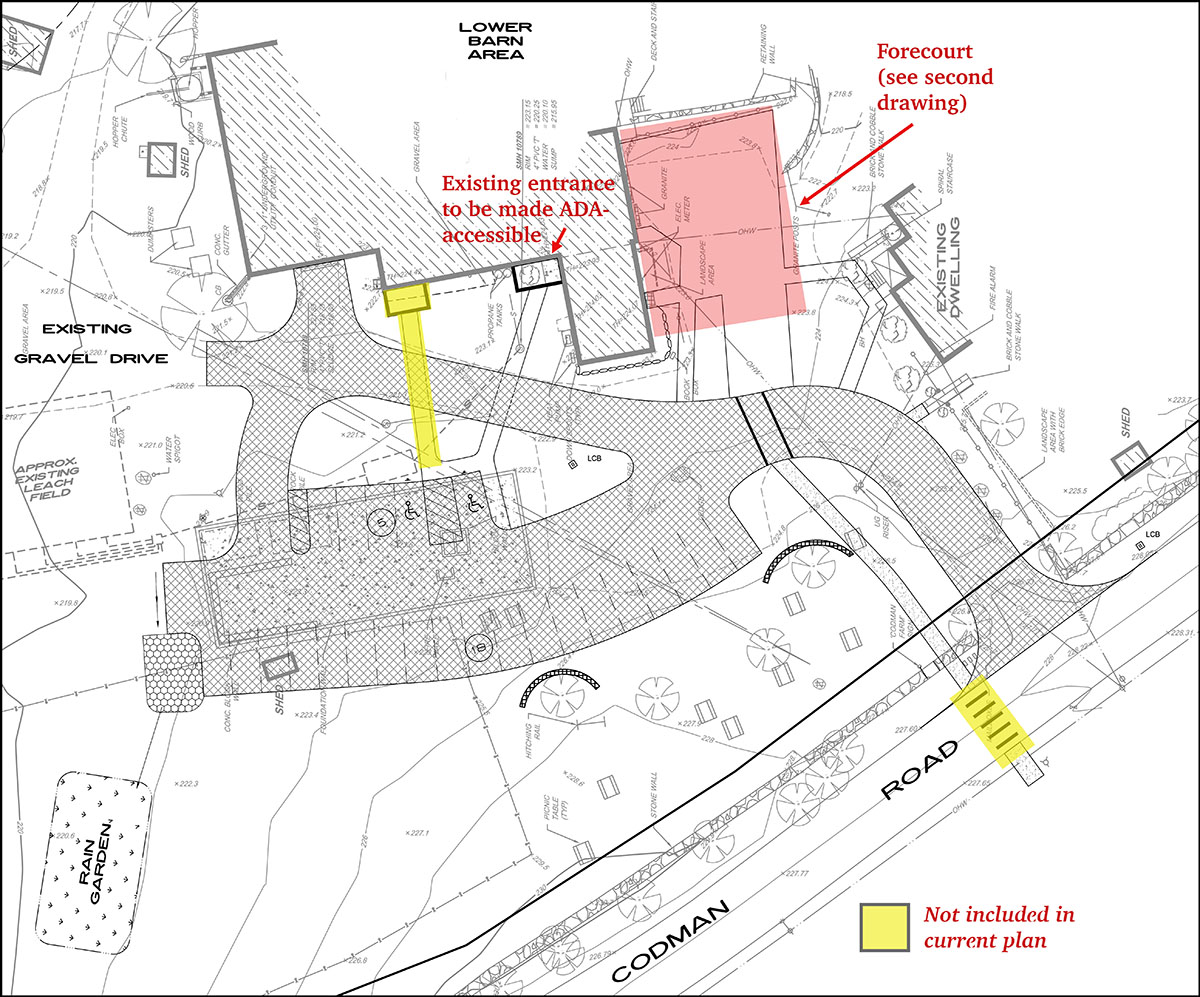
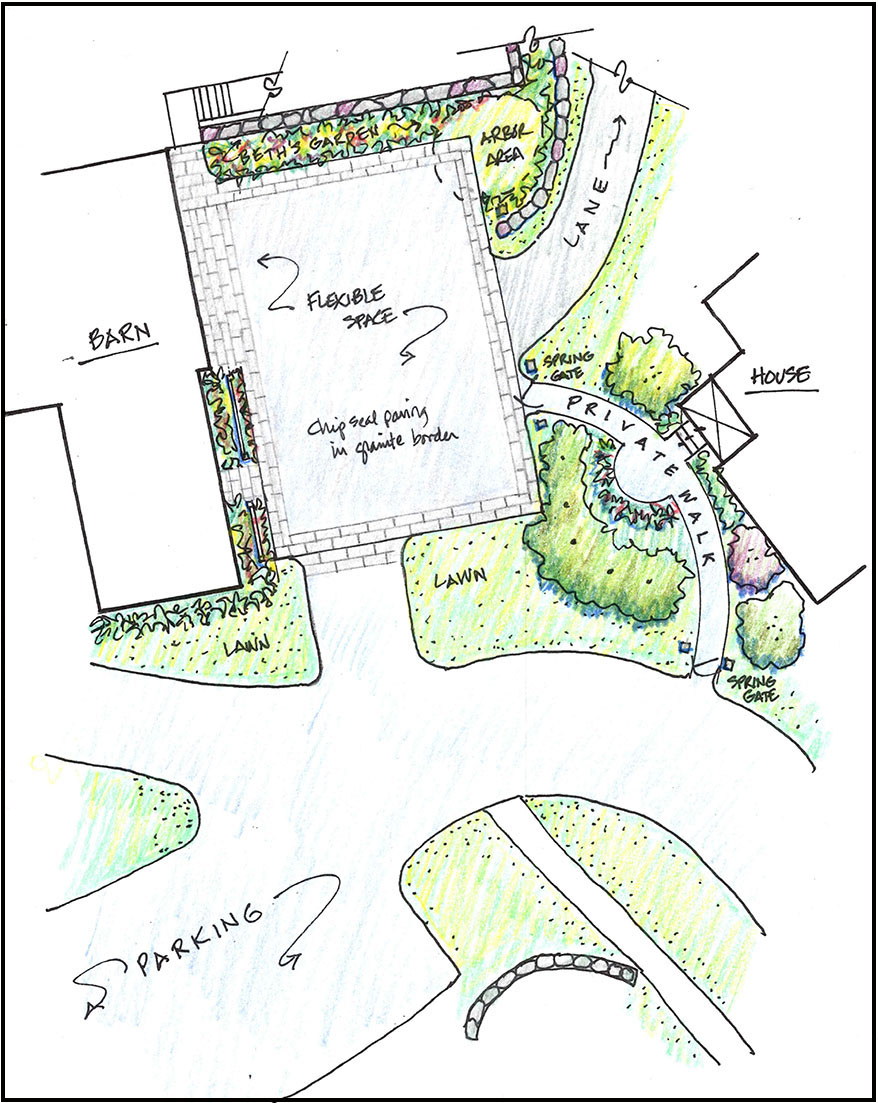
If all goes well, the muddy and cramped driveway at Codman Community Farms (CCF) will be resurfaced and expanded to allow easier access to the farm store, and there will be a new public gathering area in front.

Plans for driveway improvements and a new forecourt (in red) at Codman Community Farms. Areas shaded in yellow are not part of the upcoming project but are part of the farm’s five-year plan (click image to enlarge).

Voters approved spending $210,000 in June 2020 to fix problems due to driveway erosion, poor drainage and lack of sufficient parking, but those plans were stalled by the pandemic. The farm is now requesting an additional $119,950 to create a car-free forecourt in front of the main barn and add an ADA-compliant entrance at the side of the attached barn to the north. The CCF is putting up another $50,000 for both projects from its own budget.

CCF already had approval for the driveway project from the Historic District Commission, but they will need to go before the HDC again to get approval for the ADA-compliant entry and other above-grade work that may include small stone walls around some trees, gates, and other small items, said Nancy Fleming, president of the CCF board of directors. The Select Board and Capital Planning Committee have expressed overall support for the project.

The forecourt that the farm plans to install in front of the main barn in an area now used mostly for parking.

Fleming and others from CCF appeared before the Select Board in February to report on the last couple of years and outline the driveway project as part of their presentation of the five-year plan for the town-owned farm. Like everything else, public activities at the farm were shut down during most of 2020 due to the pandemic — but the self-service farm store tripled its income as people sought to avoided crowded supermarkets, and it now provides the majority of funding for farm operations.

In 2021, the farm brought back some public events (modified for Covid-19 safety) and launched a market garden to grow and sell produce and flowers. Coming soon: a recently completed commercial kitchen, and new sales terminals in the farm store that are more user-friendly and will allow customers to pay using SNAP food assistance funds.

The farm now has a Diversity, Equity and Inclusion committee and four full-time employees: Farm Manager Pete Lowy, Assistant Farm Manager Jared Martin, plus a farm store manager and market garden manager in addition to a part-time HR and office manager, education and outreach coordinator, and seasonal staff. 

Looking ahead over the next five years, CCF hopes to move the farm store to the rear of the main barn to free up the front area for community events and workshops. They’re also thinking about building an educational pavilion with an integrated outdoor cooking area with a wood-fired pizza oven for food-related events and educational classes, constructing a crosswalk from the bike path on the other side of Codman Road, and installing a fire suppression system in two of the barns. The vegetable garden may also expand, pending approval from the Conservation Commission.

Before Low was hired six years ago, “we had some quite difficult years at the farm” in which the board had to borrow from its endowment to cover operating costs, Treasurer Carol Carmondy said at the Selects meeting. “That has all turned around,” mainly due to store income, grants, and Lowy being “very smart about running an efficient farm,” she added. The pandemic “generated a lot of demand that seems to be lasting for local and sustainably grown food.”

The farm is not looking to scale up its livestock operation but will focus its energy on improving the land through reseeding and other measures as well as expanding its educational outreach and volunteer activity. “We want to do a better and better job of maintaining the pastures and fields around town, have more events, more ways to engage the community, and more ways to teach people about where our food comes from,” Lowy said.

Category: agriculture and flora 1 Comment

Flints and Hannan spread Lincoln’s farming bounty at dinner

September 25, 2021

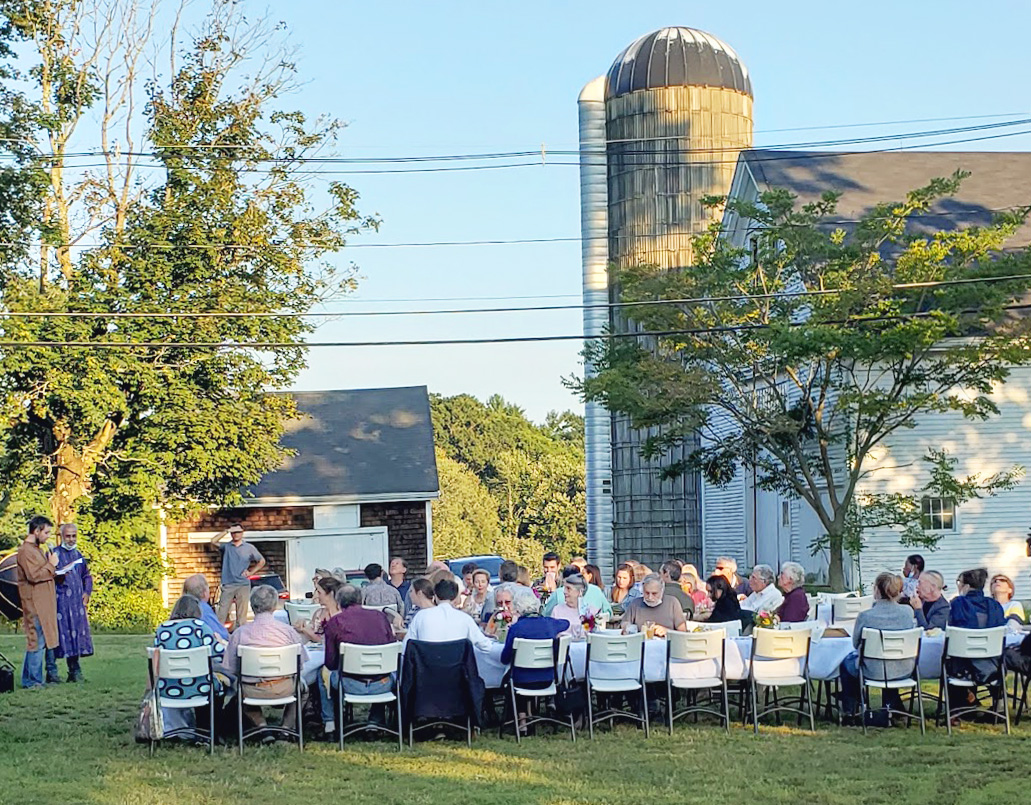
Two farming concerns in Lincoln — one centuries old and one very new — recently collaborated on a farm-to-table event to raise awareness of local agriculture and the Flint Homestead Project.

About 65 guests were treated to food made from Hannan Agro Farms produce prepared by Lincolnite Brianno Doo and helpers (both Doo and Mohammed Hannan donated their time and effort). Codman Community Farms also helped by loaning a grill and chairs.

Tom Flint and Mohammed Hannan (left) address the guests at the Flint homestead dinner. (Photo by Ose Schwab)

Sponsors arrived early for private tastings, a half-hour tour of the Flint fields, and gift bags hand-sewn by Tom’s wife. After dinner, everyone enjoyed music and learned about Hannan’s journey from Bangladesh to Lincoln in a short film produced by Tom Flint, a filmmaker and the latest in a line of Flint owners dating back to the 1600s.

“The event went swimmingly, and it was a real tribute to Lincoln’s agricultural heritage,” Flint said.

Guests also learned about the Flint Homestead Project, which aims to preserve the 1709 Flint farmhouse and barn dating from the 1750s on the north side of Lexington Road (Matlock Farm, also owned by the Flint family, is on the south side of the road). On the day of  the dinner, organizers turned the barn into a pop-up museum displaying historic artifacts from the family and items borrowed from the Lincoln Land Conservation Trust.

The Flint family did some repair work on the buildings that was deemed critical by a 2014 conditions assessment, though the trust fund devoted to maintaining the property is almost exhausted and much more work remains. They’re also exploring other options including donating the homestead to a nonprofit or turning it into a museum, but the maintenance costs have been an obstacle, Flint said.

The family has connected with a preservation consultant to help Tom and his sisters Sarah and Susanna (all three inherited the homestead in 2013) to help formulate financial and repair strategies. She previously arranged a charrette with about a dozen people specializing in history preservation, fundraising, archeology and museum curation. The Flints had hoped to have an open house two years ago but weren’t able to, so “Saturday was the first opportunity to showcase the project and speak to a larger group of people,” Flint said.

Category: agriculture and flora, history Leave a Comment

Police log for Sept. 8–19, 2021

September 23, 2021

September 8

Scott Circle, Hanscom AFB (4:04 p.m.) — Caller reported a fake Instagram account was set up in her name. An officer spoke to the party, who reported the account was deleted.

North Commons (6:41 p.m.) — Caller reported their neighbor was stomping around the apartment making noises. They do not want a police response, just a log entry. Similar reports at 9:47 p.m., September 9 at 5:55 a.m., and September 12 at 8:42 a.m. and 9:08 p.m.

Cambridge Turnpike eastbound (10:28 p.m.) — State Police called reporting a crash with injuries on Route 2. Police units assisted the State Police; Fire Department transported one party to Emerson Hospital.

September 9

Boyce Farm Road (2:21 p.m. and 5:29 p.m.) — Officer attempted to make contact with the resident to serve court paperwork.

Concord Road (2:59 p.m.) — Caller reported several pigs walking in the roadway near Old Concord Road. Officer checked the area; none found. (Editor’s note: Farmer Pete Lowy of Codman Community Farms included this report in his weekly email to CCF members).

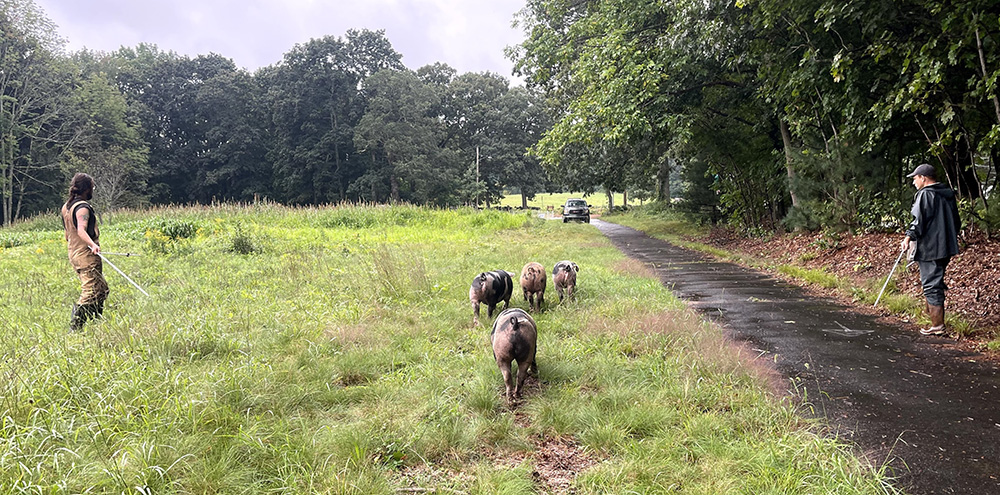
Assistant Farmer Spencer Coady Bronk (left) and Pete Lowy herding the escaped pigs.

Last week we had a bit of excitement when a customer came flying into the parking lot in her car to let us know that the pigs were out and running down the bike path on Route 126. Sometimes when we shift the pig fencing to new areas without getting pre-authorization from the pigs, we find ourselves in a bit of trouble. The pigs can be very routine in their ways, and can become used to a certain area of a field… and when we shift the fencing, they don’t quite realize it. Often by accident, they run right through a new fence line we have created because they were either daydreaming or viewing their Instagram feed while walking and thus didn’t see the new fence.

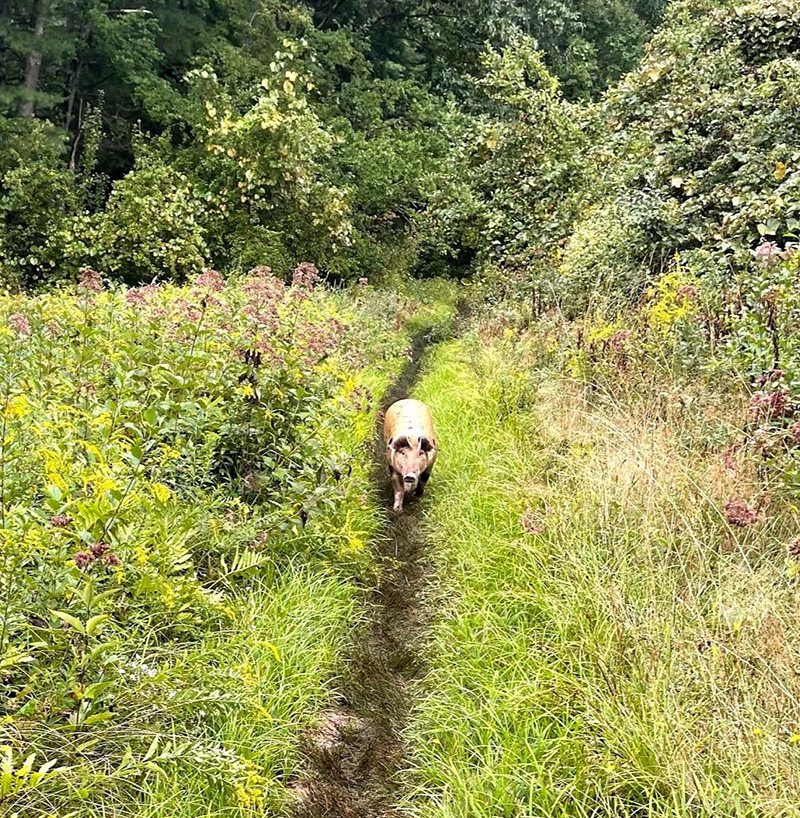
A fugitive pig enjoys one of Lincoln’s trails.

When the pigs went on their walkabout last week, Spencer [Spencer Coady Bronk, Assistant Farmer] had just shifted the fence an hour or so before. When they “escape” and find themselves newly liberated they just go wandering. So, the farmers need to then find them and help coax them back to home base. So after I got word that the pigs were out, I called Jared and Spencer and then raced to the scene to find four pigs enjoying a lovely stroll down the bike path on Route 126 right near Old Concord Road. With wetlands on one side of the path and cars driving down 126 on the other side, it was easy to get them to turn to make an about-face. But then they made a louie and turned left onto the hiking path adjacent to the wetlands. This is when I pulled out my phone and snapped a few photos of the chase down the walking paths. It was equally frustrating and amusing. The reality that the pigs could have explored the 80 miles of paths in Lincoln was ever-present in my mind as I was trying to coax them back to their home field.

Luckily, pigs do not excel at running for long periods of time. When being chased they quickly start panting and get tired and are ready for a snack and nap! So with some running to and fro for a while, we were able to get them where they needed to go. Holding long fiberglass rods to extend our waving arms helped a great deal to coax them along. Thanks to all who called the farm to let us know they were on the loose! Hopefully, it’s the first and last escape of the season.

September 10

Tower Road (9:00 a.m.) — A family member called looking for assistance in locating a missing resident who was out of the country. An officer assisted the family member with notifications to appropriate Department of State contacts.

Codman House (3:44 p.m.) — Caller reported someone in a red pickup truck dumped debris on the property. Officers made contact with the resident who was responsible, who returned and picked up the items.

September 11

Tower Road (3:34 p.m.) — Caller asked an officer to check the area as they believed an ex-boyfriend was in the area. Officers checked the area but the party was not seen.

September 12

Lexington Road (12:45 p.m.) — Caller was concerned that she couldn’t get in touch with her teenager who was at a car show on the Waltham town line. Officers checked the area and passed the information to Waltham police. Waltham police located the teen, who called home.

Cambridge Turnpike westbound (4:30 p.m.) — Caller reported that a party was dropped off on the side of Route 2 by a family member who was having a medical event inside the car and continued driving. State Police were notified. An officer met the caller on Route 2 and transported him back to the station to be picked up by a family member. State Police located the driver on Route 95 South and assisted them.

Tower Road (9:22 p.m.) — An Eversource employee working at the pump house reported a male party came walking out of the area of the pump house and seemed out of place. Officer checked the area but were unable to locate. Water Department notified.

Concord Road (9:39 p.m.) — A family member called to check on a resident who they hadn’t been able to contact. The resident was fine and said they would make contact with the caller.

September 13

Sandy Pond Road (1:02 p.m.) — Caller reported that landscaping truck was taking up a lane of travel. Officer responded; the company was done working and was leaving.

Mary’s Way (9:04 p.m.) — A family member was unable to make contact with a resident and requested a well-being check. Officers went to the residence but the party and their vehicle were not there. The officer followed up with the caller and checked the residence again at 12:40 a.m. but the resident was still not home.

September 14

Nothing of note.

September 15

Weston Road (7:48 a.m.) — Caller was looking to speak with Animal Control about a skunk on the property. Animal Control officer notified to handle.

Mackintosh Lane (8:19 a.m.) — Caller reported that a vehicle had been parked on the road daily for the past week and they were concerned about emergency vehicles getting by. Police checked but the vehicle was no longer there.

Tower Road (9:21 a.m.) — Caller wanted to speak to an officer about a possible scam involving gift cards. Officer spoke to the party and took a report.

Mary’s Way (9:58 a.m.) — Management company asked an officer to do a walk-through of an apartment because the resident hadn’t been seen for a few days. Officer walked through the apartment but no one was home.

Mary’s Way (12:36 p.m.) — A walk-in to the station reported being involved in a crash with a trash truck on Mary’s Way. Officer followed up with the truck driver and took a report.

Indian Camp Lane (8:38 p.m.) — A walk-in to the station said their car broke down and was towed to Doherty’s garage, and they requested a ride to their residence. An officer brought them to their residence.

September 16

Tower Road (9:25 p.m.) — Caller requested information regarding a civil matter. An officer spoke to the party and advised them of the civil process.

Old Winter Street (10:32 p.m.) — Sudbury police called looking for Lincoln police to check a residence for a missing party. Officers spoke to the homeowner but the missing party was not there.

September 17

Ballfield Road (3:22 p.m.) — A Lincoln School staff member called to report a child was missing from a school program. An officer went to the residence and the child was safely home; there had been a miscommunication.

Langley Road, Hanscom AFB (4:01 p.m.) — Hanscom Office of Special Investigations was looking for assistance on an investigation. Assistance provided.

Tower Road (4:48 p.m.) — Officers spoke to the resident regarding an ongoing civil matter.

Heritage Road, Hanscom AFB (11:22 p.m.) — Hanscom Security Forces requested assistance with an assault and battery that occurred on the base. Officers responded to assist; Hanscom Security Forces will be handling the investigation.

September 18

Tower Road (1:47 a.m.) — Caller reported that he lost some items sometime in the beginning of August. He believes someone on the property is responsible.

Drumlin Farm (7:44 p.m.) — Caller reported hearing loud bangs in the area. Officers checked; it was coming from Bedford’s fireworks display.

Lincoln Road (9:53 p.m.) — Caller wanted to speak to an officer regarding an encounter she had with a former resident. An officer spoke with the party and took a report

September 19

South Great Road (7:55 a.m.) — Caller reported a turtle in the roadway. Officer located it and moved it to the side of the road.

Wells Road (10:45 a.m.) — Caller reported being locked out of their apartment. The Fire Department responded to assist.

Lexington Road (4:28 p.m.) — Caller reported a party walking along Route 2 near Lexington Road north. State Police were contacted and officers checked the area but were unable to locate the party.

Wells Road (10:40 p.m.) — Two callers reported hearing a loud bang from inside the building. Officers and Fire Department responded; the source was a boiler. Management was contacted to handle.

Category: agriculture and flora, police & fire 1 Comment

Lincoln’s newest farmer hopes for organic growth

August 23, 2021

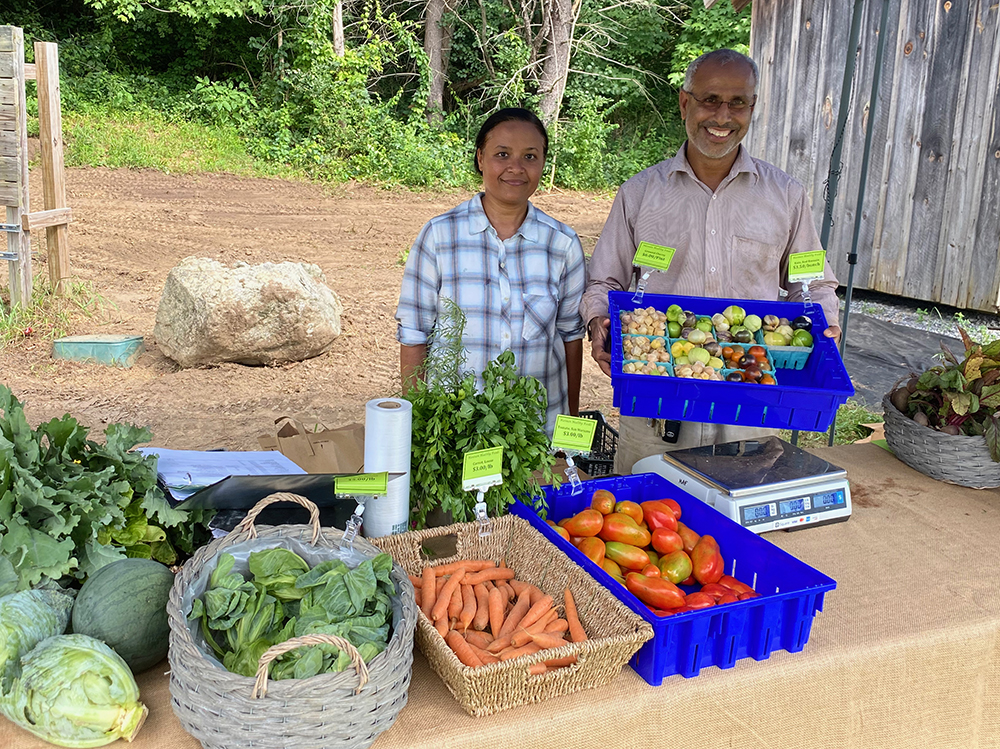
Mohammed Hannan and his wife Kaniz at their farm stand.

Mohammed Hannan grew up on a family farm, but it was thousands of miles away and very different from where he now works the land in Lincoln.

A lot has changed for Hannan, 46, since his days as a boy in rural Bangladesh and as a college student earning a degree in wildlife and conservation biology from the University of Chittagong. He came to America in 2008 on a fellowship from Duke University and now works full-time as a research scientist at Harvard Medical School. But it was food that drove him back toward agriculture.

“Right after coming here, I honestly didn’t have enough money, so I was buying food from Market Basket, Haymarket, and so forth. I quickly realized I needed access to good food but I didn’t have the money for Whole Foods,” he said. He thought of growing food himself but wasn’t sure how to make that happen while working full-time, but he volunteered on a farm on weekends one summer, “and after that I realized it was a lot of fun as well as hard work.”

Hannan learned the ins and outs of New England farming with the help of the New Entry Sustainable Farming Project. He graduated in 2020 from the program, whose mission is to improve local and regional food systems by training the next generation of farmers to produce food that is sustainable and nutritious, and making this food accessible to everyone. While he was learning to farm in Beverly, he won fifth place in an agricultural contest in the “heaviest tomato” category with a Yellow Brandywine weighing in at just over two pounds.

Now Hannan commutes from his home in Cambridge to manage his crops in Lincoln, where he’s been growing vegetables on the Ricci conservation land off Route 2A since 2018. On Saturdays, he and his wife Kaniz also run a farm stand on Route 117 (the Umbrello hay field, site of the former Blue Heron Farm). During his journey, he’s benefited from an ongoing Lincoln connection — New Entry director Jennifer Hashley also helps run Codman Community Farms with her husband Pete Lowy and continues to advise him.

Hannan Agro Farms has also gotten help through a CSA work-share program and WWOOFers—visitors from the Worldwide Opportunities on Organic Farms program who help out in exchange for produce and learning about organic agriculture. 

During its successful first year, the farm has grown array of traditional veggies and some not-so-familiar produce. These include luffa gourds, which Hannan used to eat in curries back in Bangladesh (the plant can also be dried and used as a sponge). In the future he hopes to include more East Asian gourds and melons, amaranth, and perhaps basil from Ghana. “I’m trying to incorporate quite a bit of stuff from back home and a few other countries,” he said.

Hannan leases both plots of land from the town, which has been very helpful in helping him get started and providing a potable water source on the Umbrello plot, where he brings each week’s load of produce, washes and refrigerates it before arraying it on the tables for sale. He also sells through New Entry’s Food Hub.

Next year, Hannan hopes to use some of the Umbrello land for gourd tunnels — open-ended structures in which the plants grow vertically and the emerging gourds hang upside-down. Salad greens and early-season microgreens are also on his wish list.

“At this point I’m expanding the operation very slowly, taking the time to do this experiment and see where I can take it — see if I can make a living at it,” he said. “To me, I think it’s really, really important that we know our farms and where our food is coming from. During this pandemic, we learned a hard lesson about how the food supply chain can be broken easily. Convenience always comes with a cost. We have our PCP, and we should also have a food care provider — the local farmer.”

Juggling a farm, a full-time job, and a family is rewarding if not always easy. “I believe that whatever you do, if you make a living from what you really like and you have the power of helping other people, it’s really refreshing,” Hannan said.

The Hannan Agro Farms farmstand in the Umbrello hay field opposite 275 South Great Rd. is open on Saturdays from 11 a.m –6 p.m. until late October.

Category: agriculture and flora, features, food Leave a Comment

My Turn: Chapman Field is getting a makeover

May 12, 2021

By Sara Lupkas

If you’ve walked through Chapman Pasture recently, you might have seen some changes — and you’ll see seeing some smoke there on Thursday as well.

Chapman Pasture is an eight-acre field located between Silver Hill Road and Old Winter Street. Formerly grazed by livestock, it’s now primarily characterized by non-native grasses. The Lincoln Land Conservation Trust (LLCT) began a town-wide Pollinator Action Plan in 2020 with the goal of increasing pollinator habitat and biodiversity throughout Lincoln, and Chapman Pasture is one of the properties we’ve been focusing on. We recently received a grant from the U.S. Fish and Wildlife Service (USFWS) to help partially fund a restoration project on the field.

The goal of the project is to restore the native grasses and wildflowers to the meadow to create critical habitat for our native pollinator species, including threatened bees and butterflies, while maintaining the beautiful open character of the land.

LLCT has been collaborating with Dr. Robert Gegear from UMass–Dartmouth, who has been studying specific sites in Lincoln for pollinator populations, and Evan Abramson of Landscape Interactions, who drafted our Pollinator Action Plan. Earlier this spring, a USFWS contractor removed invasive plants around the edges of Chapman Pasture, and Lincoln Conservation Department and LLCT staff worked collaboratively to remove nearly 1,000 feet of linear fencing from the pasture edges.

The next step is a prescribed burn of the field to remove the non-native grasses scheduled for Thursday, May 13. With assistance from USFWS, LLCT commissioned a certified burn plan and hired a professional burn crew with expertise in prescribed burns. All activities related to the burn have been approved by USFWS, the professional burn crew from New Jersey, and the Lincoln Fire Department.

Following the burn, LLCT will undertake a replanting of the field (likely this fall) with native grasses and forbs, and then will begin a mowing and maintenance regime to encourage native plant species and to eliminate encroachment of invasive species from field edges.

We are excited about this great opportunity to develop and implement an innovative and productive long-term management plan for the field that will enhance the natural beauty and biodiversity of the field.

More information about the plan for Chapman Pasture can be found in the Lincoln Pollinator Action Plan. Within that document is this Chapman Pasture-specific toolkit.

Lupkas is the Stewardship Director for the Lincoln Land Conservation Trust.


“My Turn” is a forum for readers to offer their views on any subject of interest to other Lincolnites. Submissions must be signed with the writer’s name and street address and sent via email to lincolnsquirrelnews@gmail.com. Items will be edited for punctuation, spelling, style, etc., and will be published at the discretion of the editor. Submissions containing personal attacks, errors of fact, or other inappropriate material will not be published.

Category: agriculture and flora, My Turn 1 Comment

My Turn: Where do the Codman Farm footprints lead?

January 11, 2021

By Pete Lowy

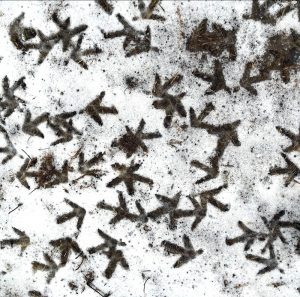
I captured this image the other day as I was wandering around the laying hen pasture. What do you see? Chicken feet, arrows, maybe something else? Well, we are on a farm, so I guess the most obvious answer is that they are chicken footprints — but in the same instance I noticed the patterns — it also immediately dawned on me that they looked like arrows pointing in different directions. When I showed the photo to Jen, she blurted out “chicken feet.” It’s funny how a shift in perspective can yield a totally different image. And the “chicken arrows” pointing in every different direction made me think of the current state of affairs in our country and also of life on the farm. How different ideologies can alter your perspective and thus perception of events and result in different actions being taken.

As a farmer, the image made me think how each and every day we have an endless amount of things to do, all sometimes pointing in different directions. The daily tasks on a farm are endless and it’s my job to make sense of the chaos and chart a clear path forward. The farms and businesses that find success tend to be the ones that are best able to stay pointed in one direction, stay true to their core principles, and be disciplined to achieve their goals.
At Codman, we are currently on such a path. With the sudden increase in visibility due to the pandemic, Codman Farm has become more of a resource to our community than ever. This has made us take measure of where we are, and consider more carefully where we are headed as a non-profit farm in the community of Lincoln. Why are we here, what is our purpose, how can we best care for our land and for the community in which we live. These are some of the many questions we are asking ourselves both now, and in the weeks to come.

I invite you to share what Codman means to you, how YOU see our role as a nonprofit in the community and HOW we can best carry out our core mission of keeping the lands of Lincoln open, in production agriculture, and educating others about farming and the impact it has in our society in so many different ways. Email me at pete@codmanfarm.org.

Pete Lowy is the farmer at Codman Community Farms. This piece appeared as part of the farm’s monthly blog/e-newsletter to members. Click here to see past issues of the blog.


”My Turn” is a forum for readers to offer their views on any subject of interest to other Lincolnites. Submissions must be signed with the writer’s name and street address and sent via email to lincolnsquirrelnews@gmail.com. Items will be edited for punctuation, spelling, style, etc., and will be published at the discretion of the editor. Submissions containing personal attacks, errors of fact, or other inappropriate material will not be published.

Category: agriculture and flora, My Turn Leave a Comment

Lincoln’s catalpa tree gets some preventive maintenance

December 20, 2020

By Cathy Moritz

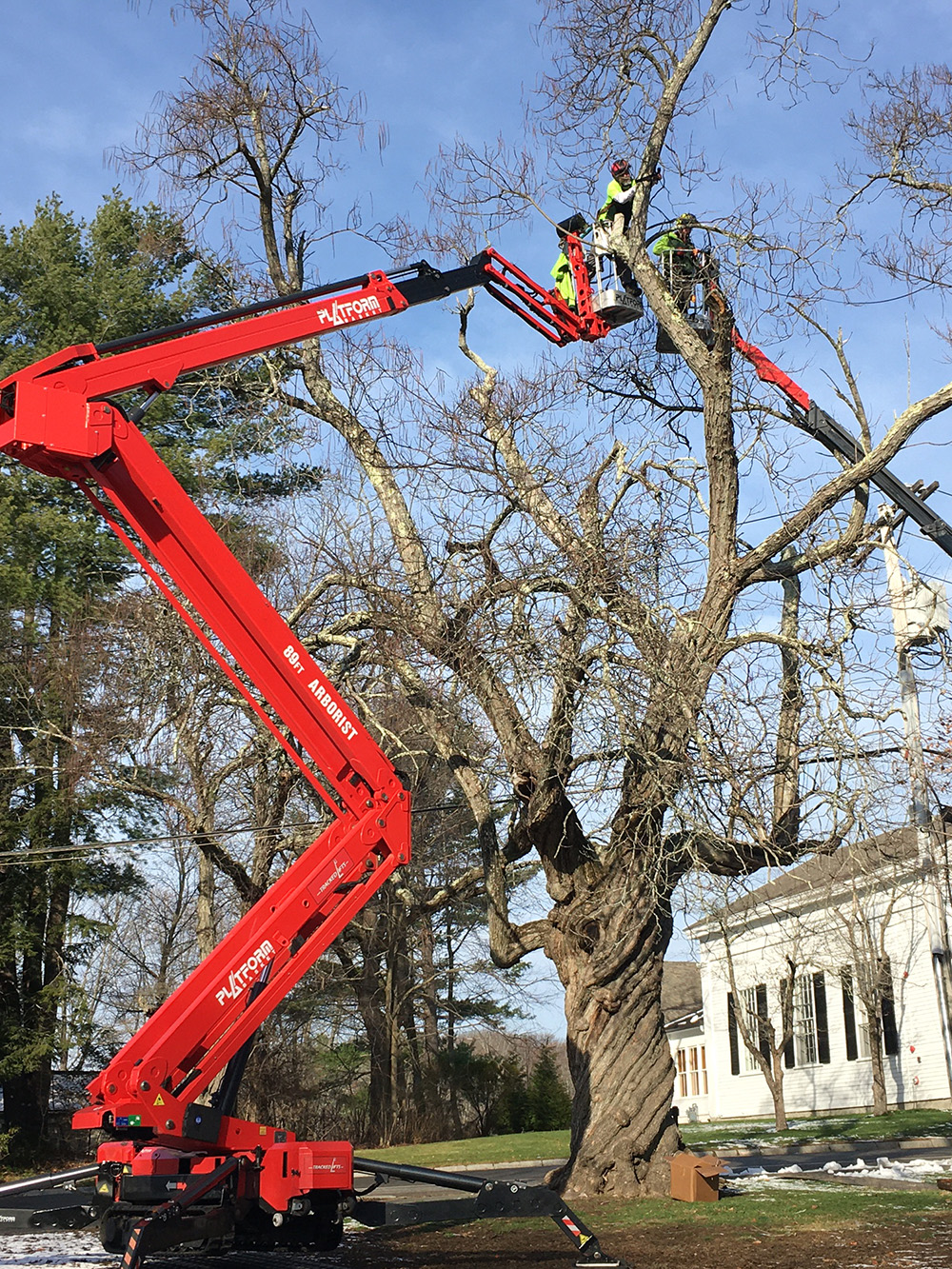
Workers attach cabling to branches of Lincoln’s twisted catalpa tree to help protect them from breakage.

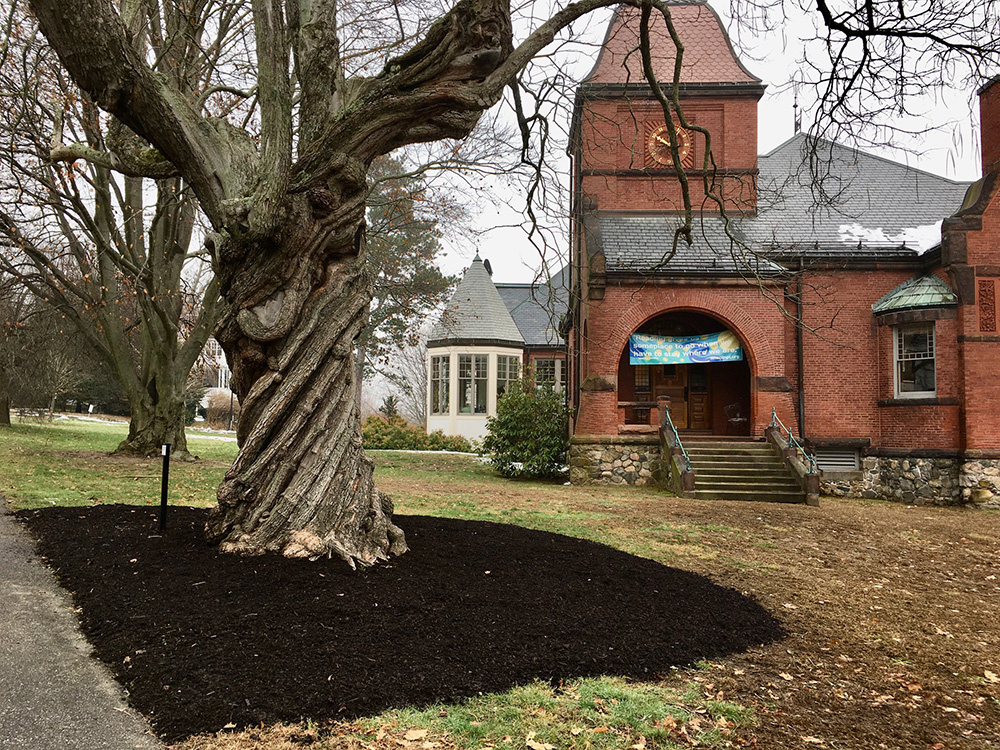
The beloved twisted tree in front of the Lincoln Public Library is estimated to be 110 to 120 years old — at least 50 years older than a typical Northern Catalpa. In a joint project, the Friends of the Lincoln Library (FOLL) and the Lincoln Garden Club (LGC) have funded a preservation project that could extend the life of the tree another 20 to 30 years.

With the expert advice of the Arnold Arboretum’s Sean Halloran and professional arborist Jonathan Bransfield, along with the approval of library trustees and town officials, the Lincoln Catalpa Committee planned an extensive preservation project. On December 11, a crew from Bransfield Tree Co. spent over four hours in two tall bucket trucks to perform the preservation work, which included cabling the upper limbs to help them withstand wind and snow, pruning unstable or dead wood from the canopy, and fertilizing and installing a protective mulch ring around the trunk. A videographer filmed the project and interviewed the crew, and Bransfield promised that a finished video will eventually be available to all.

A fresh layer of mulch covers the ground beneath the tree.

The Committee was organized last spring to promote the preservation of the tree and coordinate a project to propagate clones of it. Members hope that at least one of the clones will twist as dramatically as the parent tree so that the tradition of a twisted tree at the library can continue. The committee includes Cathy Moritz, FOLL and LGC board member; Peter Sugar, library trustee; Bobbie Myles, library director; LGC members Cynthia Ferris and Eileen McCrory, and past FOLL president and LGC board member Daniela Caride. Questions about the group’s work can be directed to coordinator Cathy Moritz at cathymoritz@gmail.com.

In a public presentation sponsored by the LGC, Halloran, head of woody plant propagation at the Arnold Arboretum, gave a talk on the twisted tree, the cloning project, twisting trees in general, and tree planting tips. Interested Lincolnites who missed the presentation on November 1 can view it here.

Category: agriculture and flora, charity/volunteer Leave a Comment

My Turn: Drumlin Farm pitches in with produce during pandemic

December 3, 2020

By Renata Pomponi

Editor’s note: this piece originally appeared in EdibleBoston.com and is reprinted with permission. The last two paragraphs were added on December 15.

It all started with a half-ton of carrots.

In late March, with the world closing down around us from a global pandemic and all of our staff except farmers working from home, it soon became clear that Mass Audubon’s Drumlin Farm Wildlife Sanctuary in Lincoln had more vegetables than customers. News stories from other parts of the country spoke of farmers plowing under their spring crops in response to the near standstill in sales due to shuttered restaurants, schools gone virtual and closed farmers markets.

At the same time, the Greater Boston Food Bank was beginning to report what would end up being more than twice the demand of their normal operations. With a root cellar stocked with a bumper crop of carrots, and a new hoop house in the crops field starting to produce fresh greens that needed to be harvested, we knew that we needed to get our food out to where it was needed most.

Drumlin Farm has long called our approach to agriculture “Community Based Farming,” and we felt strongly that our ties to the community should drive our food distribution strategy, particularly at this time when food insecurity was rising in our region.

With the practical reality that there are only so many deliveries we could make in a week, it also felt important to continue working within the communities in which we already had relationships in order to maximize our impact. When we learned that the Cambridge-based nonprofit Food for Free had taken on grocery delivery and daily school meal preparations for families in their city, it immediately felt like a natural fit; in ordinary times, we would have already been making weekly deliveries to the Cambridge Public School’s farm-to-school program.

A few emails and phone calls later and we were connected with a weekly drop-off to Food for Free’s refrigerated lockers, getting those carrots (along with fresh eggs and greens) out to many of the same children who would have been eating Drumlin Farm food in the salad bars of the Cambridge elementary, middle and high school cafeterias.

Similar ties drew us to a partnership with the Lincoln Food Pantry, in our home community of Lincoln, where their board felt strongly about including fresh produce from local farms in their bi-monthly distributions. One of our regular restaurant customers decided to do a Meal Day for health care workers; that became another easy fit for a donation that strengthened our ties with the people who understood and valued our approach to sustainable agriculture. Through these and other meaningful local partnerships, we quickly got to a point where we were donating about a quarter of what we produced each week in April and May.

While the root cellar supply dwindled, the costs of running our farm of course did not. The demand for local food definitely increased enrollment in our CSA program, but our major distribution channels—restaurants and farmers markets—remained at minimal levels compared to our target annual budget. We wanted to keep donating whatever we couldn’t sell, but we also faced the same harsh realities of every small business during these challenging times.

Enter the community.

Our entire food donation program would not be possible without the incredible generosity of a growing group of individuals who see the value in investing in their local farms while simultaneously doing good in their community. By supporting Drumlin Farm with their charitable donations, these donors are keeping our farm going and helping ensure the food they know and love out gets to the families and individuals who need it the most. The response to this outreach has been steady and inspiring, allowing us to continue meeting Drumlin Farm’s commitment to local partners while keeping our farmers employed. Some donors have made major gifts, while some have chosen to add $5 or $10 onto their weekly CSA orders. One has even made an extraordinary offer to match every donation, doubling the impact, up to a total of $25,000. Each and every person has made a difference.

The root cellar is empty now and some of our regular sales channels have rebounded. But as the bounty of our fields grows each week during the summer and fall, we will continue to donate a significant portion in order to help alleviate hunger in our region. The pandemic crisis has led us to closely examine how our model of sustainable community farming can do even more to sustain our neighbors facing food insecurity, and we hope to be able to continue this program even after the pandemic has subsided for good.

Addendum, December 15, 2020:

Over the course of the 2020 growing season, Drumlin Farm has distributed over 17,000 pounds of veggies and 600 dozen eggs to people in need around eastern Massachusetts. We are grateful to the Lincoln Agricultural Commission for provided funding this summer to allow Drumlin Farm to begin making twice-a-month contributions of produce and eggs to the Lincoln food pantry. The Ogden Codman Trust then stepped forward with a generous grant to allow us to continue the program through the winter, with eggs from our chickens and greens coming soon from our hoop house.

Our hunger relief work in Lincoln has been a true community partnership, and we are honored to be part of making the connections from farm and farmer to those who truly need our food.

Renata Pomponi is the Wildlife Sanctuary Director at Drumlin Farm in Lincoln. To learn more about the Drumlin Farm hunger relief project, including a matching challenge that will double the impact of your donation, please visit the Drumlin Farm Food Donation Program.


”My Turn” is a forum for readers to offer their views on any subject of interest to other Lincolnites. Submissions must be signed with the writer’s name and street address and sent via email to lincolnsquirrelnews@gmail.com. Items will be edited for punctuation, spelling, style, etc., and will be published at the discretion of the editor. Submissions containing personal attacks, errors of fact, or other inappropriate material will not be published.

Category: agriculture and flora, charity/volunteer, food Leave a Comment

Storm wreaked havoc at Codman Community Farms

October 18, 2020

The unexpected derecho that swept through the area on October 7 damaged hundreds of trees, closed many roads and caused widespread power outages (about half the town at one point). A similar but stronger event in August destroyed millions of acres of crops and buildings in Iowa and northern Illinois, but the storm here caused damage and even livestock deaths on Lincoln’s own town farm. Below is the account of farmer Pete Lowy of Codman Community Farms. He sent this account to subscribers of the farm’s email newsletter; it’s reprinted here with his permission.


Last Wednesday was yet another memorable night on the farm. The evening starting out pretty much business as usual for a chicken catching night. As we do every chicken catching night we loaded the trailer with empty chicken crates, recruited some volunteers, and planned to gather out in the field to catch and crate birds about one hour before sunset. A bit of rain and thunderstorms did pop up in the forecast which had not been predicted, but it didn’t seem like a big storm.

Of course, the rain itself was due to arrive right around 6 pm, just when we planned to meet up with volunteers at Mt. Misery field, but otherwise, all seemed fine. Jared and I decided to get a jump on the weather as we first had to catch the last 40 turkeys at Van Leer field, then head over to Mt. Misery. We successfully caught all the turkeys as planned and loaded them in the back of the pickup truck. Toby the guardian dog looked on lazily as we caught the birds, no doubt happy to be done working for the season, then Jared loaded Toby in his truck and we both headed back to the farm to hook up the big trailer with the empty crates and to drop off Toby.

I was eager to get going as I’m always a bit excited and hopeful that chicken catching goes well – so I headed over to Mt. Misery first — Jared would soon follow. Just as I arrived in the field where the coops were located, some raindrops started falling. I got out of the truck to open the electric fence gate and as soon as I opened the truck door I felt a strong gust of brisk wind and some big pelting raindrops smack me on my bald pate — never a nice feeling! I jumped back into the truck and pulled into the field about 200 yards from where the coops were located.

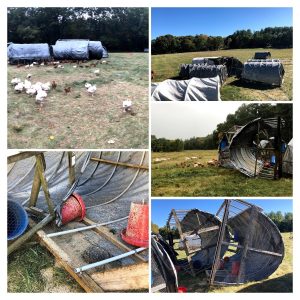
Driving slowly towards the coops, the weather closed in, uncertain how much rain would fall, I stopped the truck. The raindrops were unusually large — but the rain was not falling heavily. But then a strange wind quickly descended from the tree line. The tall trees surrounding the field swayed in the strong wind. Before I knew it, the 8’x12′ open-floored, tarp-covered chicken coops, each containing 65 chickens, started lifting off of the ground. One popped off the ground and descended again, like a kite trying to take off, then was suddenly picked up and flung through the air, tumbling and twirling side over side until it lay resting at the tree line about 200 feet from where it started. Then just as quickly another coop — and another — and another lifted off the ground and flipped over.

I honestly could not believe this was happening. We have used these types of coops for over 10 years and never, ever has this happened before. But this storm, later to be officially classified as a derecho (defined on Wikipedia as a widespread, long-lived, straight-line wind storm that is associated with fast-moving windstorms, potentially rivaling hurricane and tornado force minds), was like nothing I have ever seen. As the coops tossed and turned and danced in the air, I could only imagine how many chickens were being injured.

As quickly as the storm arrived, it departed. I called Jared, who had yet to arrive, and shouted out to him about the disaster I just witnessed — he was on his way. I was afraid to get out of the truck for fear of another wave of wind, but thankfully it never arrived. Once Jared arrived, we cautiously walked out to the coops to survey the damage. The chickens were scattered around, newly exposed to the open sky, and disoriented from the sudden change in their housing situation! Many chickens were walking around aimlessly in circles, wondering where their feeders and waterers went. Some were huddled together in small groups trying to stay warm, and yet other birds took advantage of their newfound freedom and started foraging, searching for tasty bugs and grass bits.

As Jared and I walked in circles surveying the damage, we began developing a plan as to how to unravel this mess. Volunteers starting arriving and we all pitched in to catch and crate the birds that were ready for harvest. We then had to relocate the homeless birds back into shelters for the evening. It was the best we could do as nighttime quickly descended. We would sort it all out in the morning. And just as we were finishing up and moving the last of the homeless birds back into shelters, an opportunistic hawk swept down and grabbed a free chicken dinner! And to our amazement, that was the only chicken that we lost due to the storm.

Unfortunately, the story does not quite end here. While we were dealing with the chickens, our pigs over at Minuteman National Park were also impacted that evening. Minuteman National Park along 2A was devastated by the storm with a tremendous amount of fallen trees. A large branch fell in our pig field, knocking down our pig fencing and injuring some of the more than 60 full-grown pigs who live on the field. Several days after the storm, three pigs died from internal injuries suffered from the fallen branch. They were beautiful full-grown Old Spot pigs that we had been growing since the spring. Tremendously sad accident. So far the rest of the pigs seem strong and healthy and we are keeping a close eye on them. Never a dull moment….

These events that happen all too often are just part of the many physical and economic challenges farms like ours face every day. We feel it’s important to share these stories to provide a deeper understanding of our work and what it take s to run a small diversified farm in today’s world. As always, we appreciate any and all feedback and are grateful for your support! Onward!

Photos of some of the damage caused by the derecho (click to enlarge).

Category: agriculture and flora, news 1 Comment

  • « Go to Previous Page
  • Page 1
  • Page 2
  • Page 3
  • Page 4
  • Interim pages omitted …
  • Page 13
  • Go to Next Page »

Primary Sidebar

Upcoming Events

Mar 21 Sat
12:30 pm - 3:00 pm

Craft Supply Swap

Mar 21 Sat
1:00 pm - 3:00 pm

Film: “Memories Flow Beneath It: From Valley to Quabbin”

Mar 27 Fri
12:30 pm - 1:30 pm

Lincoln’s Invaluable Vernal Pools

View Calendar

Recent Posts

  • Water bills to go up by 13% March 5, 2026
  • News acorns March 5, 2026
  • Property sales in January 2026 March 4, 2026
  • My Turn: Unraveling the Hanscom misallocation March 3, 2026
  • Police log for Feb. 19–25, 2026 March 3, 2026

Squirrel Archives

Categories

Secondary Sidebar

Search the Squirrel:

Privacy policy

© Copyright 2026 The Lincoln Squirrel · All Rights Reserved.