• Skip to primary navigation
  • Skip to main content
  • Skip to primary sidebar
  • Skip to secondary sidebar

The Lincoln Squirrel – News, features and photos from Lincoln, Mass.

  • Home
  • About/Contact
  • Advertise
  • Legal Notices
    • Submitting legal notices
  • Lincoln Resources
    • Coming Up in Lincoln
    • Municipal Calendar
    • Lincoln Links
  • Merchandise
  • Subscription Info
    • My Account
    • Log In
    • Log Out
  • Lincoln Review
    • About the Lincoln Review
    • Previous Issues
    • Submit Your Work
    • Subscribe/Donate

Alice Waugh

Initial ideas for mall redevelopment to be presented Thursday

January 16, 2024

A conceptual drawing of the front of the mall (Donelan’s is at left rear) shared by the RLF last June. 

The Rural Land Foundation will hold a public forum on Thursday, Jan. 18 at 7 p.m. via Zoom to present preliminary conceptual plans for redevelopment of a portion of the mall at Lincoln Station. There will be a brief presentation followed by time for questions and feedback. Click here for the Zoom link (passcode: 466177).

The mall building closer to Lincoln Woods (excluding the Tack Room, Post Office, etc.) is under discussion along with other areas in South Lincoln for rezoning to comply with the Housing Choice Act. The RLF, which owns the mall, has been in discussions for some time with Civico about ideas whereby Civico would redevelop the mall while adding a second and third floor for multifamily housing as stipulated in the HCA.

Whatever is eventually proposed will have to conform to the revised zoning bylaw now being drafted by the Planning Board in preparation for a vote at the March 23 Annual Town Meeting. The board at one point was considering whether to allow a building height of 48’ and a fourth story by special permit (up from the current limits of 36 feet for residential buildings and 42 feet for mixed-used buildings) but decided on January 9 to remove that proposal from the zoning bylaw, according to the Jan. 10 update posted on the Housing Choice Act Working Group web page.

The draft bylaw currently requires that 33% of the total square footage of all buildings on a parcel be for commercial use. In addition, 80% of a building’s frontage along Lincoln Road or along a private right of way (e.g. the driveway into Donelan’s) must be dedicated to commercial use, the update notes. For the other three subdistricts (Lincoln Woods, Lincoln Road and Codman Road but not the Village Center subdistrict that includes the mall), the Planning Board is also considering a new “building footprint + parking” parameter that limits the footprint and parking to no more than 50% of the lot. 

The number of potential housing units on the site will depend on numerous site constraints (including parking, circulation, access) and the overall economics of any proposed redevelopment project, RLF board chair Michelle Barnes said in a December 20 email to the Lincoln Squirrel.

Civico, which developed and later sold the Oriole Landing project, has been in talks with the RLF to design a mutually acceptable mall project, with the possibility of Civico eventually buying or leasing the property from the RLF. Any future sale would include deed restrictions that would mandate a certain proportion of commercial use in perpetuity, Barnes has said. RLF has no legal agreements with Civico or any other developer at this point in the process, Barnes said in December.

A redevelopment project would also require additional septic capacity. The mall uses the same wastewater facility as Lincoln Woods, which is owner by TCB (The Community Builders). Barnes said last month that the RLF has had “very preliminary discussions” with TCB about the possibility of a redevelopment project and that a design study is underway.

The schedule of Planning Board meetings, public hearings and community forums on the HCA can be found here.
Category: South Lincoln/HCA* 1 Comment

The Old Town Hall celebrates its 175th birthday this year

January 8, 2024

The Old Town Hall has wandered quite a bit in its 175 years. It was built in 1848 at a time when Lincoln needed a new civic gathering place. Until then, the town had used the original meetinghouse built in 1746 where today’s stone church now stands. The new Town House was built opposite the meetinghouse across Bedford Road, with its classic Greek Revival colonnade facing south over the town common, toward the town well and where the Minute Men had mustered in 1775 (photo #1). There it stood for forty years, witness to the Transcendentalist and Abolitionist movements, the Civil War, industrialization, and the early gentrification of Lincoln. It was a witness as well when the old meetinghouse burned to the ground in 1859.

1. The future Old Town Hall in its original location.

In 1891, when George Bemis gave the town funds to build a new civic center, the Old Town Hall was put up for purchase. James L. Chapin (1824‑1902) bought the structure, moved it down the hill to a site just north of the today’s white church (photo #2), and put it to good use as a general store, post office and gathering place. Chapin’s son George continued the business until his death in 1918. The building was then purchased by Charles S. Smith. Again, the structure was jacked up and moved to its current site on Lincoln Road. Remarkably, as the building was moved down the hill in stages on rollers and props, the store and post office remained open, with planks set up for customer access during business hours (photo #3).

2. The Greek Revival building after it was moved closer to the white church in 1891.

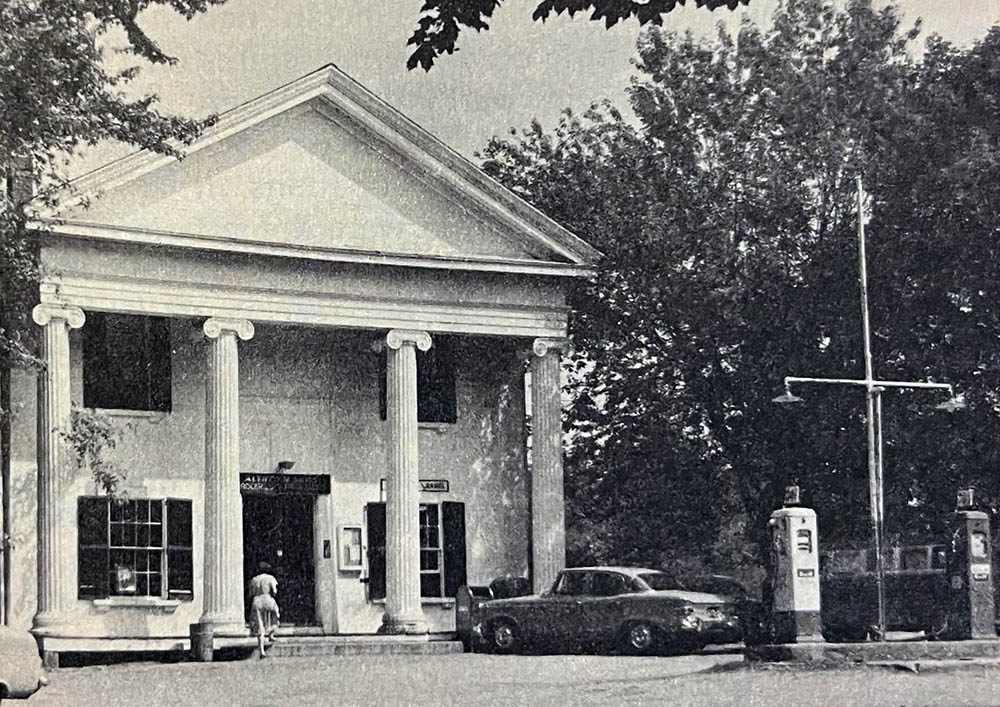
The Old Town Hall continued as post office and general store for much of the twentieth century (photo #4), operated by Elmer A. and Charles L. Rollins and finally by Alfred M. Davis. In the 1950s there were two gas pumps out front, the post office and post boxes inside on the right, glass candy counter and racks of cigars and bagged snacks with canned goods and necessities on shelves on the left, and a walk-in refrigerated room and meat counter with a hamburger grinder plus an ice cream/popsicle freezer in the back of the building. The second floor was at various times occupied by law and real estate offices and a small publisher. A watering trough outside was a stopover for horses, at least one of which was known to eat popsicles, spitting out the sticks. Needless to say, kids on foot or bicycle found the store a perfect place to spend their weekly allowance.

3. The building remained open while it was moved for the second time in about 1919.

As the Davis era came to an end, the building was acquired in 1962 by the nonprofit Old Town Hall Corporation. Residents still come by daily to pick up their mail, just as they did in the Chapin era. The Old Town Hall Exchange offers an eclectic collection of interesting items for sale, many on consignment, as well as antiques displayed in the basement.

4. The Old Town Hall in the 1960s, complete with gas pumps.

Around 1990, the original glass display cases so memorably used for candy and cigars in the Chapin/Davis era were moved to the library for use. A decade later, they were judged unsafe for the library and were on the verge of being thrown into a dumpster when they were rescued and moved back to the Old Town Hall, where they’re being reutilized by the Exchange in their old location.


“Lincoln’s History” is an occasional column by members of the Lincoln Historical Society.

Category: history 1 Comment

My Turn: Rally highlights opposition to Hanscom proposal

October 5, 2023

By Trish O’Hagan and Alex Chatfield

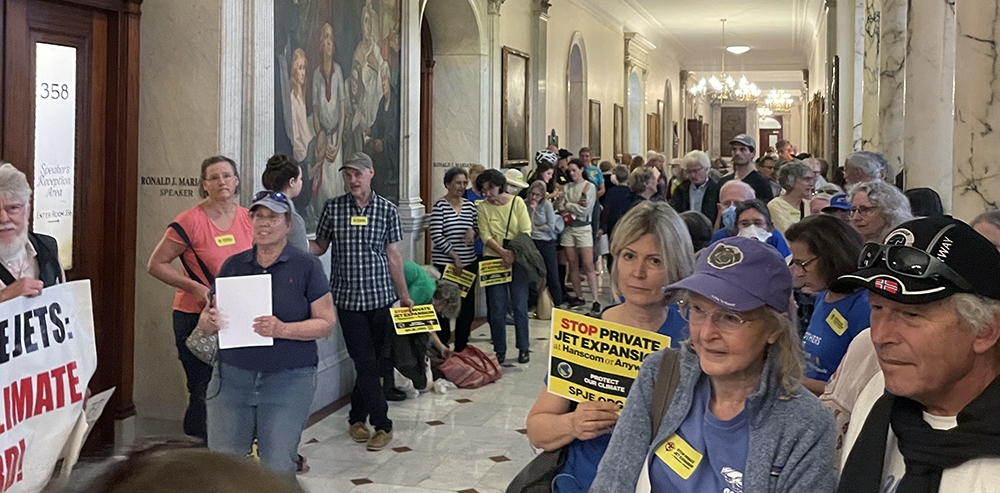
Lincolnites were out in force at a State House rally that one of us (Alex) MC’d on Monday, Oct. 2 and took part in presenting Gov. Maura Healey with a petition opposing private jet expansion at Hanscom Field or any airport.

Over 10,000 Massachusetts residents from around the state signed the petition expressing their opposition to the Massport plan to build 26 new private luxury hangars at Hanscom covering 500,000 square feet.

We reminded the crowd of 240 people that “we are here today supporting our governor, who has promised to be our climate protection champion. We are in here in solidarity with her administration, because we need her to show us that protecting the climate was not just a promise for her campaign, but an essential principal that will guide every decision she makes while she is in office.”

From the steps of the State House, speakers including State Sen. Mike Barrett (click here to read his remarks), Chuck Collins from the Institute for Policy Studies, Diane Proctor of the Concord League of Women Voters, and Chris Marchi of East Boston’s nonprofit advocacy group AIR, Inc., explained how Massport’s plans are a direct and immediate threat to Massachusetts’ efforts to combat climate change.

Perhaps the most compelling speaker was Lexington fifth-grader Kalea Foo, who also presented the printed petition to Gov. Healey’s staff. Speaking on behalf of the next generation, she reminded the adults that they need to do everything possible to preserve a safe climate and reduce our reliance on fossil fuels.

For people wondering “what’s next” in the process, there is a draft environmental impact report expected from the developers this fall, possibly in October. It will be reviewed by the administration, and there will be a public comment period. In the meantime, citizens can help by contacting the governor and urging her to use her all her power and authority to get Massport to cancel the plan.

For more news coverage on the rally, see this WGBH article. Background can be found in the Lincoln Squirrel (February 12 and February 5), the Bedford Citizen (numerous articles and opinion pieces), and this September 29 editorial in the Boston Globe, as well as the Stop Private Jet Expansion web site.

Want to help? Join the coalition, donate money, and show up to our Tuesday afternoon “stand-outs” at the Paul Revere Capture Site in the Minute Man Historic Park on Route 2A. We are there every Tuesday from 4–5 p.m. We have signs and banners, so just bring yourself!

rally
rally-inside2
rally-chatfield

“My Turn” is a forum for readers to offer their letters to the editor or views on any subject of interest to other Lincolnites. Submissions must be signed with the writer’s name and street address and sent via email to lincolnsquirrelnews@gmail.com. Items will be edited for punctuation, spelling, style, etc., and will be published at the discretion of the editor. Submissions containing personal attacks, errors of fact, or other inappropriate material will not be published.

Category: Hanscom Air Field, land use 2 Comments

My Turn: Stop private jet expansion

August 31, 2023

By Kati Winchell

As the wettest summer in nearly a century draws to a close with two hurricanes spinning in the Atlantic, there is an increased sense of urgency to achieve the Commonwealth’s 2050 net zero goals of reducing emission from 70 to 14 million tons of CO2. Yet, in the midst of this climate emergency, Massport is proposing to triple the number of hangars at Hanscom Civil Air Terminal for the exclusive use of private luxury jets — the most carbon-intensive form of travel per passenger. Just to be clear, this is not about military flights or any activities at the Air Force base, but rather about building nearly half a million square feet more hangar space for private jets.

If the proposed expansion goes forward, emissions from private jets at Hanscom are projected to grow by millions of tons, jeopardizing the state’s ability to attain its 2050 emission goals. For this reason, 39 local and statewide organizations have joined forces to educate the public about the threat that Massport’s expansion plans present to reducing our carbon footprint and to support the difficult decisions the governor will have to make to ensure that we meet our 2050 goals.

Sign the petition urging the governor to stop this private luxury jet expansion that so clearly runs contrary to Mass Climate Goals.  For more information or to sign up for updates, see www.stopprivatejetexpansion.org.

Kati Winchell of Lincoln is projects director for Save Our Heritage. 


“My Turn” is a forum for readers to offer their letters to the editor or views on any subject of interest to other Lincolnites. Submissions must be signed with the writer’s name and street address and sent via email to lincolnsquirrelnews@gmail.com. Items will be edited for punctuation, spelling, style, etc., and will be published at the discretion of the editor. Submissions containing personal attacks, errors of fact, or other inappropriate material will not be published.

Category: Hanscom Air Field, My Turn 2 Comments

Lincoln and others are working on waste reduction, but there’s a ways to go

June 21, 2023

Editor’s note: This is a follow-up piece to the “Where Does It All Go?” series published in the Lincoln Squirrel in August 2022. Links can be found at the bottom of this article.

By Alice Waugh

Lincoln is doing its part by recycling and composting diligently, but there’s always room for improvement to meet the state’s ambitious goals for reducing solid waste disposal — trash, recyclables, and everything in between.

The Massachusetts Department of Environmental Protection’s 2030 Solid Waste Master Plan released in 2021 calls for reducing disposal statewide by 30% (from 5.7 million tons in 2018 to 4 million tons in 2030) by 2030 and sets a long-term goal of achieving a 90 percent reduction in disposal to 570,000 tons by 2050. To this end, MassDEP has been banning more items from the trash and encouraging composting, while recycling sorting facilities are working on reducing contamination and educating consumers about what and what not to recycle.

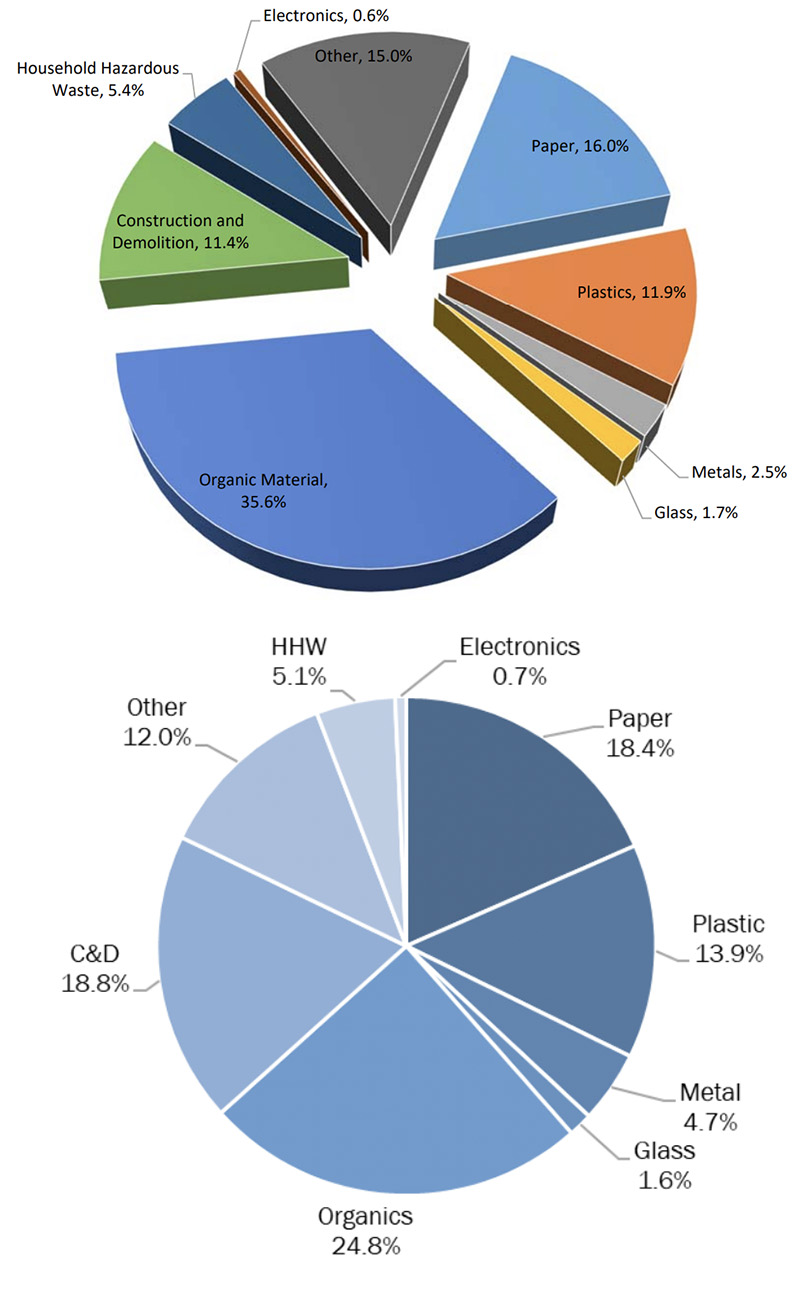
Residential waste by category that was processed by Wheelabrator/WIN Waste Innovations in North Andover in 2019 (top) and 2022.

Trash and what goes into it

There’s a long list of items that are not allowed to go into the trash, including construction and demolition materials (asphalt pavement, brick, concrete, clean gypsum wallboard and wood) as well as tires, large appliances, lead acid batteries, metal, yard waste, and cathode ray tubes in addition to recyclables. In November 2022, that list of banned materials was expanded to include mattresses, textiles, and commercial food from facilities and organizations generating more than one-half ton of those materials per week (down from the limit of one ton per week imposed in 2014)

The largest category of waste sent to municipal waste combustors (a.k.a. MWCs, incinerators, or waste-to-energy plants) is organic material — mostly food waste. However, the share of those organics in the waste stream for WIN Waste Innovations (formerly Wheelabrator) in North Andover, Lincoln’s trash handler, dropped sharply from 35.6% of the waste stream in 2019 to 24.8%, according to the report for 2022. This is at least in part due to the availability of grants through MassDEP’s Sustainable Materials Recovery Program that helps pay for compost bins and implement programs.

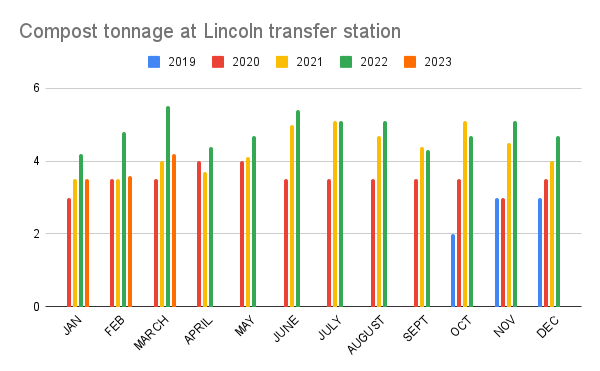
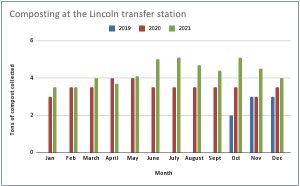
Under an agreement with Black Earth Compost, Lincoln began accepting compost at the transfer station in 2019 (the company also does curbside pickup and lists what is and isn’t compostable). The amounts dropped off each month rose consistently year over year until the first quarter of 2023, when the transfer station accepted 12 tons of compost — down from 14.5 tons in the first quarter of 2022, according to the Department of Public Works.

Source: Lincoln Department of Public Works

The state is also working to reduce food waste from small businesses and residents by fostering more development of community and drop-off composting programs as well as efficient models for curbside food waste collection.

Years ago, transfer stations in Lincoln and other towns used to take construction and demolition debris as bulky waste for incineration, but that material is no longer acceptable in the municipal waste stream. Some of it (along with recyclables) was still sneaking into the bulky waste container near the metals container at the transfer station, but since the container became accessible only with the help of a DPW employee, the amount of unacceptable materials has dropped, the DPW reported.

On the other hand, the percentage of construction and demolition debris collected by Waste Innovations in North Andover has increased from 11.4% to 18.8% of the materials total from 2019 to 2022 for reasons that are unclear. The Construction & Demolition Recycling Association and MassDEP provide information on managing debris, including where to dispose of it.

The state monitors the loads sent to MWCs can levy fines on towns that include too many unacceptable items. In the past year, four municipalities — Arlington, Boston, Natick, and Quincy — have been warned though not fined by MassDEP for having recyclable cardboard in their trash, according to MassDEP spokesman Ed Coletta. Cambridge (mattress/box springs) and Watertown (mattresses and tires) were also warned.

Burning vs. burying

Back in the day, most garbage was sent to a landfill or burned in open fires, both of which had (and still have) drawbacks. Like many densely populated parts of the country, Massachusetts began running out of space for landfills, which also released greenhouse gases such as methane into the atmosphere, as well as other pollutants into the ground and water. MassDEP has closed all unlined landfills and requires the remaining few to close when they reach capacity. Most of the state’s trash now goes to MWCs via transfer stations or private haulers. Today it has only 16 active landfills, and three of those accept only ash and other waste left over from MWC combustion.

Those facilities are about half as energy-efficient as modern natural gas power plants, with an electrical efficiency of approximately 24% vs. 50%, Coletta said. “The electrical efficiency of a MWC is lower primarily due to the fuel type (i.e., solid waste) that has less energy content (for example, less carbon and greater water content) than natural gas,” he explained. Like landfills, MWCs emit pollutants, although they are regulated by MassDEP and the federal government to ensure they do not “pose significant risks to public health or the environment,” though the agency notes that it’s not possible to completely eliminate emissions from combustion.

As alternatives to incineration for nonrecyclable plastic, gasification and pyrolysis (heating in the absence of oxygen to produce hydrocarbons to make more plastic or fuel oil) are being explored, but there are challenging costs and drawbacks. Pyrolysis still produces carbon dioxide and other atmospheric pollutants, and it is energy-intensive, sometimes requiring even more energy than it yields. The mixture of different types of plastic and contaminants being pyrolyzed is also a problem. 

“There’s too many types,” said Jen Dell, a chemical engineer, in a 2022 Chemical Engineering News article. “There are too many additives. You can’t recycle them all together, and separating them out defies the second law of thermodynamics. It is just impossible to reorder all these plastics once they’ve been put into a curbside bin.” Finally, some also point out that pyrolysis does nothing to reduce dependence on plastics, since it only produces more plastic.

For cities and towns today, “the question of whether landfills or municipal waste combustion facilities is a complicated question – each has its pros and cons. Our focus in our 2030 Solid Waste Master Plan is to reduce the amount of waste that is disposed overall, whether it is disposed of at an in-state landfill, in-state combustion facility, or out-of-state landfill,” Coletta said.

In a welcome twist that was unforeseen when polluting landfills were filling up and closing, some capped landfills such as Lincoln’s are now being turned over as sites for solar panels. Lincoln has hired a firm to install a solar installation atop the landfill across from the transfer station that could eventually generate enough electricity to power all town-owned buildings excluding the schools.

Recycling

As always, the best approach to reducing overall waste is a combination of the “five Rs”: Refuse, Reduce, Reuse, Recycle, and Rot. (“Refuse” means saying no to disposable single-use plastic, coffee cups, utensils, straws, shopping bags, food packaging, and anything else you could replace with a reusable or compostable option.) Even though it’s listed as #4, recycling — in particular, single-stream recycling — is probably the most familiar strategy.

As noted in the Lincoln Squirrel last year, Lincoln’s recycling rate (the proportion of recyclables diverted from the trash) since 2012 has averaged about 40%, which is slightly better than the statewide average of 33% but well below world-leading cities including San Francisco, Seattle, and Los Angeles in the U.S., which recycle or divert about 80 percent of their waste from landfills and MWCs.

Lincoln sends its single-stream recycling to Waste Management in Billerica for sorting and sale. A group of residents from the Green Energy Committee and Mothers Out Front visited the facility in February 2023 to learn how the process works and made this two-minute video. But they still had some unanswered questions, so the Lincoln Squirrel talked to Chris Lucarelle, Waste Management’s Area Director for Recycling Operations. Here are his replies:

Is it correct to say that anything stamped with #1, #2 or #5 is recyclable?

We prefer that we say “plastic bottles, jars, tubs and lids” rather than numbers.

Can other household items made of plastic be recycled along with cans, bottles, etc.? For example, plastic toys/chairs/buckets, reusable plastic kitchenware?

Not kitchenware, but we do separate items like buckets and crates that are bales and sold as a bulky rigid plastic grade.

What happens to nonrecyclable plastic? Can it be sold for pyrolysis or some other use, or does it all get sent to the incinerator? 

We are working on solutions for those miscellaneous plastics but we’re not quite there yet.

How big a problem is contamination of recyclable plastics with nonrecyclable types or other things?

Because we sort all of our plastics optically, we are able to make bales of just PET or HDPE [#1 and #2] without contaminating the batch. To keep plastics out of the paper when sorting, we are now automating our paper lines with optical sorters to extract any plastic that found its way into the stream. Sometimes it’s usable flattened containers that can be recovered and sometimes it’s film and pouches that ends up with the residue.

Do you expect to be able to accept black plastic as a recyclable material any time soon?

Some of our facilities have the technology today to recover black plastic, but not all facilities yet.

Aside from “tanglers” (plastic bags, wire, rope, hoses, etc.) that jam the machines, what do you often see in the recycling stream that should not be there?

Small camping propane tanks and lithium ion batteries, both of which are a fire hazard.

What about small metal household items other than cans such as old saucepans, metal pipes, tools, or other small hardware?

This type of scrap metal tends to jam in our equipment or risks injury to our workers. Scrap metal should not be placed in a curbside bin.

Are empty plastic medicine bottles considered trash?

Yes — plastics smaller than two inches in any dimension should not go in the recycling bin. This includes loose plastic bottle caps,  which tend to fall through the equipment at recycling processing facilities (put caps back on bottles before recycling).

I hear that small Fancy Feast-type cat food cans should not be part of single stream recycling – why?

They are often lined with plastic.

Is shredded paper OK?

Many of our MRFs [materials recovery facilities] accept shredded paper from commercial sources as an independent stream. When it is placed in the single-stream bins, it ends up contaminating the glass.

(Belinda Gingrich, who was part of the tour by Lincolnites, also noted that shredded paper and small scraps “fly about like confetti. Any paper smaller than two inches on a side will most likely get lost in the system and end up in the trash containers that reside under the conveyor belts.”)


More information about recycling:
  • Recyclopedia (created by Recycle Smart MA, a program funded by MassDEP), where you can look up almost anything to find out whether you can put it in your recycling bin. For items that aren’t allowed, the site also suggests other means of disposal, such as Beyond the Bin.
  • Recycling 101 from Waste Management, which sorts the recyclables from Lincoln and other area towns
  • The Lincoln transfer station
  • The “Where does it all go” series in the Lincoln Squirrel from 2022:
    • Part 1: Single-stream recycling
    • Part 2: Trash
    • Part 3: Recycling beyond single-stream
    • Part 4: Beyond the transfer station
    • Part 5: The 5 R’s, and some numbers

Category: conservation Leave a Comment

Town moves forward with firm to build solar installation at landfill

April 19, 2023

After years of stops and starts, solar panels may finally start appearing on the capped town landfill in late 2024. 

The town recently selected HESP Solar of Montvale, N.J., to build a solar voltaic facility that will provide 1 MW of electricity, which is about what’s needed to power town-owned buildings excluding the schools. The electricity will go directly to the electrical grid and the town will receive income from a power purchase agreement (PPA).

Although the firm is not based in Massachusetts, during the bid process they brought in a Massachusetts attorney to better understand the Commonwealth’s regulatory and incentive processes, an electrical engineering firm that has built solar projects atop landfills in the past, and a geotechnical firm to learn more about the landfill, said consultant Beth Greenblatt at the March 20 Select Board meeting. Greenblatt works for Beacon Integrated Solutions, which was also involved in creating the PPA for the Lincoln School’s solar installation.

“They will work to accommodate the town in all ways possible. I think they’ll be a very good partner for the town,” she said.

Lincoln won’t have to pay anything and will actually see three revenue streams from the deal. In addition to income from the PPA in the form of electricity savings — estimated at $170,000 to $200,000 per year — HESP Solar will make lease payments for use of the land and PILOT (payments in lieu of taxes) for their personal property on the site.

“Financially it’s an attractive proposition for the town,” observed Town Administrator Tim Higgins.

The project was slowed by several factors including the pandemic and lengthy negotiations with Minute Man National Historical Park. The park owns the right of way on either side of Route 2A, so the town needed their approval to install power lines from the landfill out to the road. Before the facility can go on line, the interconnection process will need multiple approvals including Eversource and MassDEP, which will permit reuse of the landfill. Construction contracts could be signed in about a year.

Category: conservation, land use 2 Comments

Hanscom runway repaving will affect nearby Lincoln residents

March 27, 2023

Starting in June, part of a Hanscom Field runway will be repaved, causing disruptions for Virginia Road residents. 

The routine 20-year repaving of the runway that runs from southwest to northeast is not related to a recent proposal to add hangars and reconfigure a taxiway at Hanscom Field.

Massport officials said at a recent Hanscom Field Advisory Commission meeting that paving trucks will be routed along Virginia Road in Lincoln to Hanscom Drive to Route 2A and Route 128, according to HFAC member Chris Eliot and a March 24 article in the Bedford Citizen. During a 37-day period, the paving trucks will operate for 20 days (daytime Monday through Friday), with about 100 truckloads (50 round trips) for each of those days.

There will also be some changes to flight patterns resulting from the monthlong closure of the runway, so some residents will hear more flights and some will hear less during this period. 

Residents of the nearby Battle Road Farm condo development, which is accessed from Old Bedford Road (which runs between Virginia Road and Hanscom Drive) are also worried about dust and construction debris that may be shed by trucks leaving the construction area.

The northern segment of the runway will be repaved in 2024, but the truck traffic for that work will be routed through Bedford. 

The 2023 project will also include restoration of more than nine acres of grass along the sides of the runway, which was originally sized for larger military aircraft.

Category: Hanscom Air Field, land use 1 Comment

Area residents and officials protest Hanscom expansion proposal

February 12, 2023

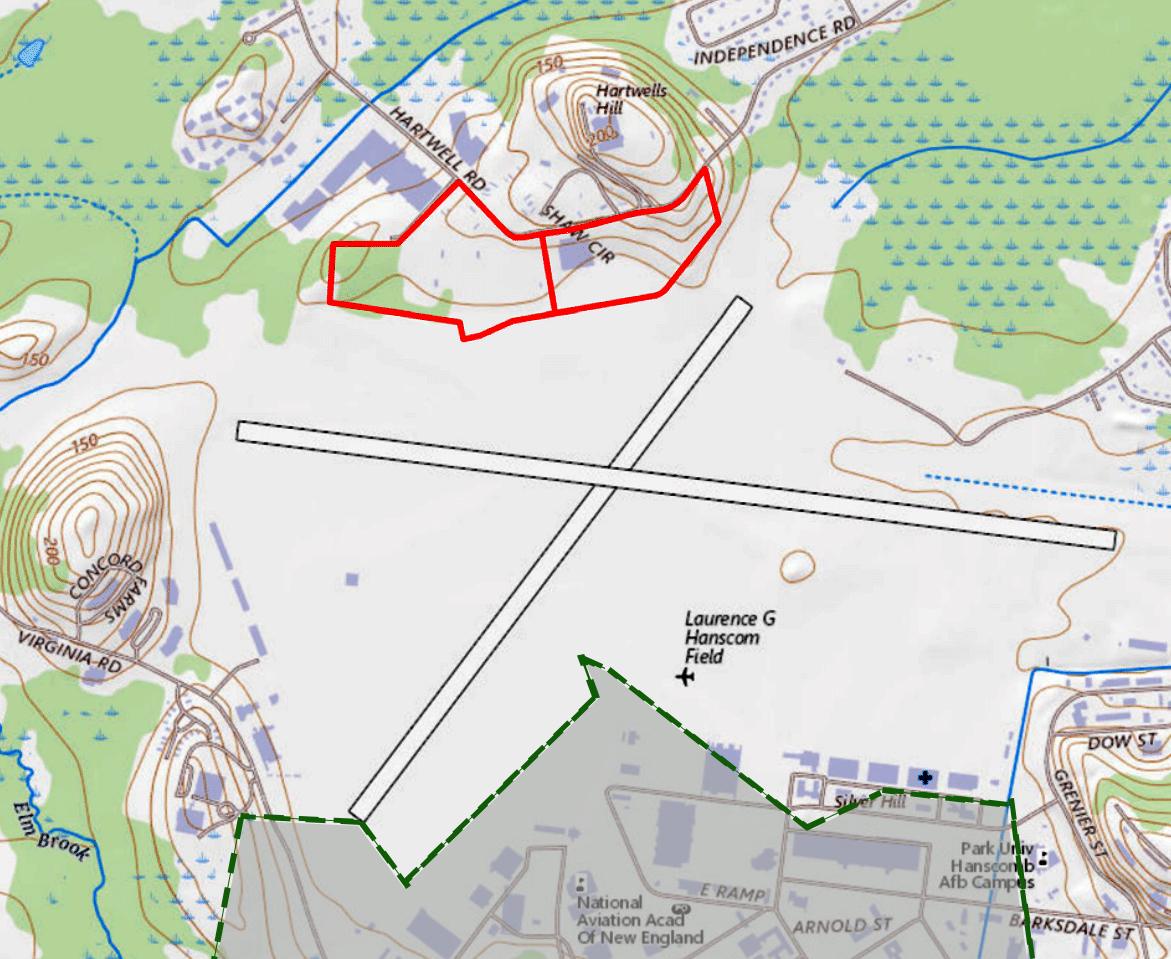
The Hanscom Field expansion area is outlined in red. Lincoln’s approximate town border is indicated by the green dashed line.

Local officials and organizations are quickly rallying to fight a proposal that would add about 408,000 square feet of new hangar space and reconfigure a taxiway to accommodate larger aircraft at Hanscom Field.

At a February 6 public forum, the possibility of a “fuel farm” was also mentioned, according to the Bedford Citizen. The online meeting, which drew dozens of residents from area towns hosted by the office of the Massachusetts Environmental Policy Act (MEPA), took place just eight days before the public comment period closes.  

The Lincoln Select Board held a special meeting on February 10 to discuss a letter in opposition to the project. Mothers Out Front and the Hanscom Field Advisory Committee (HFAC) have also written letters against the idea, and other Lincoln groups such as the Green Energy Committee and the Planning Board are also expected to weigh in. 

State Sen. Mike Barrett, a key climate activist in the state legislature whose district includes the four Hanscom towns, also spoke out at the MEPA forum, the Bedford Citizen article said. “It is striking that in the middle of our attempt as a state to deal with an existential crisis, Massport is intent on building its private jet business,” he said.

“There is a climate change emergency and every effort must be made to phase out and not expand use of fossil fuels,” the HFAC noted in a letter to MEPA.

Mothers Out Front claimed that paving and construction will lead to more stormwater runoff, fewer carbon-storing plants, and stress to wildlife, wrote. “We believe [the proposal] represents an example of profits over people,” they wrote.

The project’s proponents say that additional hangar space will reduce the need for “ferry flights” to and from full Hanscom hangars to other storage areas, but the idea that “adding 90 football fields worth of space would reduce emissions from aircraft struck me as hard to believe,” said Select Board member Jim Hutchinson at Friday’s meeting.

The draft letter, which will go out early this week, listed 10 specific requests and areas of concern about the project. It asked for more information on current and projected traffic of both aircraft and ground vehicles at Hanscom Field, data on ferry flight frequency, destinations, and emissions; the flight paths, maximum size, and noise profiles of aircraft that an expanded airfield could accommodate; and details on the fuel farm, including the amount of fuel to be stored, the size and number of vehicles that would transport it, and how potential fuel spills will be handled.

The pandemic put a dent in many businesses, but jet operations at Hanscom are actually up by 19% since 2019, Massport noted at an October 20, 2022 meeting (total operations are down by 6% as recreational and pilot training operations continue to decline).

In one sign of the strength of the private jet business at Hanscom, Magellan Jets recently opened a dedicated passenger area in one of the airfield’s buildings. Business travel dropped during Covid-19 but private flights for leisure travel mostly made up for it; the pandemic “really opened everyone’s eyes to what’s available domestically” for private travel, said Anthony Tivnan, president of Magellan, whose fees start at $6,900 per hour for use of one of its eight-passenger planes.

“This is not about military flights that are defending our country, or commercial aviation — this is about private jets getting people to where they want to go,” Select Board member Jennifer Glass said.

“I feel like bigger things were planned that was being addressed at that listening session,” resident Miriam Stason said at the elect board meeting. Hutchinson agreed, saying, “Massport doesn’t usually make these plans without a bigger picture in mind.”

Another worry: larger and more frequent flights may involve planes taking off and landing at Hanscom at night. The fine for doing so is just $400, and it’s not legally possible to increase that amount.

Officials also noted that Hanscom expansion will most directly affect the environmental justice community in north Lincoln, which includes the Battle Road Farm development, where 48 of 120 units are designated as affordable housing.

Massport tried to expand Hanscom back in the mid-2000s, but cooperation among the four towns helped defeat that effort, said Sara Mattes, who was a Board of Selectmen member at the time. “We have to look at what worked and what didn’t work” from that time, she said. “This is just round one of a long trench warfare.”

Category: Hanscom Air Field, land use Leave a Comment

The Storrows built New England’s first bomb shelter in Lincoln

October 30, 2022

By Sara Mattes

“Did you know…?” that Lincoln had the first bomb shelter in New England and possibly the first in the United States?

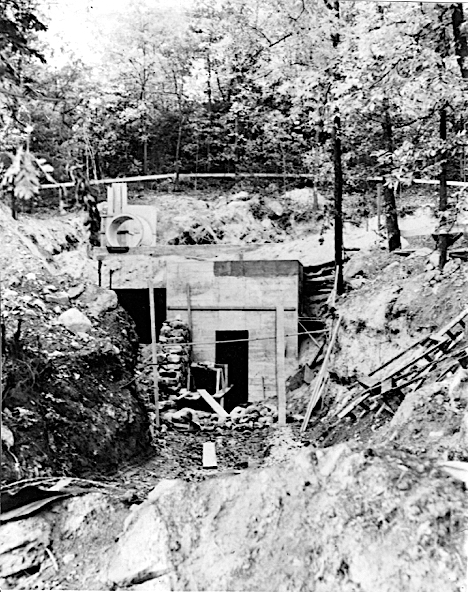
The Storrows’ bomb shelter was so newsworthy in 1940 that the Wide World photo service circulated this photo nationally. It even appeared in the Cleveland Plain Dealer.

The bomb shelter under construction in 1940 on the Lincoln estate of James and Helen Storrow (now the Carroll School). The entrance in the foreground is still visible from Baker Bridge Road.

The puzzle is: Why did the Storrows think they needed a bomb shelter? Granted, Europe had been at war for over a year, and the United States had started drafting young men into the military. But the U.S. was not yet at war, and the attack on Pearl Harbor was more than a year away. Did Helen and James Storrow really think that Hitler would send bombers across the Atlantic just to attack their home in Lincoln? Tell us what you know about the Storrows’ bomb shelter and help us fill out the story.

Are you curious about other people or places in Lincoln’s history?  Tell us your question, and we will try to respond with another “Did You Know…?” Send your suggestions to president@lincolnhistoricalsociety.org.


“Lincoln’s History” is an occasional column by members of the Lincoln Historical Society.

Category: history 2 Comments

“Where does it all go?” Part 3: Recycling beyond single-stream

August 7, 2022

By Alice Waugh

Previous articles in this series looked at what happens to Lincoln’s trash and single-stream recycling. The DPW recently published a guide that lists everything accepted at the transfer station and where residents should put things (see Section 6 in the regulations). But what then happens to all that stuff?


Also in this series:

  • Part 5: The 5 R’s, and some numbers
  • Part 4: Recycling beyond the transfer station
  • Part 2: Trash
  • Part 1: Single-stream recycling

Compost

DPW officials have been pleasantly surprised at the amount of compostables they’ve been collecting at the transfer station, saving tons of material from being incinerated along with the town’s trash.

Black Earth Compost began collecting compostables at the transfer station in October 2019. Since the program began with four barrels (two more were added in early 2021), residents have dropped off an average of 3.76 tons per month. The company turns what it collects into compost and sells back to the public, as well as to area farms (including Codman Community Farms and The Food Project) at a reduced rate.

(Source: Lincoln Department of Public Works)

What can you compost? Black Earth has a list here. It’s not just food scraps (including meat and dairy items) — it’s also napkins and paper towels, wine corks, coffee grounds and filters, toothpicks, popsicle sticks, compostable pizza boxes, and even pet waste and bedding from any animals except dogs and cats. Dishes, utensils, etc. that are specifically labeled as “home-compostable” are also accepted.

Residents may also sign up for curbside pickup of compostables for $15.99 a month (plus purchase of an animal-proof 13-gallon bin for $38 or a 4-gallon bin for $16). The starter kit includes compostable liners for a small countertop bin and the curbside bin. For those who have outdoor space for home composting, the DPW sells backyard containers at its Lewis Street headquarters for $25 and countertop containers for $10 (click here to order). Massachusetts residents may no longer throw away clothing and textiles with their trash starting on November 1. Fortunately, the transfer station has several receptacles for this stuff.

Textiles

Bay State Textiles, a for-profit company that has a bin at the transfer station and at the Lincoln School, collects clean and dry clothing and textiles in any condition including shoes, purses, linens and towels, bedding, etc. Every American throws out about 81 pounds of post-consumer textiles each year, but only about 15% of the total is reclaimed with the other 85% going into the municipal solid waste (trash), according to Paul Curry, the company’s president.

What happens to the stuff depends on what category it falls into: reusable, repurposable, or recyclable. Reusable clothing is sold to firms in developing countries that sell or give away the items to local residents. One of Bay State’s customers in the Dominican Republic employees several hundred people to sort and categorize the items by condition and quality as they’re prepared for sale, Curry said.

Repurposed items come from textiles that are torn up, made into wipes, and sold to factories and service industries all over the world, where they’re used for cleaning equipment, staining furniture, cleaning cars, etc. Some items are also targeted for fiber conversion — they’re shredded and recycled for use in carpet padding, insulation, furniture stuffing, among other things. Techniques and markets for turning cotton-rich and polyester-rich textiles into new fibers are also advancing. Only about 4-5% of the materials it collects can’t be used for anything, Curry said.

The nonprofit American Red Cross picks up clothing from one of the bins and sells it through a vendor, with a portion of the proceeds benefiting its Disaster Relief Fund. Donors are eligible for tax deductions. 

Groups that accept new or gently used clothing and distribute items to people in need at little or no cost include:

  • The St. Vincent DePaul Society
  • Cradles to Crayons (newborn to age 12)
  • Circle of Hope (Needham), which distributes items free of charge to 25 area shelters and low-income programs in Boston
  • Solutions at Work Cambridge (clothing for children and homeless people a the Green Street Shelter, and business attire for job seekers)
  • ThreadEd — a Newton charity that provides donated professional clothes to low-income college students
  • thredUP — they mail you a free Donation Clean Out Kit with a pre-paid shipping label, and you get a tax receipt for $5 per bag.

More information:

  • Textile recovery (MassDEP)
  • FAQs about textile recycling (Secondary Materials and Recycled Textiles Association)

Books

The transfer station has a mini-swap shed for books and other media, as well as a bin where residents can drop books off for resale to benefit the Friends of the Lincoln Library (FOLL). Before the advent of Covid-19, the FOLL accepted donations in the Bemis Hall foyer and sold them at monthly book sales. Nowadays the materials are picked up by the Bay State Book Company, which sells them online and returns a portion of the proceeds to FOLL. There are also FOLL bins in the Donelan’s parking lot, Tracey’s Service Station (at the intersection of Bedford Road and Route 2, and Lincoln Gas and Auto Service at 170 South Great Rd.

The book shed is a place where residents can leave and also take home used books, puzzles and similar items. Volunteers take items that have hung around too long to More Than Words, a Waltham program that trains and employs at-risk youth in its $4 million book-selling business.

Mattresses and box springs

These may not be put in the regular trash after November 1, but there’s an area at the transfer staton to leave them, where they’re picked up by Raw Material Recovery. Massachusetts residents and businesses discard about 600,000 mattresses and box springs annually — but once disassembled, more than 75 percent of mattress components can be recycled, according to the Massachusetts DEP.

Electronics

Items you can leave in the electronics area include computers, monitors, printers, VCRs, stereo equipment, refrigerators, microwaves, etc. — “basically anything with a cord,” said Susan Donaldson, the DPW’s office manager. They are picked up by East Coast Electronics Recycling, which declined to comment on what it does with the materials it receives.

Batteries, fluorescent bulbs, deposit bottles

The old swap shed is the place to drop off these items.

Rechargeable lithium batteries and fluorescent lightbulbs (rod-shape and U-shaped) are processed by Veolia to remove harmful metals and chemicals. Ordinary alkaline batteries and button batteries no longer contain these substances and can be thrown into the regular trash. Incandescent lightbulbs are also fine to put in the trash. Car batteries should be taken to a service station for disposal.

Waverley Redemption Center in Waltham takes deposit bottles and pays the town a portion of the 5-cent deposit on each bottle, which goes into the DPW’s recycling budget. 

Scrap metal

Schnitzer Steel in Everett picks up metals bin near the transfer station entrance. Items accepted in that bin include washers, dryers, metal pipes, fencing, cookware, baseball bats, outdoor grills, metal sinks, outdoor furniture, etc. (here’s a more detailed list of materials they buy from scrap dealers and contractors).

Schnitzer shreds the items into fist-sized pieces and sorts it with magnets to separate ferrous and nonferrous metals (steel vs. copper, aluminum, nickel, etc.), explained Eric Potashner, the company’s chief public affairs and communications officer. Most of the ferrous material from New England is shipped to steel mills overseas, where it’s smelted for making into new steel products such as rebar, sheet metal and car parts. The nonferrous metals are sent to another facility in Georgia for further processing to remove nonmetal components and then sold to domestic manufacturers to make into new products. Copper, a highly conductive metal, is much in demand these days since it’s a key component of electric vehicles.

(Editor’s note: this story was updated on August 8.)

Category: conservation 2 Comments

  • « Go to Previous Page
  • Page 1
  • Interim pages omitted …
  • Page 70
  • Page 71
  • Page 72
  • Page 73
  • Page 74
  • Go to Next Page »

Primary Sidebar

Recent Posts

  • More information — and questions — about strategies for library HVAC September 30, 2026
  • My Turn: Support teacher grant program at L-S September 29, 2026
  • Public safety log for Sept. 10–25, 2026 September 28, 2026
  • News acorns September 27, 2026
  • Property sales in August 2026 September 24, 2026

Squirrel Archives