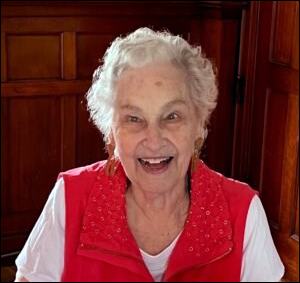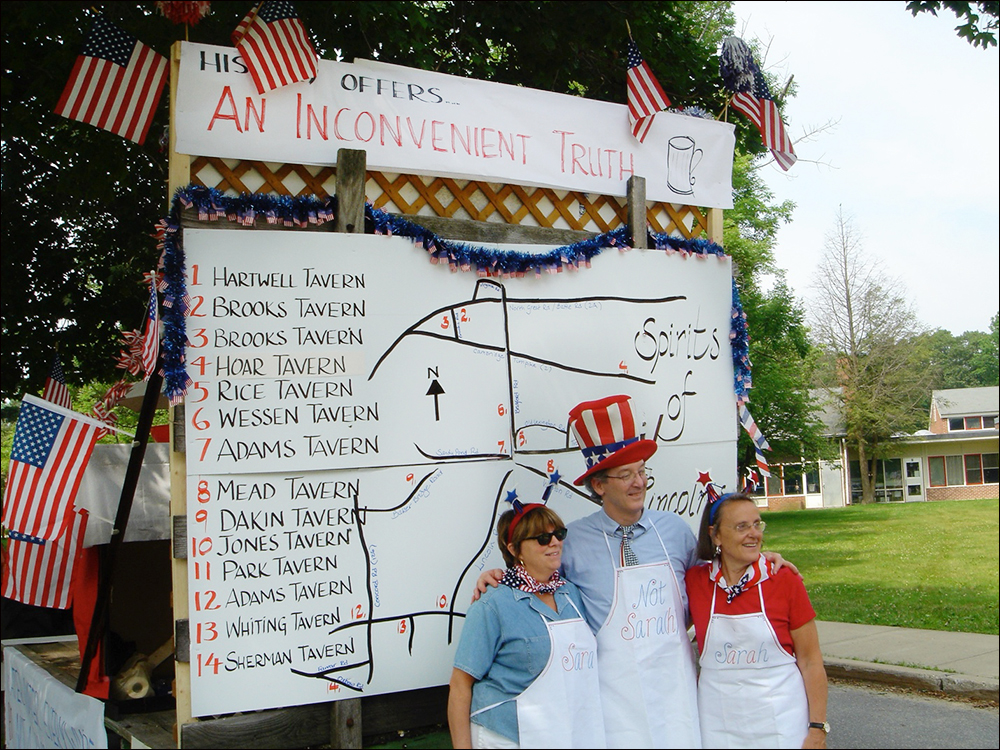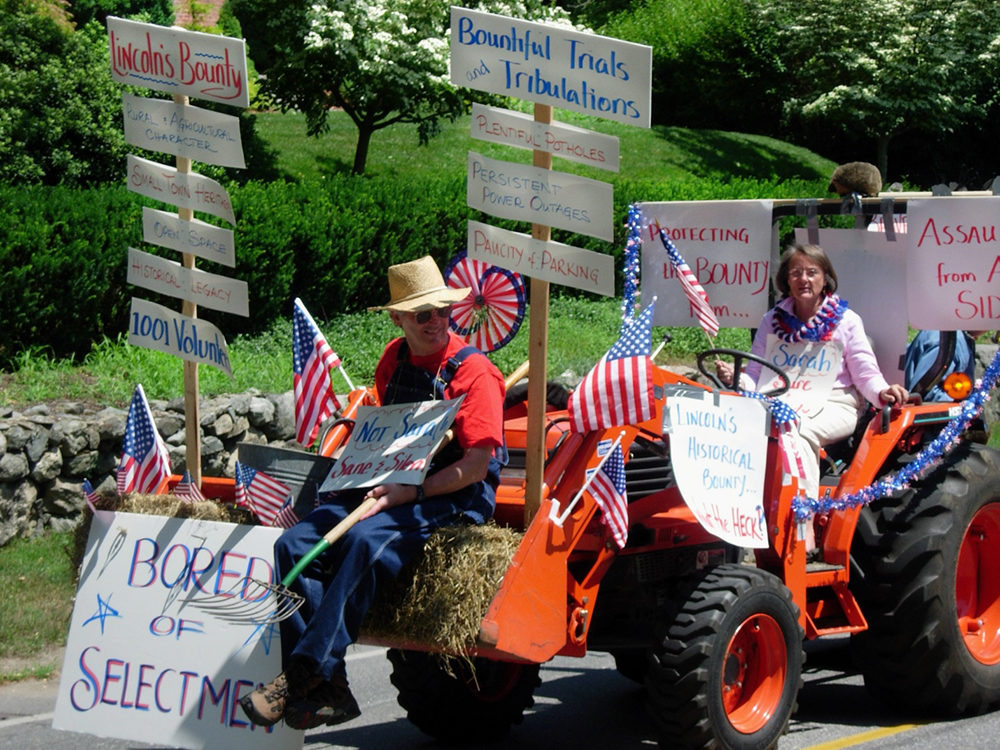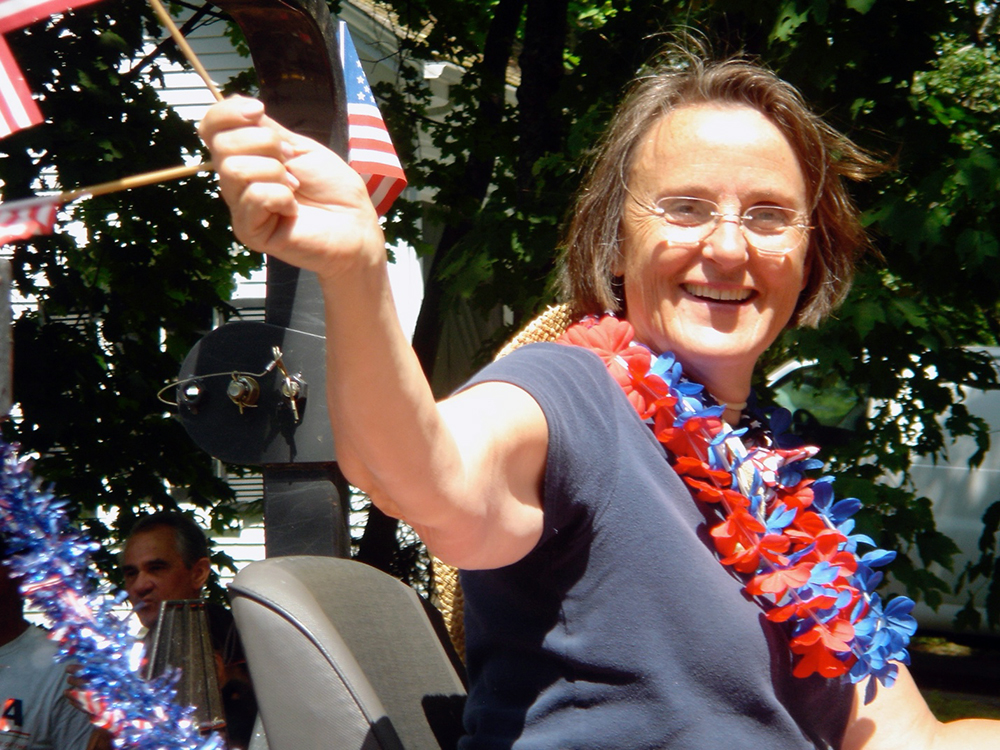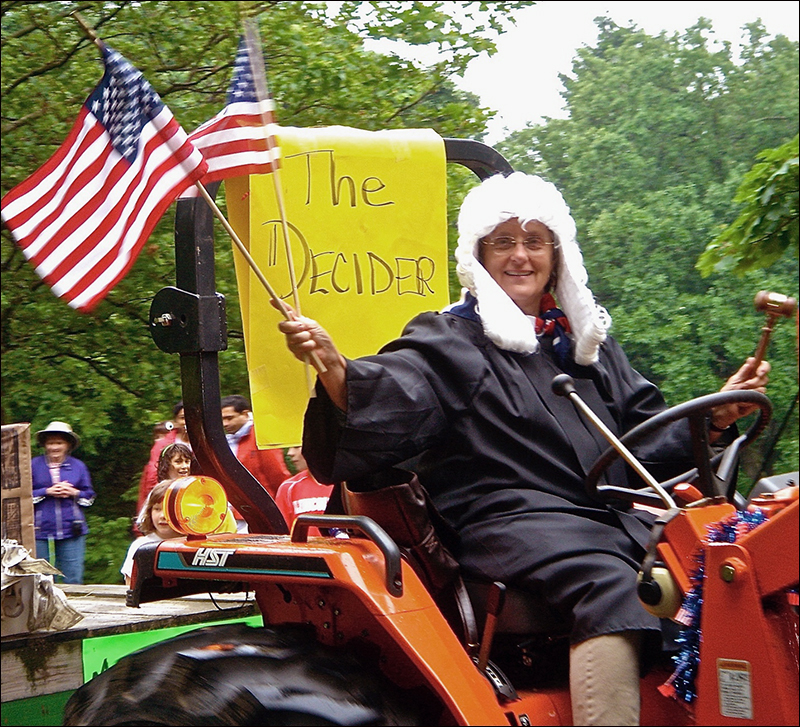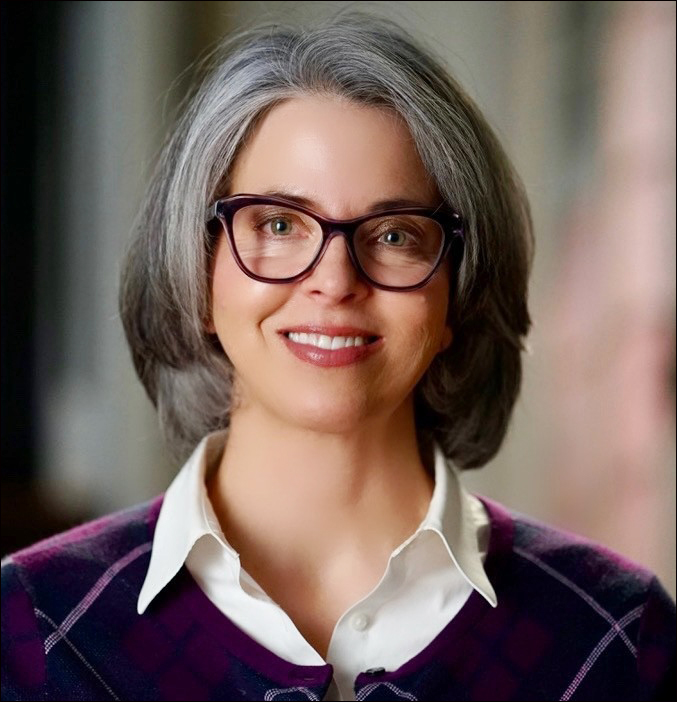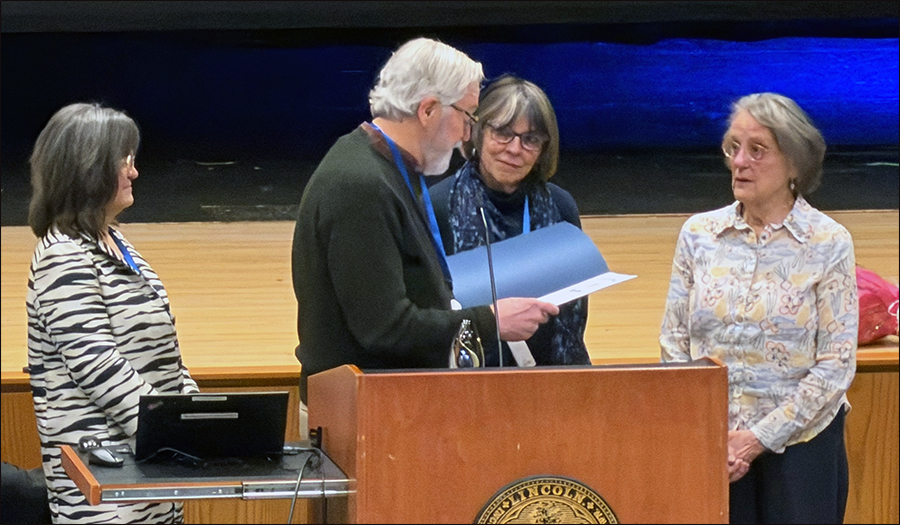
Former Selectman Gary Taylor reads the Bright Light Award citation to Sarah Cannon Holden (right) as fellow former Selectman Sara Mattes (center) and current Select Board member Jennifer Glass (left) look on. (Click image to enlarge)
Lincoln residents gathered on March 28 for an Annual Town Meeting that included both a reflection on decades of civic service and a forward-looking debate on how to preserve the town’s character in a changing world.
Bright Light Award
The highlight of the morning was the presentation of the Bright Light Award to Town Moderator Sarah Cannon Holden, who was presiding over her final Town Meeting after 15 years in the role. Select Board member Jennifer Glass delivered an emotional tribute, noting Holden’s 36 years of elected and appointed service that included stints on the Finance Committee, School Committee, and Select Board. Before the award was presented, a slide show displayed some of Holden’s Lincoln history as well as short video tributes to “Rahrah” from her grandchildren and others.
Holden, who is an attorney and professional mediator, “mentored countless fellow volunteers and taught the next generation to find their voice and positively impact the community,” Glass said. Quoting Holden about a contentious meeting in the past, she added, “It was fun, it was inspiring, it was messy at times, it was democracy.”
In her 36-year career as a Lincoln volunteer, “I learned about different perspectives on issues and human resistance to change,” Holden said. “The greatest gift is the unique opportunity when serving as moderator and on other boards is to learn from people” of all types and from everywhere in town, she said. “It is what we celebrate this year [America’s 250th anniversary], it is what we must protect vigilantly… [our duty is] to be informed, to volunteer, to be at Town Meeting, and to vote.”
Holden’s two former Selectmen, Sara Mattes and Gary Taylor, helped present the award, with Mattes (who recently published an appreciation of Holden in the Lincoln Squirrel and on LincolnTalk) noting that the trio were known then as “Sara, Sarah, and Not-Sarah.” Holden received a standing ovation and a citation from the President of the Massachusetts Senate for her service.
Article 32 cast a look farther back in Lincoln history in asking for a town vote on the same question that was put before voters in 1776: whether or not to support the forthcoming Declaration of Independence by the Continental Congress. Two Lincoln historians, Rick Wiggin and Don Hafner, read speeches that were given in town on May 20, 1776 for and against declaring independence.
“Imagine the choice the colonists faced: king or no king,” Holden said before Wiggin presented the pro-independence argument with some lines that carried new relevance in 2026.
“America today is at a crossroad” in deciding whether “a king who is greatest enemy of this country shall continue to tell us, ‘there shall be no laws but such as I like’,” Wiggin said. Ironically, Lincoln was one of only two towns in Massachusetts that voted against the measure in 1776.
Modernizing Town Meeting
Kenny Mitchell, chair of the Town Meeting Study Committee, presented the group’s report with recommendations on how to improve the efficiency and accessibility of the centuries-old tradition. Kenny Mitchell noted that while the current process works well for typical meetings, “high-interest items” can double or triple attendance, straining the system.
The committee outlined five key themes for improvement:
- Preserving traditions
- Reducing meeting length
- Ensuring fair and balanced motions
- Improving access and voting technology
- Reducing confusion and discomfort
Several of the recommendations have or will soon implemented, such as clickers for instant vote-counting, scheduling high-interest items first, and a two-minute time limits for comments from the floor with a countdown clock shown on screen. Other ideas that were popular among earlier survey respondents but would require town bylaw amendments are scheduling specific voting times for high-interest issues and remote voting, which would also require approval from the state legislature. Lincoln officials will monitor the progress of a home rule petition by Wayland that asks the legislature to allow this, “but I think this is a ways off,” Mitchell said.
The clickers, which officially debuted a year ago, were a hit. In a brief post-meeting poll (also done by clicker), 85% of participants rated the three-hour meeting length as “just right.”
Budget and capital projects
Finance Committee Chair Paul Blanchfield presented a $52.5 million budget for FY27 (pages 43-48 in the Financial Section & Warrant) representing a 1.3% decrease from this year. The budget includes the use of $2.3 million in excess reserves to provide tax relief, resulting in a flat tax bill for the median household. Lincoln’s average tax bill has grown by about 5% in recent years, which is higher than the inflation rate but somewhat lower than the increases in neighboring towns, he said.
Key capital approvals included:
- $1.28 million for Community Preservation Act projects (pages 3-7 in the list of motions)
- $822,916 in Capital Planning Committee projects plus $1.05 million for a new fire engine to replace a 1999 model (pages 8-12 in the list of motions)
- $457,350 for the Water Department, including the third year of a smart meter rollout, a generator for the Tower Road well, and building repairs.
As expected, votes to fund the library HVAC project were passed over after independent energy advisors found that previous tax credit assumptions were “overly optimistic” by roughly $500,000. An environmentally friendly ground-source heat pump system was expected to cost the town about $2.5 million after rebates and incentives, which will still be available alter this year, Blanchfield said. Meanwhile, the town is getting a second round of estimates for both heat pump and conventional boiler options
“It does not delay the need for replacement, but allows us to make a better-informed decision,” he said. A refined funding plan is expected for a Special Town Meeting in the fall.
Dark Skies
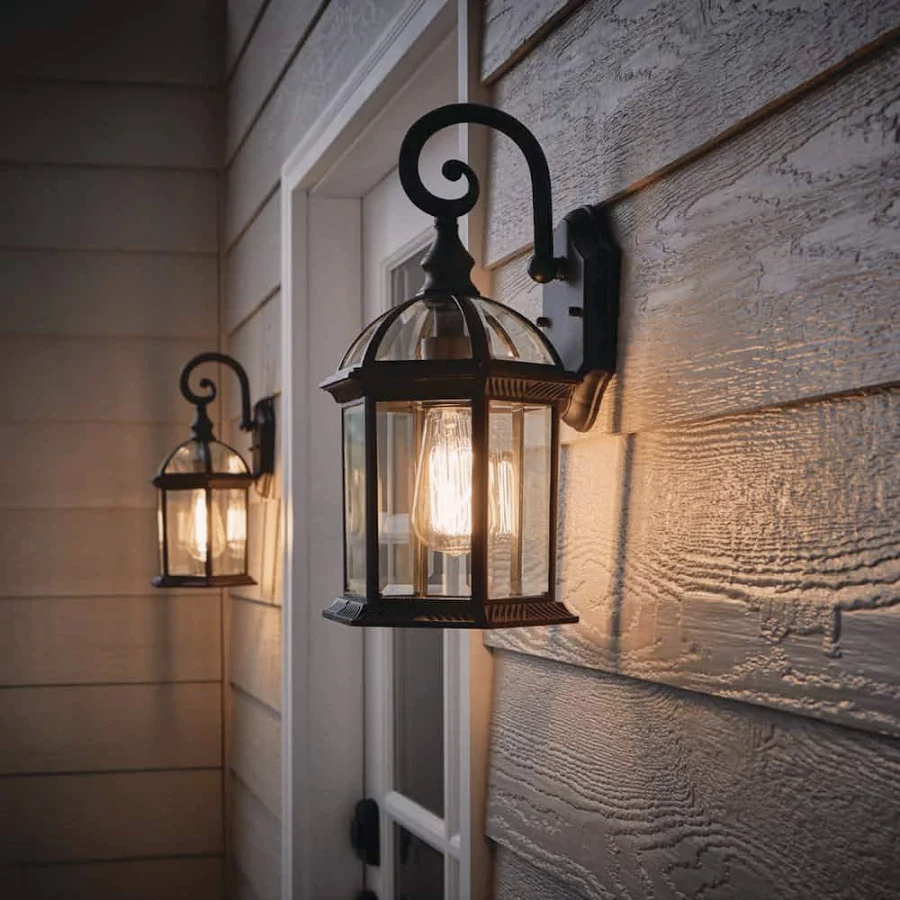
The most robust debate centered on Article 35, an amendment to the town’s “dark skies” zoning bylaw. Sherry Haydock of the Planing Board’s Dark Skies subcommittee argued that the changes are essential to minimize the effects of light pollution on birds, fireflies and other wildlife, particularly harms to circadian rhythms and bird migration, which mostly happens at night, she said. The Planning Board voted last week 3-1 to endorse the amendment.
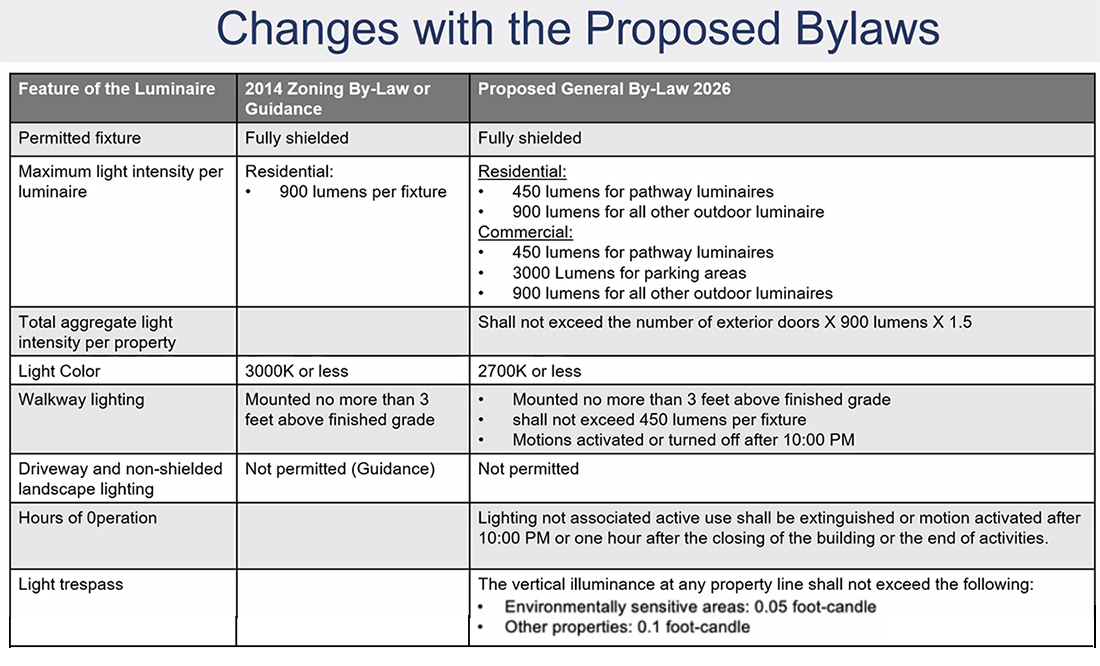
The new regulations will only apply to properties with new construction, substantial renovations, or change of use, as well as any newly installed fixtures on existing buildings. They require:
- Shielding to direct all light toward the ground
- A maximum light color temperature of 2700K (down from the current 3000K)
- Limits on brightness (900 lumens)
- New rules on hours of operation for lighting not associated with active use
There is a waiver application process, Haydock said in response to a question from resident Karen Seo, who keeps sheep and uses nighttime lighting to keep away coyotes. Resident Andrew Pang also said the new rules were “overly burdensome” because fixtures that comply with Lincoln’s new rules (some of which are more stringent than guidelines from DarkSky) were difficult to find in the course of a recent renovation at his home.
“The amount of time and energy that we spent was extraordinary and onerous,” Pang said, adding that “the market right now does not support” easy identification of Lincoln-compliant fixtures. However, resident Don Halsted, who also did a recent renovation, urged people to use Google Gemini in the search. “Have patience, use AI, and get fixtures with screw-in lightbulbs,” he said.
Another thorny issue is Christmas lights. “There are people who like to celebrate holidays for an extended period of time,” resident Jennifer Morris remarked to knowing laughter from the audience.
“Would one of the committee members like to talk to my neighbor so as not to cause discord? I hope my neighbor isn’t here today,” quipped another resident.
The Planning Board sought legal advice about whether or how to limit holiday lights or specify the length of time they can be displayed, but these issues could be construed as limiting religious expression, “and town counsel said, ‘Don’t touch it, it’s a hot potato’,” board member Susan Hall Mygatt said.
Resident Diana Beaudoin urged passage of the “deeply important” amendment. “I think this bylaw, more than anything I’ve seen in my 35 years in Lincoln, expresses the real values of Lincoln and why so many people choose to move here,” she said. The article passed with a 195-48 vote, clearing the required two-thirds majority hurdle.
Voters also overwhelmingly supported a citizens’ petition to file a home rule petition to ban anticoagulant rodenticides. Residents and local veterinarians spoke passionately about the secondary poisoning of owls, hawks, and foxes that eat poisoned rodents.