• Skip to primary navigation
  • Skip to main content
  • Skip to primary sidebar
  • Skip to secondary sidebar

The Lincoln Squirrel – News, features and photos from Lincoln, Mass.

  • Home
  • About/Contact
  • Advertise
  • Legal Notices
    • Submitting legal notices
  • Lincoln Resources
    • Coming Up in Lincoln
    • Municipal Calendar
    • Lincoln Links
  • Merchandise
  • Subscriptions
    • My Account
    • Log In
    • Log Out
  • Lincoln Review
    • About the Lincoln Review
    • Issues
    • Submit your work

government

Letter to the editor: 8th-graders ask for Town Meeting support

March 22, 2017

letter

To the editor:

Make way! Here comes the renowned eighth-grade Warrant Article Group! What, you ask? The Warrant Article Group is a group of eighth-graders who had a dream—a dream to learn more about local government. Led by the town clerk and the town moderator, we have been able to fulfill this dream. Now we have to get to Town Meeting.

This year we are aiming to add a set of benches to the school athletic fields. The need had come to our attention when our dear friend Maya informed us that in the Codman field, due to lack of space, people are often forced to put important belongings on the often muddy ground. In addition, currently we only have one set of benches and they are on the Brooks field.  Just recently we added more playing area at the Codman field, which means a higher demand for benches. The 15-foot weatherproof and portable benches we propose have shelves on top to provide extra space for belongings.

The Warrant Article Group has gained support from the School Committee, the Board of Selectmen, the Recreation Committee, and the Finance Committee. And we are hoping for support from you. See you at Town Meeting on March 25.

Sincerely,

Achla Gandhi (8th-grader, Lincoln School)
21 Juniper Ridge Rd.


Letters to the editor must be signed with the writer’s name and street address and sent via email to lincolnsquirrelnews@gmail.com. Letters will be edited for punctuation, spelling, style, etc., and will be published at the discretion of the editor. Letters containing personal attacks, errors of fact or other inappropriate material will not be published.

Category: government, letters to the editor, news Leave a Comment

Letter to the editor: proposed bag/bottle ban is ‘an infringement of consumer rights’

March 21, 2017

letter

(Editor’s note: The warrant articles in question would not ban all types of plastic bags and water bottles—see this February 28 Lincoln Squirrel story.)

To the editor:

There are two articles on the Town Meeting warrant that are of concern to Donelan’s Supermarkets. Article 41 and 42 propose to ban the use of plastic bags and bottled water in the town of Lincoln. Donelan’s shares the concerns of the proponents, the Lincoln Sudbury Environmental Club, regarding waste and its impact on our environment. However, these two articles will affect our business and your shopping trip to Donelan’s. All consumers should have the right to make their own decisions on safe and legal products for themselves and their family. To impose such a ban is an infringement of consumer rights.

Donelan’s spends a lot of time, energy, and resources on recycling. We keep shrinkwrap and corrugated cardboard out of the waste stream by having it compressed and bundled in our stores for recycling. We have an organic recycling program in our stores when perishable food cannot be donated to a local food bank or a local farmer. This program keeps food waste from entering the waste stream and in turn is made into useful compost. Our locations use new energy efficient equipment and lighting, and our Lincoln store was built with many recycled materials.

We also collect and recycle plastic bags, even from our competitors, and plastic wrapping material. Our Lincoln store manager reports that our collection bins are widely used and we are constantly having to empty them. Additionally, we encourage our customers to purchase reusable shopping bags, and we sell them at just about our cost. Donelan’s Supermarkets is a member of the Massachusetts Food Association. The Mass. Food Association and Donelan’s support a statewide recycling program that would include all elements of the waste stream, not just a narrow segment.

Currently, there is proposed state legislation banning plastic bags (editor’s note: see also this May 2016 Boston Globe article). The Mass. Food Association is working with the proponents on legislation that will address the issue statewide. Town-by-town bans create an un level playing field and creates confusion.

The proposed bottled water ban is of concern to Donelan’s and our industry. We understand that plastic bags and water bottles are the most vilified components of the waste stream. However, shouldn’t a solution encompass all items in the waste stream? Bottled water is a safe and legal product. In the case of a local emergency or catastrophe, it is vital.

Lincoln is a small community with a small local business component. The proposed ban on bottled water will hurt small local businesses like Donelan’s, local food shops, pizza shops, and convenience stores. In the case of Donelan’s, we need to be a full-service supermarket in Lincoln in order to compete and survive. Customers who purchase bottled water will not buy their groceries from Donelan’s and then go out of town for their bottled water. They will simply take their entire grocery shopping out of town, along with other potentially local business.

These two issues are more complex than the proponents may imagine and have long-lasting consequences. Individual selectman and town officials have expressed serious reservations, and we agree that more needs to be done before these bans are passed. The issues raised are bigger than us. These issues are state wide, nationwide, and global.

We hope that the dialogue on these important issues in our industry continues. The Mass. Food Association and Donelan’s Supermarkets are committed to working toward a comprehensive state wide recycling program that addresses all waste.

Sincerely,

Jack and Joe Donelan
256 Great Road, Suite 15, Littleton MA 01460


Letters to the editor must be signed with the writer’s name and street address and sent via email to lincolnsquirrelnews@gmail.com. Letters will be edited for punctuation, spelling, style, etc., and will be published at the discretion of the editor. Letters containing personal attacks, errors of fact or other inappropriate material will not be published.

Category: conservation, government, letters to the editor Leave a Comment

Letter to the editor: vote yes on community center feasibility study

March 20, 2017

letter

To the editor:

The warrant for the  Annual Town Meeting on March 25 includes an article to approve $150,000 to fund “a feasibility study and preliminary design development plans for a community center to be located within the Hartwell Complex of the Ballfield Road school campus.” If funding for a school project feasibility study is approved, the board of the Lincoln Council on Aging and the Parks and Recreation Committee recommend approval of the community center article at both Annual Town Meeting and the town election to be held on Monday, March 27. The benefits to all residents of Lincoln in funding feasibility studies for both the school and community center projects are many, and include:

  • Funding feasibility studies for both projects assures that planning will be done jointly, and therefore will take into account the needs of both projects most efficiently.
  • Beginning the process for a community center project now will save the town money in the long run. Multiple committees have determined that both the Council on Aging and Parks and Recreation need significantly improved facilities and construction costs will only increase over time.
  • The community center will provide all residents with attractive space for programs and activities they already enjoy as well as new ones, with enough parking that is a reasonable distance, and that is fully accessible. This includes:
    • Adults and children who participate in Parks and Recreation programs
    • Seniors who attend COA programs and use COA social services
    • Members of community organizations who will hold meetings and programs in the community center
    • Residents of all ages who need confidential health and social services
    • All members of the community who would like to participate in fun and community-building activities like community suppers and townwide fairs, and
    • Anyone who would like a place to gather to socialize with others in a relaxed, welcoming place.
  • A community center in the Ballfield Road area, along with the schools and athletic fields, would enhance Lincoln’s sense of community by providing one place for formal and informal opportunities for residents from many generations and a diversity of interests to come together to get to know one another and feel a part of a vibrant and welcoming town.

The reasons for supporting a community center are as many and as individual as each town resident. What would you like a community center to do for you?

Sincerely,

Lincoln Council on Aging Board
Lincoln Parks and Recreation Committee


Letters to the editor must be signed with the writer’s name and street address and sent via email to lincolnsquirrelnews@gmail.com. Letters will be edited for punctuation, spelling, style, etc., and will be published at the discretion of the editor. Letters containing personal attacks, errors of fact or other inappropriate material will not be published.

Category: community center*, government, letters to the editor, seniors, sports & recreation Leave a Comment

Letter to the editor: Vote yes on solar array at landfill

March 19, 2017

letterTo the editor:

Without question, we Lincolnites are dedicated conservationists. Almost 35 percent of the town’s land is protected, giving us five square miles of undeveloped natural habitats for wildlife and plant life, fresh air, clean streams, and long stretches of space to walk and reflect.

It’s perhaps not surprising, then, that we also care about sustainability and the environment. In a recent Green Energy Committee survey, 90 percent of respondents indicated an interest in rooftop solar out of concern for climate change; 65 percent were concerned about the global politics of fossil fuels.

There is a direct connection between climate change and energy consumption. In Massachusetts, state law requires a minimum of 12 percent of its electricity be supplied from renewable sources in 2017, with those minimums increasing at just 1 percent each year. This means that the remainder—up to 88 percent—comes from dirtier or more dangerous sources. According to the U.S. Energy Information Administration, more than 63 percent of Massachusetts electricity came from burning natural gas, petroleum, and coal in 2016.

Fortunately, Lincoln has alternatives. Many volunteers have worked tirelessly over the past several years to explore supplying a portion of the municipal electricity with locally sourced clean energy. A Selectman-appointed Solar PV Working Group developed a Solar Blueprint, a detailed analysis of 25 municipally owned sites for potential solar arrays. These sites included school buildings and parking lots, public buildings, Codman Farm, and the capped landfill at the transfer station, automatically eliminating options that were located on environmentally sensitive lands, in historic districts, or with too much shade.

Two sites were ultimately selected for near-term solar installations that have the potential to generate up to 50 percent of the municipal electricity supply: a 45kW array on the Public Safety Building along Lincoln Road, and a 600-1,000kW array on the landfill at the transfer station.

Landfills have been natural first choices to host solar arrays in communities throughout the United States. Capping a landfill involves layering over a contaminated trash heap with a plastic-like drainage material, then clay and gravel, topped off with a vegetative layer to prevent soil erosion. In June 2016, Lincoln published a study on the environmental impact of using Lincoln’s capped landfill for a solar array. The study determined that the site provides low-quality habitat for wildlife and native plants.

To install solar PV at the landfill, Lincoln must identify and designate an equivalent amount of non-conservation protected land into conservation protection. The town’s proposed acquisition of An and Lorraine Wang’s property on Bedford Road provides an excellent opportunity for a win-win: using poor-quality land from a capped landfill to host solar electricity generation, and acquiring equivalent or better-quality land to contribute to Lincoln’s current Article 97-protected stock of conservation land. After a thorough review, the Conservation Commission unanimously voted in December to support the project and the removal of the capped landfill property from Article 97.

The proposed landfill solar PV generation system exemplifies Lincoln’s active engagement in and support for environmental conservation and stewardship projects. The landfill solar PV project has benefited from well-developed research, thoughtful consideration, and community engagement process. By continuing to move in the direction of clean, local, and renewable energy supplies, we will leave a more sustainable environment in Lincoln for future generations to come.

We encourage you to vote “yes” on Article 36 at Town Meeting on March 25.

Sincerely,
The Lincoln Solar PV Working Group

(Renel Fredriksen, Board of Selectmen; Tom Gumbart, Jim Henderson, and Peter von Mertens, Conservation Commission; Tim Higgins, Town Administrator; John Snell, Green Energy Committee; and Gary Taylor, Planning Board)


Letters to the editor must be signed with the writer’s name and street address and sent via email to lincolnsquirrelnews@gmail.com. Letters will be edited for punctuation, spelling, style, etc., and will be published at the discretion of the editor. Letters containing personal attacks, errors of fact or other inappropriate material will not be published.

Category: conservation, government, land use, letters to the editor Leave a Comment

Letter to the editor: ConComm supports Wang project

March 15, 2017

letter

To the editor:

Over the past several weeks, the Conservation Commission has received several questions about the 100 Bedford Road project (also referred to as the Wang project), which will be going before Town Meeting on March 25. The Parks and Recreation commission has put together an excellent video describing the proposal, which has two major components:

  1. The creation of an athletic field
  2. Placing 7.1 acres of land into conservation protection

There is a third aspect of the proposal related to a solar power installation that will also be presented at Town Meeting. The purpose of this letter is to explain the decisions made by the Conservation Commission regarding the proposed solar project and the processes taken that informed those decisions. The Conservation Commission strongly supports the 100 Bedford Road project and believes it represents a major benefit to conservation efforts in the Town and to the Town as a whole.

The Conservation Commission strongly supports solar energy, and the state is a proponent of using town landfills to provide solar energy. The Green Energy Committee has done extensive work in identifying potential solar sites in town and concluded that the landfill is the optimal site for a significant photovoltaic installation. At the 1995 Town Meeting, the Town voted to “permanently dedicate and restrict exclusively for active and passive recreation and open space uses, consistent with and subject to the mandate and protections of Article 97 of the Amendments to the Constitution of the Commonwealth of Massachusetts… the “Landfill Parcel.”

Article 97 of the Massachusetts Constitution grants “people the right to a clean environment and authoriz[ed] the Commonwealth to acquire conservation easements. Article 97 was intended to be a legislative ‘check’ to ensure that lands acquired for conservation purposes were not converted to other inconsistent uses.”

It is extraordinarily difficult to remove land from Article 97 protection, and to ensure that such removal is rare and to good purpose, the state has defined a rigorous series of steps that must be taken to effect removal. The Massachusetts Executive Office of Energy and Environmental Affairs (EOEEA) Article 97 Land Disposition Policy, commonly referred to as the “No Net Loss of Conservation Land Policy,” requires that the several steps be taken to effect removal of a parcel from Article 97 protection, including:

  • The Conservation Commission must vote unanimously that the parcel is surplus to municipal, conservation, and open space needs.
  • Town Meeting must support the disposition with a two-thirds vote
  • The state legislature must support the disposition with a two-thirds vote

Not surprisingly, the process that the Conservation Commission followed is also quite rigorous. I’ll go through each issue that was considered:

  1. Have all alternative sites in Lincoln not covered by Article 97 been considered and rejected as “not feasible and substantially equivalent”? The Green Energy Committee and Solar Design Associates identified approximately 25 potential sites for solar photovoltaic (PV) arrays, with a ranking system for suitability. The work showed that the landfill is the most suitable and the consensus of the Commissioners was that there are not alternative sites that are “substantially equivalent.”
  1. Does the disposition and proposed use destroy or threaten a unique or sensitive resource? Rimmer Environmental Consulting was hired to prepare a Solar Site Assessment and Habitat Evaluation of the landfill site and that report was completed in June 2016. The evaluation found that the proposed use will not destroy or threaten a unique or sensitive resource, and the commissioners supported this finding.
  1. Is real estate of equal or greater fair market value, or value in use of proposed use, whichever is greater, and significantly greater resource value provided to the municipality? The Conservation Commission then considered the 7.1 acres of the 100 Bedford Road property as the property to be provided to the town in exchange for the removal of the landfill from Article 97 protection. The potential acquisition parcels have perimeter habitat, which the commission determined are of substantially greater value (with respect to both fair market value and proposed use) than the landfill. The 100 Bedford Road property offers valuable habitat, trail connections, and vegetated buffer to other uses. The commission contacted the EOEEA and town counsel about the swap, and both parties agreed that the proposed swap is appropriate.
  1. Is the conversion of the minimum acreage necessary for the proposed use and, to the maximum extent possible, does it continue to protect the resources of the parcel proposed for disposition? The commission has not been presented with a final construction plan for the installation of solar panels on the landfill site. Accordingly, the commission determined that it would condition its approval (if all the other above conditions are met) on conducting a review of the construction documents in order to ensure that the resources continue to be protected to the maximum extent possible. Items the commission will examine include staging and work sequencing, fence detailing for wildlife passage, and restoration plant specifications.
  1. Does the disposition serve an Article 97 or another public purpose? The commission concluded that the disposition does serve an important public purpose, namely the first major source of solar PV energy for the Town. The commissioners expressed their strong support for this public purpose.

This evaluations described above were conducted over approximately one year and involved the Conservation Commission, conservation director, conservation planner, Green Energy Committee, and several consultants. On December 14, 2016, the Conservation Commission voted unanimously to remove the landfill parcel from Article 97 protection for conversion to a site for solar energy. The removal was conditioned on (1) that the 100 Bedford Road land swap, and (2) Conservation Commission approval of the solar construction plans.

In my personal opinion, the town made an intelligent decision in 1995. By putting the landfill under Article 97 protection, our citizens made it difficult for later generations to remove the land from protection without having exceptionally strong reasons. As a direct result, the outcome of this lengthy exercise will provide major victories for the town: more valuable conservation land and a large solar power installation. And we should not lose sight of the fact that the driving force behind the 100 Bedford Road acquisition is a new playing field, filling a long-felt need for the town. The solar benefit is real and the processes to enable it are complex, but to be clear, the solar benefit was a positive side effect of the playing field acquisition, not the driver of the 100 Bedford Road project. All of these positives would be gained with no additional tax burden, a serendipitous sequence of events and outcomes for the town!

Sincerely,

Richard Selden, MD, PhD
Member, Conservation Commission and Community Preservation Committee


Letters to the editor must be signed with the writer’s name and street address and sent via email to lincolnsquirrelnews@gmail.com. Letters will be edited for punctuation, spelling, style, etc., and will be published at the discretion of the editor. Letters containing personal attacks, errors of fact or other inappropriate material will not be published.
Category: government, land use, letters to the editor Leave a Comment

Video explains financing and plans for Wang land purchase

March 13, 2017

The site of the Wang land just south of Bedford Road’s intersection with Route 2.

Lincoln residents will be asked at Town Meeting to approve a total of $2 million for land purchase and construction that will yield the town’s first new athletic field in more than 50 years as well as new conservation land. However, because of the type of financing that’s being considered, the expenditure will not result in any additional tax burden.

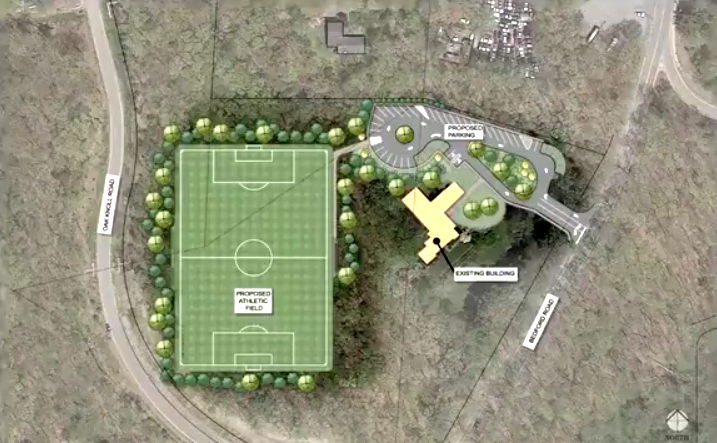
The Rural Land Foundation (RLF) and the Birches School teamed up to buy the 16-acre Wang property off Bedford and Oak Knoll Roads in November 2016. The Birches School will use four acres (including an existing 12,000-square-foot house at 100 Bedford Rd.) for its new headquarters plus a public parking lot that will also serve the adjacent athletic field. Residents will be asked to approve the purchase of the other 12 acres using Community Preservation Committee (CPC) funds.

CPC funds come from a 3 percent property tax surcharge and a partial match funds from the state (26 percent last year). The fund replenishes annually by about $950,000, and the town proposes to borrow $1.3 million over 15 years against this income. Another $500,000 will come from the general balance. The purchase will have no impact on the town’s bonding ability going forward, according to an informational video about the project distributed by the Parks and Recreation Committee.

Artist’s rendering of the new athletic field.

The total cost of $2 million breaks down to $800,000 for purchase of the land (three acres for the athletic field and nine acres for conservation) and $1.2 million for construction of the field. The town will also get a permanent easement on the parking lot that the Birches School will build—something that will save the town $500,000. Users of the field will also have access to a school bathroom.

Another benefit of the town acquiring the land is that it can be used as a “solar swap.” By adding new acreage to the town’s inventory of conservation land, it can take an equal amount out of conservation for a municipal array at the capped landfill.

The town’s current athletic fields on the school campus are in poor shape due to overuse and lack of irrigation. Assuming all goes as planned, the new field will be built by September 2017 and ready for use in August 2018. Conservation officials also plan to make trail connections from the new conservation land to adjacent parcels.

After the Park and Rec video was released, the committee answered questions posed by residents on LincolnTalk. Those answers are reprinted below.


Would putting synthetic turf in help with heavy field usage? 

Yes, artificial or synthetic turf is much more durable than natural grass fields. Community Preservation Act funds, however, can’t be used to pay for an artificial turf field. There are also a number of growing concerns with artificial turf, including high temperatures for children, off-gassing of the materials as well as the fact that there are still ongoing maintenance costs. While cost savings have been highlighted as among the benefits of an artificial turf field, the life expectancy and costs savings for artificial turf fields are now being questioned.

Has anyone studied the projected traffic onto Bedford Road and Route 2? 

Yes, Birches School and the Rural Land Foundation hired MDM Transportation to perform a traffic study of the area. They found that “the expanded Birches School and adjoining soccer field use will be accommodated along Bedford Road at operating levels that are well below capacity under full enrollment and during soccer field use periods (weeknights and Saturdays).” There will be a number of site improvements made to the area, including improving sight lines and widening the existing driveway to enable two exit lanes and one entry lane.

You mention that the Selectmen, FinComm, CapComm and School Committee are supporting this project. Is the Planning Board in support? 

We specifically approached the Selectmen, the Finance Committee, the Capital Committee and School Committee for their support of the project, but did not ask the Planning Board. We, however, did receive site plan approval for the project.

Has the Chief of Police signed off on this project? 

The police chief is aware of the project and has not expressed concern, although his formal approval was not part of the site plan approval process. The fire chief has signed off on emergency access to the property and our highway superintendent, and the town’s consulting engineer (not the project engineer) have reviewed our traffic study and are informing our site management plans.

Will there be any neighbors to whom the field and parking lot will be visible, who formerly saw only woods?

There is one immediate abutter, and we have worked closely with them to make sure that they are not negatively impacted, using landscape and fencing to ensure privacy. In addition, we met early on with the immediate neighborhood to not only share the initial announcement with them, but also to solicit their questions and concerns. The current site plan reflects their feedback.

The Carroll School on the Wayland/Lincoln border is creating new athletic fields. Is it possible to rent those? 

The Carroll School will not be renting the fields to area towns or schools in response to neighborhood concerns.

Have you looked at any other single-family lots in Lincoln on which to build a field? 

We have been actively looking for the past 15 years at all opportunities; however, for a number of reasons these other lots have not panned out. The Wang property at 100 Bedford Road works for several reasons, including access from Route 2 and the center of town; low impact on neighbors; and the partnership with the Rural Land Foundation, which makes the potential acquisition feasible since they are in essence providing the town with a bridge loan, giving us the time we need to examine the transaction in the Town Meeting framework; and the partnership with Birches School provides a number of cost savings related to the parking lot and restroom facility.

Why can’t the town build an athletic field on the flat lot abutting the school by the Smith building? 

The agricultural field behind the Smith School is privately owned and mostly in conservation. Taking land out of permanent conservation designation is an extremely difficult process. It requires permission of the land owner and then involves finding a lot with comparable conservation value to swap. Approval from the Conservation Commission, Town Meeting and the Commonwealth is also required. In the 15 years that we have been searching, we have not been able to find a lot that would be large enough to accommodate a field of this size with adequate parking, let alone a flat, open parcel.

Category: conservation, government, land use, sports & recreation Leave a Comment

Candidates offer views on wide range of issues

March 13, 2017

Twelve of the residents who are on the ballot for Lincoln’s local election gathered to answer questions at a moderated candidate forum at Lincoln Woods on March 11.

Before the forum, each candidate was asked by the Lincoln Woods Advisory Council, which organized the event, to respond in writing to two questions. Those answers, which were the basis for much of Saturday’s discussion, were published in the Lincoln Squirrel in three batches last week but have now been compiled into a single post here. That compilation includes a previously unpublished response from Jonathan Dwyer, candidate for the Board of Selectmen, who was not at the forum.

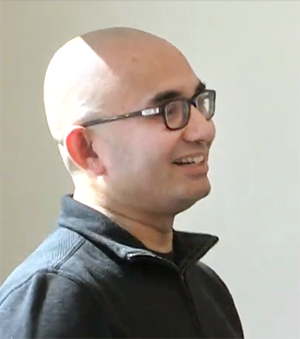
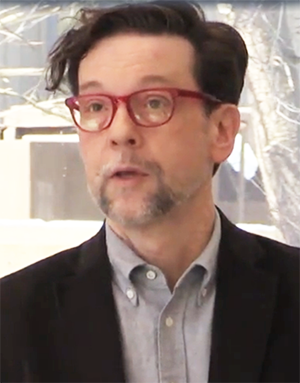
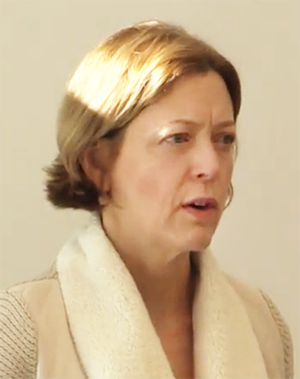
The videotaped event (from which these photos were taken) is available online here. Forum questions from moderator August Sanders and the candidates’ answers are excerpted below.

Melinda Abraham

Melinda Abraham

Running unopposed to reelection as a Bemis trustee (one year)

Q: What can we do to increase engagement and diversity?

Abraham noted that the Bemis Free Lecture Series has had several speakers from WGBH because one of the former trustees had a connection there. “We were taking advantage of a one-time opportunity… but we’d like to engage additional speakers. Trying to do it with our limited budget has been our challenge,” she said. One possibility is engaging people who are already in the area on a book your so the trust doesn’t have to reimburse for travel.

Jennifer Glass

Jennifer Glass

Running against Allen Vander Meulen for one-year vacancy on Board of Selectmen; current chair, School Committee

Q: How do you respond to those who might think you’re running for Selectman to get more clout to push through a school project?

A: “Certainly there’s a little piece of that that is true, in that we are on the verge as a town of making generational decisions” on issues including a community center, Parks and Recreation, affordable housing and South Lincoln, Glass said. “A school project is one of them, though clearly it represents the largest dollar amount. What I would say is I have a lot of experience, because we’ve been talking about a school project for so long [and we need to] see all of these parts in context with each other. I’ve had the opportunity to reach out to a lot of boards and citizens in town. I understand what it is to make mistakes, to learn from them, and own up to them keeping the conversation going even when it’s hard. What I’m really interested in is looking at our community as a whole… who are we going to be for the next several decades.

Q: How can we create affordable housing while being mindful of the costs associated with such as effort?

“One of our core values is trying to be as diverse a community as possible… Yes, [affordable housing] may draw on resources, but that’s OK. I think that’s an investment in who we are and who we want to be.”

Noting that the next Board of Selectmen will consist of two newcomers and a member with only one year of experience, Glass said, “I think it’s a really an opportunity. We have that chance to start a little bit from a clean slate and ask question—why is it done this way, how do we make what’s working and move it forward?”

Lynn DeLisi

Lynn DeLisi

Running unopposed for Planning Board (three years)

Q: You wrote [in your pre-forum response] that you’d like to see more enforcement of our bylaws. Can you expand on that statement? 

A: “When I volunteered four years ago [for the Planning Board], I was very excited about learning something new and contributing to our community. I found that we rigorously try to protect the bylaws put together at Town Meetings, yet we don’t have any method of enforcing what we do,” aside from the limited resources of the police and the building inspector, she said. “I think we need to open a town discussion on how we enforce the bylaws.”

Q: What is your vision for Lincoln Center and what is the role of Planning Board in that?

DeLisi noted that there had been a report on South Lincoln as well as an advisory committee and a consultant, “and we kept on thinking and talking and there was no action.” As a member of the search committee to hire a new town planner last year, “my main drive was looking at their personalities and whether this was someone who had the internal drive to do things that a planner should do. And one thing a planner should do is revitalize the town center… taking the initiative and running with it. That’s exactly what [Jennifer Burney] did. She created a vision for how we go about this” by prompting formation of the Economic Development Advisory Committee [EDAC] and the South Lincoln Implementation Planning Committee [SLPIC].

Another important issue is recreational marijuana, which is now legal in Massachusetts, “but we as a town haven’t come up with how we’re going to handle it. This is a billion-dollar business, as we’ve seen in Colorado. We have to decide what we want. Will there be stores in South Lincoln selling it? Will there be a lot of people growing it? Marijuana used in adolescents clearly affects the brain in a bad way,” said DeLisi, who is a psychiatrist. “I don’t want to see that be more accessible to young people in our community” who could buy cookies and candy containing marijuana in Lincoln Center.

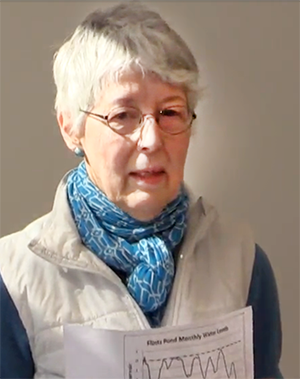
Ruth Ann Hendrickson

Ruth Ann Hendrickson

Running unopposed for Water Commission (three years)

Hendrickson displayed a graph showing water levels in Flint’s Pond over the past few years. In summer 2016, largely due to lawn watering during the drought, “we used more water than we ever have in the history of the town. Even though we’ve had a normal amount of rain this winter, we’re starting very, very low. It’s very serious and I’m asking you not to water your lawns.” She asked anyone to come to her with ideas about “how to approach wealthy people who water their lawns no matter what… they have people for that and don’t care what it costs.”

Asked what water conservation actions Lincolnites could take, she said, “Not water your lawn. Most lawns will revive when the rains come again.” She also recommended using drip irrigation and re-landscaping with ground cover and bushes, and if grass is used, using a long-root, drought-resistant variety in small areas. Indoors, toilets and the washer use about half the home’s water, and the town provides rebates for purchasing water-efficient appliances.

Lincoln should consider the recent suggestion of a town communications subcommittee, because “I don’t think we’re using the modern communications techniques of the younger generation. Asking someone to come to a meeting just isn’t working any more… We need to reach out to find other new ways to make not only information available, but also discussions, Snapchat or whatever they’re using,” she said.

Rakesh Karmacharya

Rakesh Karmacharya

Running for Housing Commission (one year)

Karmacharya is interested in exploring “nontraditional housing options” such as homeowners renting out rooms in exchange for helping around the house, shopping and other errands, etc. This would open low-cost housing opportunities in Lincoln for younger people (including, for example, teachers at LEAP) while also helping elderly residents remain in their homes for as long as possible.

“There are a lot of elderly who live alone, as well as families with young kids, but there’s not as much interaction [as there could be] between those two vibrant groups… [we might be able to] create surrogate grandparents and surrogate grandchildren” for seniors whose extended family live far away. “I see housing as part of the bigger fabric of community,” he said.

Stanley Solomon

Stanley Solomon

Running against John MacLachlan for Bemis trustee (three years)

“The people I think of that would be good speakers are people from the STEM world and people from outdoors,” said Stanley, 85. “And I promise I will not be running around in Lincoln politics for the next 15 years.”

Q: Do you see a role for trustees to collaborate wth other town commissions?

“The Bemis Trust should confine its activities to providing what the trust was established for. I think the rest of Lincoln has enough committees and people to take care of things they’re there for. I don’t see see this kind of interdisciplinary thing as being beneficial.”

John MacLachlan

John MacLachlan

Running against Stanley Solomon for Bemis trustee (three years)

“To be honest, after the last [national] election, I felt obligated to get more engaged with the community,”  MacLachlan said when asked what inspired him to run for town office after living in Lincoln for only three years. “I’ve been to a number of events where there were mainly elderly people and few young families, or the reverse. It would be nice to have more young families there, with [Bemis Lecture Series] topics that topics that would engage both the elderly and the young.”

MacLachlin has also been asked by the Parks and Recreation Commission to fill an appointed seat, and he said that he could hold both posts, but “would be happy to allow Stanley to take that position” as a Bemis trustee.

Fred Mansfield

Fred Mansfield

Running unopposed for reelection to the Board of Health (three years)

Mansfield was asked about how the town could balance its emphasis on protecting the environment with the need to protect residents’ health in the face of threats from Lyme disease and other tick-borne and mosquito-borne illnesses, and what (if anything) the Board of Health can do to mitigate those threats.

State environmental officials set traps for mosquitoes and monitor what diseases they’re carrying, which can also include West Nile virus and (perhaps eventually) Zika, Mansfield said. However, “we don’t have much in the way of mosquito control because [homes in Lincoln] are so dispersed.” There are a few catch basins in which the town could put larvicide, and if there was a major outbreak of mosquito-borne illness, helicopters could do aerial spraying of insecticide, he said.

As for ticks, Mansfield recommended that residents pull their socks up over their pant legs, put on insect repellant containing permethrin on their socks, and check themselves carefully for ticks. “We have no way of controlling the deer or the mice that are part of the [Lyme disease] cycle, and we won’t really have a solution other than prevention,” he said. According to Mansfield, his fellow Board of Health member Steven Kanner, an internist, has advised that anyone who finds a tick on his or her body, even without an obvious bite or bull’s-eye lesion, to “take two doxycycline pills and forget about it, trying to prevent things rather than treat them.”

The candidate was also asked about the leaf blower issue. In 2015, the Board of Health went on record as saying that airborne particles and noise from gas-powered leaf blowers are a health hazard, but later distanced itself from proposed restrictions on use of the machines by homeowners not in the South Lincoln commercial area.

“Our thought was that the Board of Health doesn’t have an enforcement arm, and Lincoln Police were not interested in taking that on,” he said. “The question is how would they do that. Do they go around with noise meters?” The board instead supports “neighborly agreements” to limit the times of year that gas-powered leaf blowers and string trimmers could be used. If this didn’t work, “we’ll probably go in front of Town Meeting and it will probably be voted down because people don’t want to pay contractors to rake by hand, and electric leaf blowers are not as powerful,” he said.

Patty Mostue

Patty Mostue

Running unopposed for reelection to the Lincoln-Sudbury School Committee (three years); former Lincoln School Committee member

“What I like about Lincoln is what I also like about the high school—the great sense of community,” Mostue said. Recent innovations at L-S include the We Are Warriors program aimed at students who may not be college-bound that helps them feel “they belong in the high school no matter what their path to higher education or work.”

“There are new people moving into Lincoln who don’t always take part in Town Meeting… I think it would be a danger to lose the sense of community that has to be guarded and nurtured all the time,” Mostue said when asked what she would like to see changed about Lincoln.

Rick Rundell

Rick Rundell

Running unopposed for reelection to the Planning Board (three years)

Q: In your written response, you said you’d like to see broader civic engagement. Is there a way the Planning Board can help with that?

Rundell noted that there are now greater opportunities for participating in the planning and economic development process with the creation of the EDAC and the SLPIC. The EDAC will be help in promote the economic health of the town by bringing together people in the business and nonprofit communities, including those who are not Lincoln residents but have an interest in seeing those businesses succeed.

Laura Sander

Laura Sander

Running unopposed for the Board of Assessors (three years); current member of the Finance Committee

As a Finance Committee member, Sander said she has “learned a lot about Lincoln finances—in particular, property taxes, which account for about 76 percent of our revenue. The oversight of that resource is really critical to how we function. We really need to be aware of our taxing capacity and how we can best utilize that. This is outside the purview of the Board of Assessors, but as a town, as we think about more commercial development or more affordable housing, we have to think about the impacts and what that means to us as taxpayers.”

Q: You wrote, “I would like to ensure that the oasis that we work hard to maintain is not an enclave that is separate from the rest of the world and its concerns.” Can you give a couple of examples of how to work harder to promote this vision?

A: “I get really concerned about the fact that we can pay a lot of lip service” to things like METCO and affordable housing, “but we need to engage with each other,” Sander said. “I don’t have specific solutions for how to do that… but if we’re not engaging somehow, we’re not getting enough out of that. We have to think about how do we create forums that allow people to really interact.”

Allen Vander Meulen

Allen Vander Meulen

Running against Jennifer Glass for one-year vacancy on the Board of Selectman; current member of Housing Commission and SLPIC

Q: Can you expand on your definition of “the Lincoln way” and how it can be improved upon?

A: “To me, the Lincoln way means that we’re all part of the community. There’s not some elite that’s driving us; everyone’s voice is important… even if you disagree with someone, [making sure] their voice is heard and taken seriously, making sure that one group doesn’t get to trump the other or create a lot of division that doesn’t need to be there,” Vander Meulen said. In his previous career as an IT manager he said he often dealt with situations where “everyone was at each other’s throat or had no idea how to get where they needed to go,” and his skill was “building consensus and a sense of camaraderie and mutual direction.”

“As a minister and a volunteer, your focus is on building the community, facilitating dialogue, and making sure the people who aren’t involved are. One thing you can’t do is just sit back and wait for people to come to you. I know too many churches that died thinking a fresh coat of paint on the front door and new carpeting would solve their problems.”

Of his opponent Glass, Vander Meulen said, “I’ve been very impressed with her. No matter who wins this election, you’ll see both of us around for a very, very long time.”

“That’s either a promise or a threat,” Glass said to laughter.

Category: elections, government, news, schools Leave a Comment

News acorns

March 9, 2017

Forum on affordable housing proposals

In preparation for Town Meeting votes on creating more affordable housing, the Housing Commission will hold an Affordable Accessory Apartment Program Housing Forum on Wednesday, March 15 at 7 p.m. in the Town Office Building. A “yes” vote on warrant Article 12 would create the Affordable Accessory Apartment Program, a public/private partnership, a collaboration between the town of Lincoln and an individual homeowner to create affordable housing eligible for Lincoln’s affordable housing inventory. Article 13 would create a tax exemption for affordable accessory apartments that meet state regulations and qualify for the town’s affordable housing inventory.

In addition to the warrant articles, forum attendees will have an opportunity to learn more about the Affordable Housing Trust Loan Program, which will grant loans to homeowners who participate in the Affordable Accessory Apartment Program. If the homeowner’s accessory apartment remains on the affordable housing inventory for 10 years, the loan will automatically be forgiven.

Those with questions may contact Pamela Gallup at 781-259-0393 or pamgallup@aol.com.

Food Project seeking teenage summer crew

The Food Project is currently recruiting for its summer Seed Crew. Each summer, The Food Project’s Seed Crew hires 72 high schoolers from diverse backgrounds to work together on one of its farms to grow vegetables and distribute thousands of pounds of produce to area hunger relief organizations while developing important leadership, teamwork, diversity and civic participation skills. Seed Crew is the entry point to participate in The Food Project’s youth crews. Following Seed Crew, young people may apply to work each academic season throughout their high school careers. Click here to apply. The deadline is Monday, March 13.

Report on Israel/Palestine fact-finding tour

The GRALTA Foundation will report on its January study tour of Israel/Palestine on Sunday, March 19 at 1 p.m. in Bemis Hall. Speakers will include legislators and others who participated in GRALTA’s 13-day trip. The event will include reports from delegates Mass. Reps. Paul Heroux (D-Attleboro) and Denis Provost (D-Somerville) as well as Boston College Professor Eve Spangler and her students with audience Q&A, followed by a panel discussion. The event is free but an RSVP for food and beverage planning is appreciated; email Steve Low at steve.low@gordianconcepts.com.

Women’s March discussion

Did you participate in the recent Women’s March in Boston or any other city? Please join us for an evening of discussion about the march, its relationship to the history of the women’s suffrage movement, and what comes next at “On the March: Reflections on the Recent Women’s Marches and Their Roots in Suffragette History” on Thursday, March 23 at 7 p.m. in the Lincoln Public Library. The evening will begin with a brief presentation by members of the Boston’s Women’s History Trail on the suffragette movement marches in Boston. Feel free to bring your camera or phone to share pictures.

Peggy Schmertzler Leadership Lecture

Peggy Schmertzler

Lincoln resident Al Schmertzler and his family invite Lincolnites to attend the first annual Peggy Schmertzler Leadership Lecture in honor of his late wife Peggy and her transformative leadership as she worked to advance equality for women at Harvard University. The lecture will be held on Tuesday, March 28 at 5:30 p.m. in the Parlor Room of the Phillips Brooks House, 22 Harvard Yard, Cambridge. The speakers will be Sarah Hurwitz, senior speech writer for President Obama and chief speechwriter for First Lady Michelle Obama, who will discuss “The Power of Words and Their Impact on Leadership.”

The lecture series was established by three of Peggy’s fellow Radcliffe alumnae in recognition of her leadership of the Committee for the Equality of Women at Harvard (CEWH) an organization she helped create and advance throughout its 30-year lifespan. Her spirit and and dedication to women’s advancement prompted her former CEWH colleagues and the Harvard College Women’s Center to partner in honoring her legacy of fearless leadership.

Category: educational, government Leave a Comment

Officials outline needs and implications of school funding vote

March 9, 2017

School and town officials made their case for voting to move ahead with a town-funded school project at a multi-board meeting and public forum on March 8.

School Committee chair Jennifer Glass urged residents at Town Meeting on March 25 to vote yes on Article 33, which would allow the town to spend $750,000 on a feasibility study. That money was previously allocated in 2014 with the stipulation that the study would be for a project involving the Massachusetts State Building Authority (MSBA); a “yes” vote would remove that condition. The MSBA has turned down several grant applications from Lincoln due to competition from other schools that are in much worse shape, either structurally or due to severe overcrowding, she explained.

If Article 33 is not approved, residents will be asked to vote on Article 34, which authorizes the town to apply once again for MSBA funding. However, the School Committee and other boards have recommended that voters approve #33 and pass over #34. Theoretically the town could do its own feasibility study while also reapplying to the MSBA, but this runs the risk of wasting the town’s time, effort and money, since the MSBA (even if it granted funding) would require yet another new feasibility study as well as an MSBA-approved architect and owner’s project manager.

“Obviously it’s hard to think about turning away the possibility of millions of dollars,” Glass acknowledged. But the unlikelihood of actually getting that money unless things get much worse—along with other factors like the greater flexibility of a town-only project (especially in conjunction with planning for a community center, which was not permitted in an MSBA-funded school project)—makes this the best way to go, she said.

The new Hanscom Middle School’s layout, with many multipurpose spaces of various sizes,  shows how a building’s design can have educational benefits, officials said. “We are seeing amazing things happening in terms of the way faculty are collaborating on an integrated curriculum and students are collaborating with each other,” said Superintendent Becky McFall.

Even without factoring educational enhancements into a new or renovated building, a project costing at least $30 million is urgently needed just to upgrade worn roofs, boilers and plumbing, HVAC systems and energy-inefficient single-pane windows, Glass said. The school also lacks sprinklers, has cramped kitchens and uncontrolled entrances, and is using converted closets for special services, she added.

If everything goes without a hitch, the earliest that construction could begin is late summer or fall 2019, with completion taking at least two years depending on the scope of the project, Glass said.

Future votes

After this month’s Town Meeting, there will be two more town-wide votes: one to choose a project concept and budget range (probably at Town Meeting a year from now), and another vote to bond the project in fall 2018 after final plans are developed.

“No solution gets chosen without a town vote—this is full-on town participation,” Glass said.

The second vote to choose a design concept was not undertaken in 2012. “We know that that is a really important step for the town to make,” she said, noting that the school campus “has a certain feel and is the heart of the community in many ways.”

Some of the data from the previous school studies can be used again, including data on the current facilities conditions, the educational program needs, possible building footprints and the optimal orientation of the building, the number of classrooms needed, etc. Still to be determined is the exact building layout and room configurations, site planning on roads, parking and pathways (especially as they may also affect a possible community center on the Hartwell side of the campus), and choosing major systems and construction materials, Glass said.

Tax implications

Finance Committee chair Peyton Marshall outlined Lincoln’s property tax situation now (generally favorable compared to eight peer towns) and how it would change after a major bond issue. He showed how much tax bills would go up depending on how much money the town borrowed and the interest rate (either 4% or 5%). The numbers assume that the town will use its debt stabilization fund to smooth the impact.

Bottom line: there would be a median annual tax increase of $275 to $300 for every $10 million that the town borrowed. The median tax bill in fiscal 2018 is $13,613.

Category: government, school project*, schools Leave a Comment

Another response for candidate forum

March 8, 2017

Following is a another candidate response in preparation for the town-wide candidate forum on Saturday, March 11 from 10 a.m. to noon in the Lincoln Woods Community center (50 Wells Rd.). Previous responses can be seen here and here.

Stanley Solomon (Bemis Trustee)

What I like best about Lincoln—While my wife Susan and I moved from Lexington to The Commons only about six years ago, I have been hiking and leading hikes in Lincoln for more than 40 years. From this, you might surmise that I rate Lincoln’s integrated conservation effort a gem. We see it as the town’s leading attribute.

What I would like to see changed—Town transportation, sewers, more restaurants, increased retail opportunities—these would all be nice to have, but they all come with consequences that, at best, change the appearance, operation and charm that Lincoln now exudes. From following LincolnTalk, it seems that a number of Lincolnites feel that spending one day a year on town government and/or two hours per election exceeds the time they have allocated to being Americans. I indeed would like to see this change.

Category: government, news Leave a Comment

  • « Go to Previous Page
  • Page 1
  • Interim pages omitted …
  • Page 42
  • Page 43
  • Page 44
  • Page 45
  • Page 46
  • Interim pages omitted …
  • Page 93
  • Go to Next Page »

Primary Sidebar

Recent Posts

  • Legal notice: Planning Board (Verizon) March 3, 2026
  • Legal notice: Planning Board (Dark Skies) March 3, 2026
  • Legal notice: Historic District Commission (several properties) March 2, 2026
  • Legal notice: Historic District Commission (several properties) February 26, 2026
  • Dilla Tingley: Lincoln’s queen of quilts February 25, 2026

Squirrel Archives

Categories

Secondary Sidebar

Search the Squirrel:

Privacy policy

© Copyright 2026 The Lincoln Squirrel · All Rights Reserved.