 The last sentence about tow town’s outstanding debt in the Dec. 16 story headlined “Bond is sold at 3.844%; taxes to rise $459 a year” was in error. The table it referred to shows the principal amounts of bonds authorized ($116 million in total), not the amount that is outstanding. The town pays debt service each year and a portion of that pays down principal. Outstanding debt, including the most recent bond issue, is roughly $104 million, according to Director of Finance Colleen Wilkins.
government
Town Meeting changes under discussion locally and statewide
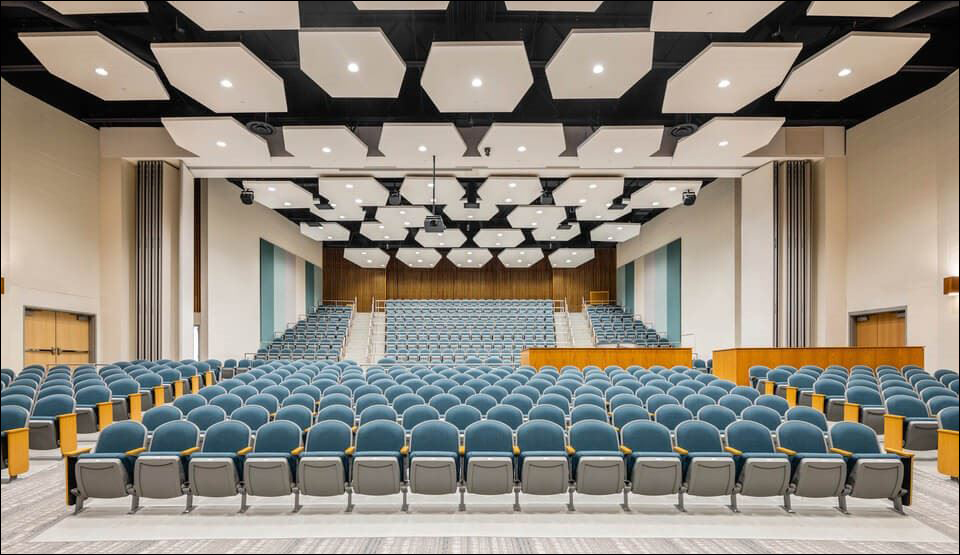 In a survey by Lincoln’s Town Meeting Study Committee (TMSC), a plurality of respondents were dissatisfied or very dissatisfied with how Town Meeting is run, and almost three-quarters would like to see written “pro and con” summaries of warrant articles before voting.
The online survey was filled out by 566 Lincoln residents to help guide the recommendations of the TMSC, which was formed after complaints about Town Meeting in March 2024 highlighted by the vote on the controversial Housing Choice Act. Controversy swirled that day and afterwards about who was allowed to present information and how.
The survey also asked how respondents got their information about issues before Town Meeting, and how they would prefer to discuss and vote on issues. While 95% said they approved of the use of clickers to vote, 50% supported having discussion and votes on two different days, or at different times on the same day. The committee previewed the results at the October 20 Select Board meeting and will present and discuss them at the State of the Town meeting on Saturday, Nov. 1.
TMSC members used AI to compile and summarize the hundreds of survey comments. The most frequently stated sentiment (mentioned by more than 80 of the respondents) was that voting needs to be more accessible, fair, and modernized. Close behind were these opinions:
- The Town Meeting process is seen as unfair, biased, and undemocratic
- There is a need for equal opportunity pro and con arguments
- Town Meeting length, structure and moderation require improvement
- Time and scheduling are major barrier to participation
Lincoln is not alone is looking for ways to improve Town Meeting, though until fairly recently, many thought that the state law requiring in-person Town Meeting discussion and voting was an almost insuperable roadblock. But a bill filed by Rep. Carmine Gentile (H.2274) would allow remote participation and voting for any town with Open Town Meeting. The bill has been endorsed by the League of Women Voters of Massachusetts, the Massachusetts Municipal Association, and the Metropolitan Area Planning Council.
“There’s a little more groundswell for remote voting than we realized,” said Jim Hutchinson, the Select Board’s representative on the TMSC.
At the start of the pandemic, the state allowed towns to conduct other types of meetings remotely, an innovation that has been largely successful. A bill signed in March 2025 extends that option until March 2027, and there are discussions about making it permanent.
If Gentile’s bill becomes law, residents would be able to obtain digital credentials from the Town Clerk in advance, use their smartphone or tablet to remotely check in, view the queue of voters (both on premises and remote) seeking to speak, watch and listen to the proceedings with real-time visual transcription, and speak (when allowed by the moderator) to offer an opinion, make a motion, etc. They could also audit their vote to confirm that it was correctly received and counted, and report a discrepancy in the vote before that vote is finalized.
Concord and Wayland have also filed home rule petitions asking the legislature to allow them towns to allow remote Town Meeting participation. Lexington filed a similar petition in 2022 but it never came up for a vote on Beacon Hill.
“If these bills [H.2274 and its Senate counterpart, S.3114, filed by Sen. Michael Barrett] advance from Committee, then they would likely need to pass in the House and Senate by the end of July 2026 or be refiled in the next legislative session (2027-2028),” said Gentile’s legislative aide Ravi Simon. “We are hopeful that either the statewide local option bill will pass, or that the legislature will allow Wayland and Concord to pilot this concept.”
The other hurdle is creating and implementing software that will allow voter participation securely and smoothly. “If the Littleton Water Department can be hacked by overseas [actors], imagine Town meeting voting,” said TMSC member Andrew Pang.
The TMSC was originally planning to release its report at the State of the Town, but they’re holding off because they haven’t settled on what to recommend about splitting Town Meeting into two sessions and/or “joining the remote voting home rule petition bandwagon,” Hutchinson said.
“I don’t see us full-out recommending either of those be adopted,” he said. “What we’ve been talking about is whether to recommend that those issues be put to a vote at a Town Meeting so that residents can tell us whether they want those things, and if so, exactly which variation we’d recommend voting on.”
The TMSC will meet remotely on Monday, Oct. 27 at 9:00pm. Click here for the Zoom link.
Two public forums coming up
Panel: ICE activity and local government
 The Select Board is hosting a Zoom panel to share information, offer resources, and respond to community questions about the impact of recent U.S. Immigration and Customs Enforcement (ICE) activity on Wednesday, Oct. 29 from 7:00–8:00pm. Panelists will include Select Board Chair Jennifer Glass, Town Administrator Tim Higgins, Acting Police Chief Jon Wentworth, and School Superintendent Parry Graham. Click here to join the discussion via Zoom.
State of the Town meeting
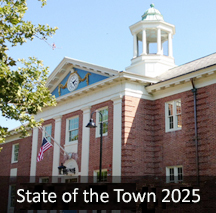 The annual State of the Town will take place on Saturday, Nov. 1 from 9:30am–12:30pm at the Lincoln School. There will be a whole-group session in the auditorium and two breakout sessions featuring the Town Meeting Study Committee and the Dark Skies Committee. Each breakout session topic will be offered twice so attendees can go to both.
Agenda:
- 8:15am — Community breakfast and town committees/community organizations fair – Dining Commons
- 9:30am — Town updates and community open forum – Donaldson Auditorium/Todd Lecture Hall
- Overview of town finances
- Infrastructure projects: water, roads, and paths
- What’s new in school, e-news launch, and more
- 11:00am and 11:45am — Breakout sessions:
- “Let’s Talk About Town Meeting!” with the Town Meeting Study Committee – Learning Commons
- “Turn Out the Lights!” with the Dark Skies Committee – Media Center
Road project list is focus of upcoming public forums, survey
 The Transportation Coalition will hold a pair of public forums on Tuesday, Sept. 30 to share its five-year project plan and discuss funding opportunities and constraints for various road improvement projects. The group is also gathering feedback and support via this survey about roads, roadside paths, and trails.
The Select Board approved the formation of the Transportation Coalition in 2023 with members from the Roadside & Traffic Committee, the Bicycle & Pedestrian Advisory Committee (BPAC), the Select Board, town staff and engineering consultants. In June 2024, the board approved a five-year plan listing 12 projects identified as priorities by the group. Those items were drawn from a more comprehensive master plan created by the BPAC that included a wide range of recommendations for safety improvements on roads and roadside paths in Lincoln.
The question, as always, is how to pay for what residents decide to do. As noted in a flyer recently sent to Lincoln homes, funding for most road work comes from the state’s Chapter 90 program, but that doesn’t cover the cost of significant upgrades or repairs, which are usually paid for via bonding. A $5.5 million major road repaving project was bonded in 2010, but “the roads are approaching the end of useful life and will soon need repaving, which will require a significant bond. Another upcoming project that may require bonding is the reconstruction of Ballfield Road currently slated for 2026,” the flyer notes.
The five-year project plan (whose order of priorities was adjusted in November 2024 in the table cited on the Transportation Coalition web page), also took into account the priorities in 2023’s Complete Streets Prioritization Plan. In past years, MassDOT’s Complete Streets grant program funded a crosswalk with pedestrian islands at Route 117 and Lincoln Road, the-ADA accessible route from Lincoln Station to Codman Farm, and improved signage at Lincoln Station, Codman Farm, and Drumlin Farm. It will also fund a new crosswalk with pedestrian islands at the intersection of Old Sudbury Road and Route 117 expected to be completed by this winter.
“Many residents have requested roadside paths and/or crosswalks for their neighborhood [but] the town’s ability to improve the infrastructure is limited by available funds, staff capacity, and easement challenges,” the flyer notes. In light of limited funding and a plethora of projects that could be tackled, residents are invited to one of two forums on September 30: a Zoom session from 9:00–10:30am and an evening event from 7:00–8:30pm in the Lincoln School Learning Commons.
The survey is open until October 9.
State budget includes funds for Lincoln food pantry, summer camp
 The Massachusetts state budget approved earlier this month includes money for several projects in Lincoln and other neighboring towns.
According to a press release from the office of Rep. Carmine Gentile (D-13th Middlesex), whose district includes part of Lincoln, the $61 billion state budget for fiscal 2026 includes:
- $150,000 for Lincoln to mitigate the costs of educating children of retired military families on Hanscom Air Force Base.
- $45,000 for the Society of Saint Vincent de Paul food pantry in Lincoln,
- $20,000 for the Lincoln Parks & Recreation Department’s summer camp program to provide financial assistance to
Other investments in the communities that comprise the 13th Middlesex District include:
- $250,000 for planning the redevelopment of MCI Concord
- $200,000 for window replacement at the Boys and Girls Clubs of MetroWest in Marlborough
- $100,000 for rehabilitation of the Marlborough Women Veterans Park
- $100,000 for the Sudbury Community Food Pantry.
- $50,000 for Quiet Communities, a nonprofit 501(c)(3) organization in Concord which works to reduce harmful noise pollution.
The legislature’s final budget increases spending by $3.3 billion over fiscal 2025, with much of the increase attributed to MassHealth.
Correction and clarification
The June 26 story headlined “Voters approve community center, Nature Link measures” incorrectly stated that the June 25 Special Town Meeting had a record turnout. In fact, the 2018 vote on whether to fund the second school project tallied more total votes (906) than last week’s 859 total. The 2018 measure passed 806-100.
Assistant Town Administrator Dan Pereira also clarified that, while the article correctly said that “Items including the new playground and furniture, fixtures and equipment were cut from the construction budget,” those items are still planned, but the project will pay for and install these items directly, rather than including them in the building construction contract.
Special Town Meeting: What you need to know
 The following was submitted to the Lincoln Squirrel by Assistant own manager Dan Pereira.
Special Town Meeting is Wednesday, June 25. The information below is intended to ensure a smooth experience for all.
Website
- Please visit our Special Town Meeting web page for up-to-date meeting
information. It contains links to meeting materials, services, and background on the key articles being presented.
Logistics
- Voter check-in begins at 5:30pm and Town Meeting begins at 6:30pm sharp.
- View our Ballfield Road Parking map, which highlights available parking locations as well as the entrance to Town Meeting so you can plan accordingly.
- View our Auditorium Seating Map, which provides an overview of the room layout and handicap seating as well as public microphone locations. Microphones can also be brought to your seat if you are unable to get to a microphone.
- The Brooks Gym will be available for viewing and voting but not public comment. Those wishing to speak should come to the auditorium and approach a microphone.
- LEAP is offering free child care for town meeting attendees from 6:00-9:00pm. Sign up here.
Electronic voting
- Electronic voting devices or “clickers” will again be used to expedite voting when necessary.
- You will receive your clicker when you check in, along with instructions.
- You should not leave the school building with your clicker! When you leave, please drop your clicker in a designated receptacle.
- If you want to leave and return later, please return your clicker to an attendant at check-in and they’ll provide you with a “clicker ticket,” which will allow you to get a new clicker when you return.
Services
- We have reserved parking close to the entrance for handicap and mobility-impaired residents.
- Assisted listening devices are available — just approach AV personnel at the console in the middle of the auditorium and they will assist you.
Broadcast
- The meeting will be broadcast (for viewing only) on your local cable TV channel (Comcast Channel 8/Verizon Channel 33) as well as on the Town of Lincoln TV website.
We look forward to seeing you and will be working hard to complete all meeting business in one night!
My Turn: FinCom has seen “breakdown in process”
The Finance Committee (FinCom) plays a critical role in our town: advising on budgets, reviewing expenditures, and helping guide decisions that affect every taxpayer. The integrity of its appointment process matters. And yet, recent public records obtained through a Freedom of Information Act (FOIA) request reveal a troubling breakdown in how this process was handled.
What the bylaw requires
Lincoln’s town bylaws are clear. They state:
“The Moderator of the Town shall, within thirty days after the final adjournment of every Annual Town Meeting, appoint for a term of three years either two persons or three persons, as may be necessary, to provide a committee of seven members (…) The term of office of each member shall commence immediately upon qualification and shall expire upon the final adjournment of the Annual Town Meeting of the last year of such person’s term of office.”
This language affirms that the responsibility to appoint FinCom members belongs solely to the moderator — not to the Finance Committee itself or any other individual. The process is meant to be transparent, timely, and grounded in public accountability.
What actually happened
Emails made public via FOIA show a very different process unfolding behind the scenes. Anyone can request these emails from the Town Clerk; they are public record. In one outreach message, the chair of FinCom wrote: “(…) me taking on the Chair Role and him taking on the Vice Chair Role and so recruiting falls in my purview.”
This directly misstates the bylaw. While the chair can assist with identifying strong candidates, the power to select and appoint belongs only to the moderator. The chair’s role should be limited to offering suggestions as one of several inputs, not acting as the main decision-maker in the selection process. But in this case, the chair handled nearly all outreach, correspondence, interviews and vetting.
The FOIA documents show that for each open slot, the moderator was presented by the chair with only one final candidate after the chair had already conducted the majority of outreach and narrowed the field. In one case, the moderator was informed of a candidate who later declined, but no broader pool of candidates was considered or interviewed. At least one resident (not affiliated with any current town committees) reached out to the moderator to express interest, yet was not offered even a preliminary conversation. This suggests the moderator had limited interest in evaluating any options outside those presented by the chair of FinCom.
The moderator confirms the delegation of duties in another email to the chair of Fincom: “Thank you so much for pursuing the search to fill Andy’s seat.” Essentially this suggests a self-appointed committee.
A pattern of exclusion
In another email, the chair remarked: “[Resident] continues to push and is asking when/if we’ll hold public interviews which I am not inclined to do.” That statement reflects a deliberate choice to avoid an open process. In fact, no general call for volunteers was made. Outreach was limited to those with close personal ties (recommendations from spouses and close friends), or individuals already serving on other committees. Qualified residents outside that inner circle were neither welcomed nor considered.
Even more concerning is this comment: “We really have till May/June as it’s been precedent to have folks serve out till June then roll off, vs. TM [Town Meeting], even though TM is the official line of demarcation… I do worry about our favorite resident sticking to the rules if folks serve a few months longer than the rules suggest.”
Precedent does not override bylaws. Suggesting that rules are flexible and describing a resident who expects compliance as a nuisance shows a troubling attitude toward public oversight and accountability. Residents who ask questions or seek transparency are not “favorites” or problems; they’re fulfilling the civic role we should all support.
Why this matters
Some may argue that because the appointments were ultimately made by the moderator, there’s no issue. But that misses the point. The process was not transparent. It was not inclusive. And it did not follow the spirit of the law. This has real consequences. Yes, Lincoln has a AAA credit rating. But that rating doesn’t reflect the full picture:
- Our tax bills are among the highest in the state.
- Our reserves greatly exceed credit agencies’ guidelines.
- We misallocated $500,000 per year for several years — money we’ll never fully recover.
- The budget presented at Town Meeting misrepresents our actual revenues and expenditures in order to raise reserves without explicit town approval.
The Finance Committee does not offer hybrid meetings. Roughly half of its meetings are held virtually, yet these are not recorded or made publicly available, despite repeated requests from both residents and town officials.
Notably, FinCom meetings were previously recorded, but the practice ceased after a resident raised a question about the Hanscom misallocation. During that exchange, the current chair provided a response that was proven to be inaccurate, and the resident’s public comment was abruptly shut down. Since then, recording has not resumed and FinCom developed a more restrictive public comment policy.
In-person meetings are not streamed and often overlap with other key town meetings, making it difficult for residents to attend. As a result, residents are effectively shut out of the process unless they can be physically present. (The only exception is the budget hearing leading into Town Meeting, which is recorded, but by then the budget has already been set).
The Finance Committee should be a check on our financials, not a closed circle where only familiar names are welcomed. We need a committee built on independence, rigor, and diverse perspectives.
What needs to change
The current process undermines trust. It discourages civic engagement. And it signals that governance happens behind the scenes, not in the open. We often hear that it’s difficult to find volunteers, but that raises the question: why aren’t we opening up the process to the many capable and willing residents who call Lincoln home?
We can, and must, do better. We owe it to every taxpayer to ensure that town governance is fair, transparent, and consistent with the rules we’ve collectively agreed to follow. The Finance Committee is too important to be treated any other way.
Sincerely,
Karla Gravis (145 Weston Rd.)
Sarah Postlethwait (7 Lewis St.)
“My Turn” is a forum for readers to offer their letters to the editor or views on any subject of interest to other Lincolnites. Submissions must be signed with the writer’s name and street address and sent via email to lincolnsquirrelnews@gmail.com. Items will be edited for punctuation, spelling, style, etc., and will be published at the discretion of the editor. Submissions containing personal attacks, errors of fact, or other inappropriate material will not be published.
Selects vote not to endorse FinCom appointment proposal
The Select Board voted not to endorse a move to change how Finance Committee members are appointed, saying the method proposed in a citizens’ petition would constitute a possible conflict of interest.
More than 130 residents signed the petition calling for a vote at the upcoming Special Town Meeting to have FinCom members appointed by the Select Board rather than the Town Moderator. Bob Domnitz, representing the signatories at the board’s June 16 meeting, said “there’s very little connection between residents and their priorities and the people on FinCom.”
When openings arise on the committee, they are not advertised, nor are candidates publicly interviewed, Domnitz said. Also, as an individual, the Town Moderator’s deliberations are not subject to the open meeting law. Further, the doings of the FinCom itself are often obscure because that body does not hold hybrid meetings that residents can view from home, he said.
“There’s very little engagement with the FinCom,” Domnitz said, though he added, “that’s on us as residents” and acknowledged that the town routinely follows the committee’s budget advice.
But his allegations provoked a sharp response from board member Jim Hutchinson. “If residents have problems with the budget, they need to come to FinCom meetings or at least the annual budget hearing,” he said. “You can’t say they’re disconnected from residents — that’s not fair. I bristle and object to the notion that they’re disconnected.”
He and the other two board members agreed that the biggest issue with the proposal is that, under the petition’s proposal, the Select Board would be in charge of naming the people who would then have the power to approve or disapprove the town budget submitted by the board.
“I struggle with this idea that we could be perceived as having a conflict of interest for determining their budgets,” board chair Jennifer Glass said.
“I do find our arms-length relationship with the Finance Committee is helpful,” said board member Kim Bodnar, who then asked Domnitz if the petitioners had given any thought to improving FinCom transparency without changing the town bylaw.
“What’s the problem we’re trying to solve? I feel like we’re in good financial shape as a town,” Glass said.
The problem, Domnitz replied, is that what the FinCom recommends is “so weakly linked to what residents want [that] it feels not really democratic.”
In what may or may not be a coincidence, some of the first people to sign the citizens’ petition are among those who have also been outspoken on LincolnTalk in opposition to spending more money on the community center, or in opposition to the Nature Link project.
“We begged for an open process [of FinCom appointments] but it was flat-out denied,” said Karla Gravis. “It feels like a little clique is choosing each other for this committee.”
Sarah Postlethwait went even further, accusing Town Moderator Sarah Cannon Holden of “gaslighting” about requests to offer input that were “completely ignored.” She emphasized that she was not attacking FinCom members per se but rather the “closed-door process” by which people are named to “what is now basically a self-appointed committee” because “the current moderator has almost entirely given up the role” of recruiting and vetting candidates.
Domnitz also implied that there isn’t sufficient “liberal vs. conservative” diversity on the FinCom, but the board and Holden pushed back, saying there has always been an effort to recruit FinCom candidates with a diversity of views.
“I’ve always felt like every FinCom I’ve been in front of has had a variety of viewpoints and different takes on approaches to finances and asked really probing and difficult questions, as they should,” said Glass, who has also served on the School Committee and the Property Tax Study Committee.
Holden said that in fact, one person she tried to recruit for the FinCom was explicitly against one of the recent town-endorsed proposals, but they said no. This points to a bigger issue, which is that regardless of who appoints FinCom members, it’s hard to find qualified people who are willing to serve, she and board members noted.
“There are some very valid suggestions for how things could be done differently,” such as publicly announcing FinCom vacancies and having public interviews of candidates, Holden said.
When discussing what formal stance the board should take on the issue, Hutchinson said he was not in favor of the proposed change, though “there may be some process pieces that could be worked on and improved.” The other Selects agreed, voting not to endorse and saying they would issue a formal statement as to their reasons immediately before the Special Town Meeting on June 25.
Also on June 16, the Select Board voted unanimously to support Article 1 — the transfer of money from the stabilization fund to the community center building project to close the gap that appeared when bids came in $2.3 million over budget.
My Turn: Change how FinCom members are named
By Bob Domnitz (on behalf of petitioners)
Several weeks ago, 130 residents signed a citizens’ petition asking that our Special Town Meeting consider an amendment to the General Bylaws of the town. If adopted, the amendment would grant authority to the Select Board to appoint the members of the town’s Finance Committee. That authority is currently held by the Town Moderator.
The Finance Committee (FinCom) is one of Lincoln’s most important volunteer committees. Its work is complex and its analysis and recommendations have a decisive impact on town operations and residents’ taxes. Despite its importance, FinCom receives limited direct engagement from residents.
As signatures were gathered for the petition, the vast majority of residents said they did not know how the members of FinCom were chosen. They thought that the moderator’s role was limited to presiding over Town Meeting. No one could recall a contested election for the position of Moderator, and no one could recall that a moderator had ever expressed a viewpoint on town finances or FinCom appointments.
The disconnect between FinCom and residents has been compounded by the current practice of relying on FinCom to screen potential candidates for membership. Vacant positions have not been advertised, and public interviews have not been held.
If endorsed by Town Meeting, the citizens’ petition will make the Select Board the appointing authority for FinCom. Residents look to the Select Board for overall management of the town. It seems natural that they ought to be the authority that appoints FinCom. The town usually has a contested race for Select Board, and candidates differentiate themselves based on their views and policy preferences. That process helps align our Select Board with residents.
Adoption of this amendment will empower the Select Board to solicit and publicly interview volunteers for FinCom, following the same public process they use for other committees that they appoint. Appointment by the Select Board will therefore create a clear link between residents and FinCom.
Although many Massachusetts towns continue the tradition of a moderator-appointed Finance Committee, the trend is toward other methods of appointment. A substantial minority of towns now rely on appointment by Select Boards, direct election by residents, or appointment by a committee composed of various town officials.
By considering this amendment, the town has an opportunity to strengthen transparency, accountability, and resident engagement in a vital part of our local government. Embracing best practices that encourage diverse perspectives and open public participation will not only enhance the Finance Committee’s effectiveness but also foster greater trust and collaboration within our community. Together, we can ensure that Lincoln’s financial decisions reflect the voices and values of all its residents, building a stronger, more inclusive future for our town.
“My Turn” is a forum for readers to offer their letters to the editor or views on any subject of interest to other Lincolnites. Submissions must be signed with the writer’s name and street address and sent via email to lincolnsquirrelnews@gmail.com. Items will be edited for punctuation, spelling, style, etc., and will be published at the discretion of the editor. Submissions containing personal attacks, errors of fact, or other inappropriate material will not be published.