• Skip to primary navigation
  • Skip to main content
  • Skip to primary sidebar
  • Skip to secondary sidebar

The Lincoln Squirrel – News, features and photos from Lincoln, Mass.

  • Home
  • About/Contact
  • Advertise
  • Legal Notices
    • Submitting legal notices
  • Lincoln Resources
    • Coming Up in Lincoln
    • Municipal Calendar
    • Lincoln Links
  • Merchandise
  • Subscriptions
    • My Account
    • Log In
    • Log Out
  • Lincoln Review
    • About the Lincoln Review
    • Issues
    • Submit your work

elections

Primary results for Lincoln

September 5, 2018

In the September 4 primary for Massachusetts governor, Lincoln opted for Democrat Jay Gonzalez by a margin of 71% to 29% and Republican incumbent Charlie Baker, 78% to 22%, in the only category where both parties had a contested primary. The tables below show Lincoln’s results for the contested races for each party (write-in and blank ballots are not included in the totals).

  • Full results for Lincoln Democrats (unofficial)
  • Full results for Lincoln Republicans (unofficial)
  • Statewide results
Democratic candidatePrecinct 1Precinct 2Total
GOVERNOR
Jay Gonzalez482249731
Bob Massie198101299
LIEUTENANT GOVERNOR
Quentin Palfrey500263763
Jimmy Tingle15580235
SECRETARY OF STATE
William Galvin468243711
Zakim246120366
GOVERNOR'S COUNCIL
Marilyn Petitto Devaney274137411
Nick Carter391201592
DISTRICT ATTORNEY
Marian Ryan210127337
Donna Patalano484233707

Republican candidatePrecinct 1Precinct 2Total
GOVERNOR
Charlie Baker9667165
Scott Lively281947
U.S. SENATOR
Geoff Diehl473684
John Kingston242044
Beth Lindstrom402768
ATTORNEY GENERAL
James McMahon464188
Dan Shores422264
U.S. REPRESENTATIVE
John Hugo413677
Louis Kuchnir402868

Category: elections, government Tagged: elections 1 Comment

Joachim wins second seat on L-S committee

March 27, 2018

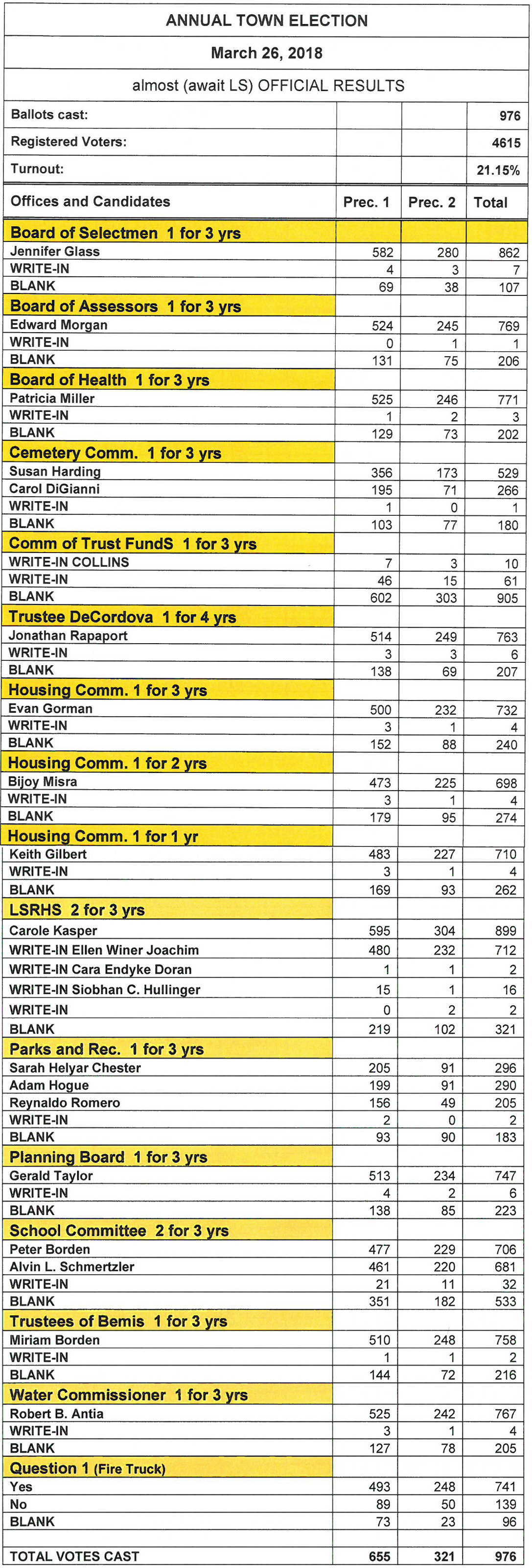
Ellen Joachim of Sudbury has won the second write-in seat on the Lincoln-Sudbury District School Committee. She will join Lincoln’s Carol Kasper, who earned the most votes—and who had endorsed Joachim as her unofficial running mate.

In Sudbury, Joachim won by a margin of 866 to 677, according to Sudbury’s unofficial results posted Tuesday afternoon. She also won Lincoln by a whopping 712–16 margin. When adding in Lincoln’s official results (see table), Joachim had a two-town total of 1,578 votes compared to 693 for Hullinger. A third write-in candidate on the ballot, Cara Endyke-Doran of Sudbury, got 236 votes in Sudbury and two in Lincoln.

Kasper will take the seat of retiring Lincoln member Nancy Marshall. Committee member Gerald Quirk of Sudbury decided not to run again after the candidates’ filing deadline had passed, necessitating the write-in campaign. The race was the subject of vigorous campaigning by their supporters in both Lincoln and Sudbury, including numerous letters to the editor. 

The official results also correct an error in the unofficial results posted earlier today in the Squirrel, which mistakenly listed 366 write-in votes for Lincoln School Committee in Precinct 1 (they were actually blank ballots).

Category: elections, government, news 1 Comment

21 Lincolnites take out candidacy papers for town election

February 1, 2018

As of Thursday, Feb. 1, the following residents have taken out nomination papers for town offices that will be up for election on March 26, 2018:

Board or CommitteeOpenings/termsCandidates
Board of AssessorsOne for three yearsEdward Morgan*
Board of Health
One for three yearsPatricia Miller*
Board of SelectmenOne for three yearsJennifer Glass*
Cemetery CommissionOne for three yearsSusan S. Harding,* Carol DiGianni
Commissioners of Trust FundsOne for three years—
DeCordova Museum and Sculpture Park TrusteesOne for four yearsJonathan Rapaport
Housing CommissionOne for three years, one for two years, one for one year Evan Gorman,* Bijoy Misra,* Keith Gilber
Lincoln-Sudbury Regional District School CommitteeTwo for three years**Gerald Quirk,* Carol Marie Kasper, Robert Stein
Parks and Recreation CommitteeOne for three yearsAdam Hogue, Rey Romero, Sarah Chester
Planning BoardOne for three yearsGerald Taylor*
School CommitteeTwo for three yearsPeter Borden,* Alvin L. Schmertzler*, Catherine Bitter
Trustees of BemisOne for three yearsMimi Borden
Water CommissionOne for three yearsRobert B. Antia*

* incumbent

There are still no candidates for Commissioners of Trust Funds position.

Nomination papers must be taken out by Friday, Feb. 2 and filed by 5 p.m. on Tuesday, Feb. 6. A final list of candidates who will appear on the ballot will be published after that.

Category: elections, government, news Leave a Comment

Glass, MacLachlan win in election’s two contested seats

March 27, 2017

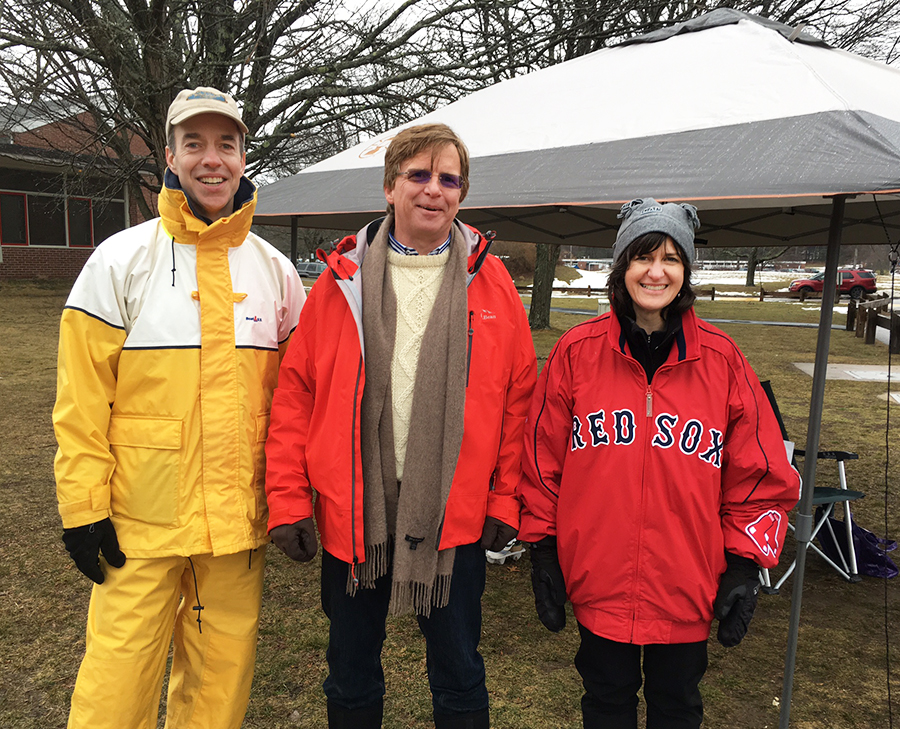
Board of Selectmen candidates Jonathan Dwyer, Allen Vander Meulen, and Jennifer Glass shared a tent to keep off the rain at the entrance to the Smith School polling place on Monday.

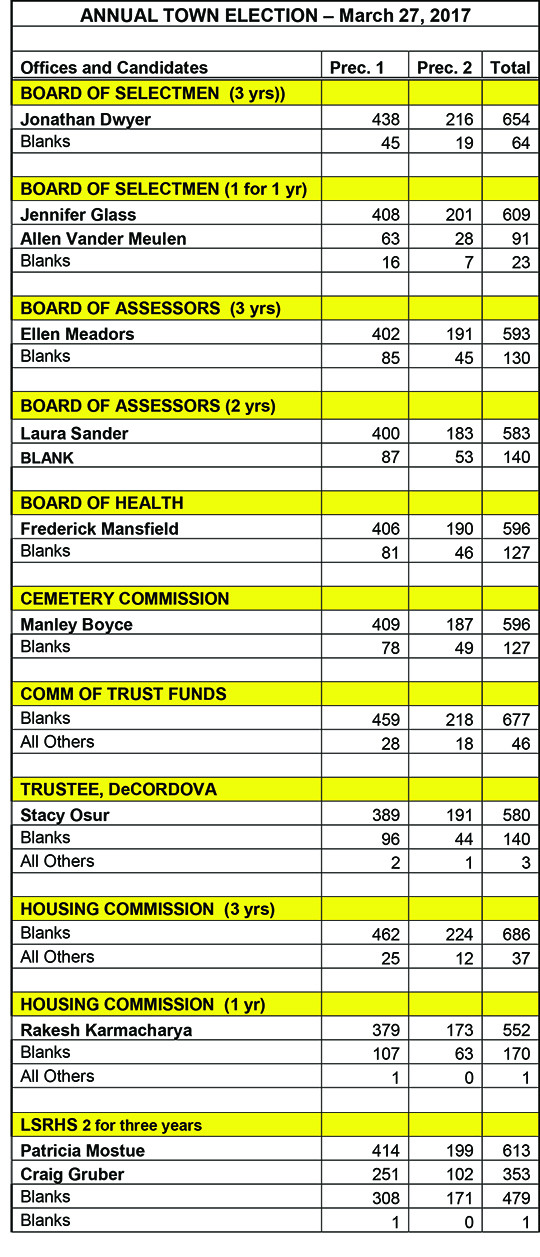
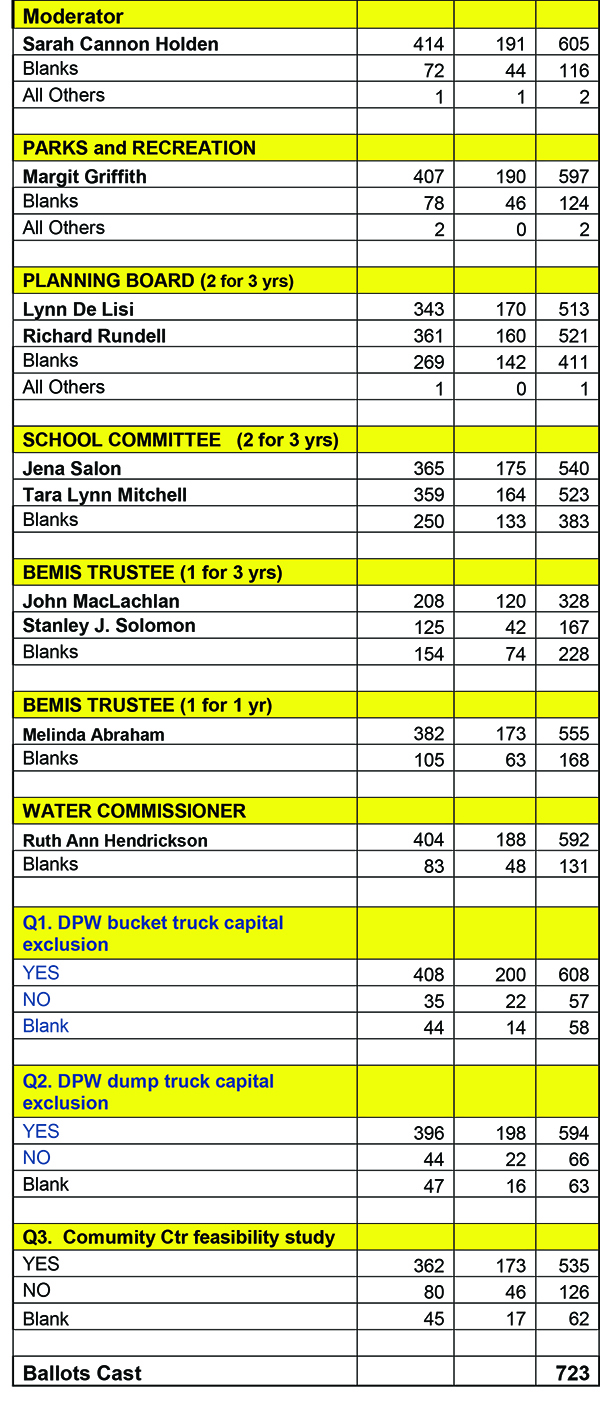
Jennifer Glass easily beat Allen Vander Meulen for the contested one-year vacancy on the Board of Selectmen by a margin of 609-91 (87% to 13%) in the March 27 town election.

In the only other contested seat, John MacLachlan bested Stanley Solomon for a three-year term as Bemis trustee by a margin of 66% to 33% (328 votes to 167 votes).

“This evening I had the honor of being the first to congratulate Jennifer Glass for her win in today’s vote in the contest to decide which of us would fill the final year of the retiring Renel Fredriksen’s seat on Lincoln’s Board of Selectmen,” Vander Meulen wrote on LincolnTalk Monday night. “I did not know Jennifer before we began this contest, but over the last couple of months, I have come to know her as a gracious, intelligent, and tough adversary, and a great person to hang out with and chat on cold, rainy March days. I know that Jennifer will serve Lincoln well, just as she already has in her years on Lincoln’s School Committee, and I look forward to working with her as we each in our own ways continue our labors on behalf of this town and its people that we both love.”

Glass just finished three terms on the School Committee; Vander Meulen is chair of the Housing Commission and its delegate to the newly formed South Lincoln Project Implementation Committee, as well as a member of the Housing Trust.

The new Board of Selectmen will consist of James Craig, who ran unopposed in 2016 for the seat formerly held by Noah Eckhouse; Glass; and Jonathan Dwyer, who ran unopposed this week for the open seat of former Selectman Peter Braun.

Category: elections, government Tagged: elections Leave a Comment

Candidates offer views on wide range of issues

March 13, 2017

Twelve of the residents who are on the ballot for Lincoln’s local election gathered to answer questions at a moderated candidate forum at Lincoln Woods on March 11.

Before the forum, each candidate was asked by the Lincoln Woods Advisory Council, which organized the event, to respond in writing to two questions. Those answers, which were the basis for much of Saturday’s discussion, were published in the Lincoln Squirrel in three batches last week but have now been compiled into a single post here. That compilation includes a previously unpublished response from Jonathan Dwyer, candidate for the Board of Selectmen, who was not at the forum.

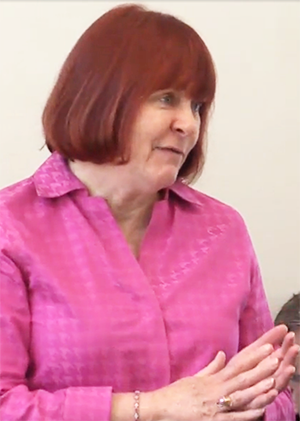
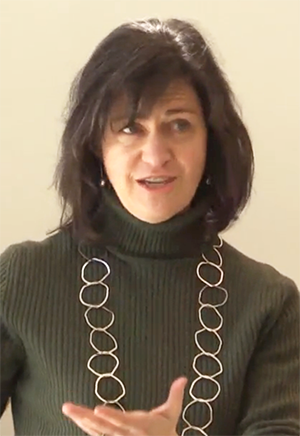
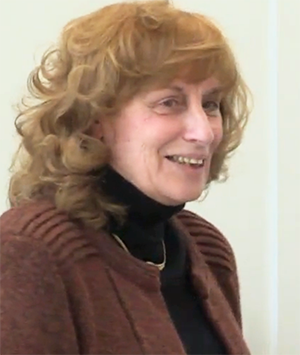
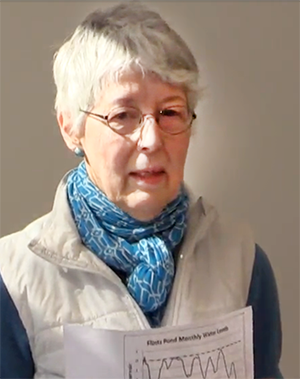
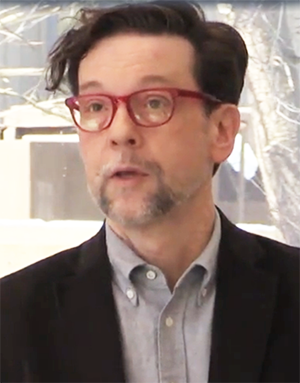
The videotaped event (from which these photos were taken) is available online here. Forum questions from moderator August Sanders and the candidates’ answers are excerpted below.

Melinda Abraham

Melinda Abraham

Running unopposed to reelection as a Bemis trustee (one year)

Q: What can we do to increase engagement and diversity?

Abraham noted that the Bemis Free Lecture Series has had several speakers from WGBH because one of the former trustees had a connection there. “We were taking advantage of a one-time opportunity… but we’d like to engage additional speakers. Trying to do it with our limited budget has been our challenge,” she said. One possibility is engaging people who are already in the area on a book your so the trust doesn’t have to reimburse for travel.

Jennifer Glass

Jennifer Glass

Running against Allen Vander Meulen for one-year vacancy on Board of Selectmen; current chair, School Committee

Q: How do you respond to those who might think you’re running for Selectman to get more clout to push through a school project?

A: “Certainly there’s a little piece of that that is true, in that we are on the verge as a town of making generational decisions” on issues including a community center, Parks and Recreation, affordable housing and South Lincoln, Glass said. “A school project is one of them, though clearly it represents the largest dollar amount. What I would say is I have a lot of experience, because we’ve been talking about a school project for so long [and we need to] see all of these parts in context with each other. I’ve had the opportunity to reach out to a lot of boards and citizens in town. I understand what it is to make mistakes, to learn from them, and own up to them keeping the conversation going even when it’s hard. What I’m really interested in is looking at our community as a whole… who are we going to be for the next several decades.

Q: How can we create affordable housing while being mindful of the costs associated with such as effort?

“One of our core values is trying to be as diverse a community as possible… Yes, [affordable housing] may draw on resources, but that’s OK. I think that’s an investment in who we are and who we want to be.”

Noting that the next Board of Selectmen will consist of two newcomers and a member with only one year of experience, Glass said, “I think it’s a really an opportunity. We have that chance to start a little bit from a clean slate and ask question—why is it done this way, how do we make what’s working and move it forward?”

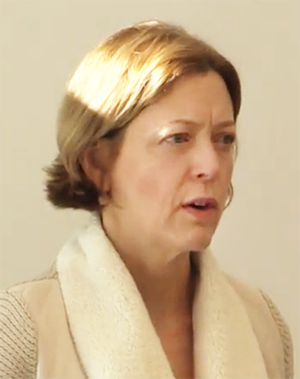
Lynn DeLisi

Lynn DeLisi

Running unopposed for Planning Board (three years)

Q: You wrote [in your pre-forum response] that you’d like to see more enforcement of our bylaws. Can you expand on that statement? 

A: “When I volunteered four years ago [for the Planning Board], I was very excited about learning something new and contributing to our community. I found that we rigorously try to protect the bylaws put together at Town Meetings, yet we don’t have any method of enforcing what we do,” aside from the limited resources of the police and the building inspector, she said. “I think we need to open a town discussion on how we enforce the bylaws.”

Q: What is your vision for Lincoln Center and what is the role of Planning Board in that?

DeLisi noted that there had been a report on South Lincoln as well as an advisory committee and a consultant, “and we kept on thinking and talking and there was no action.” As a member of the search committee to hire a new town planner last year, “my main drive was looking at their personalities and whether this was someone who had the internal drive to do things that a planner should do. And one thing a planner should do is revitalize the town center… taking the initiative and running with it. That’s exactly what [Jennifer Burney] did. She created a vision for how we go about this” by prompting formation of the Economic Development Advisory Committee [EDAC] and the South Lincoln Implementation Planning Committee [SLPIC].

Another important issue is recreational marijuana, which is now legal in Massachusetts, “but we as a town haven’t come up with how we’re going to handle it. This is a billion-dollar business, as we’ve seen in Colorado. We have to decide what we want. Will there be stores in South Lincoln selling it? Will there be a lot of people growing it? Marijuana used in adolescents clearly affects the brain in a bad way,” said DeLisi, who is a psychiatrist. “I don’t want to see that be more accessible to young people in our community” who could buy cookies and candy containing marijuana in Lincoln Center.

Ruth Ann Hendrickson

Ruth Ann Hendrickson

Running unopposed for Water Commission (three years)

Hendrickson displayed a graph showing water levels in Flint’s Pond over the past few years. In summer 2016, largely due to lawn watering during the drought, “we used more water than we ever have in the history of the town. Even though we’ve had a normal amount of rain this winter, we’re starting very, very low. It’s very serious and I’m asking you not to water your lawns.” She asked anyone to come to her with ideas about “how to approach wealthy people who water their lawns no matter what… they have people for that and don’t care what it costs.”

Asked what water conservation actions Lincolnites could take, she said, “Not water your lawn. Most lawns will revive when the rains come again.” She also recommended using drip irrigation and re-landscaping with ground cover and bushes, and if grass is used, using a long-root, drought-resistant variety in small areas. Indoors, toilets and the washer use about half the home’s water, and the town provides rebates for purchasing water-efficient appliances.

Lincoln should consider the recent suggestion of a town communications subcommittee, because “I don’t think we’re using the modern communications techniques of the younger generation. Asking someone to come to a meeting just isn’t working any more… We need to reach out to find other new ways to make not only information available, but also discussions, Snapchat or whatever they’re using,” she said.

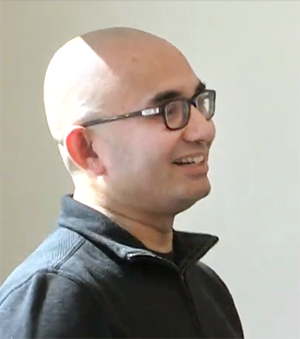
Rakesh Karmacharya

Rakesh Karmacharya

Running for Housing Commission (one year)

Karmacharya is interested in exploring “nontraditional housing options” such as homeowners renting out rooms in exchange for helping around the house, shopping and other errands, etc. This would open low-cost housing opportunities in Lincoln for younger people (including, for example, teachers at LEAP) while also helping elderly residents remain in their homes for as long as possible.

“There are a lot of elderly who live alone, as well as families with young kids, but there’s not as much interaction [as there could be] between those two vibrant groups… [we might be able to] create surrogate grandparents and surrogate grandchildren” for seniors whose extended family live far away. “I see housing as part of the bigger fabric of community,” he said.

Stanley Solomon

Stanley Solomon

Running against John MacLachlan for Bemis trustee (three years)

“The people I think of that would be good speakers are people from the STEM world and people from outdoors,” said Stanley, 85. “And I promise I will not be running around in Lincoln politics for the next 15 years.”

Q: Do you see a role for trustees to collaborate wth other town commissions?

“The Bemis Trust should confine its activities to providing what the trust was established for. I think the rest of Lincoln has enough committees and people to take care of things they’re there for. I don’t see see this kind of interdisciplinary thing as being beneficial.”

John MacLachlan

John MacLachlan

Running against Stanley Solomon for Bemis trustee (three years)

“To be honest, after the last [national] election, I felt obligated to get more engaged with the community,”  MacLachlan said when asked what inspired him to run for town office after living in Lincoln for only three years. “I’ve been to a number of events where there were mainly elderly people and few young families, or the reverse. It would be nice to have more young families there, with [Bemis Lecture Series] topics that topics that would engage both the elderly and the young.”

MacLachlin has also been asked by the Parks and Recreation Commission to fill an appointed seat, and he said that he could hold both posts, but “would be happy to allow Stanley to take that position” as a Bemis trustee.

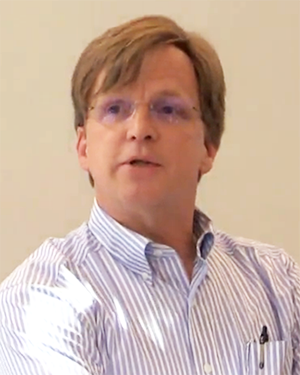
Fred Mansfield

Fred Mansfield

Running unopposed for reelection to the Board of Health (three years)

Mansfield was asked about how the town could balance its emphasis on protecting the environment with the need to protect residents’ health in the face of threats from Lyme disease and other tick-borne and mosquito-borne illnesses, and what (if anything) the Board of Health can do to mitigate those threats.

State environmental officials set traps for mosquitoes and monitor what diseases they’re carrying, which can also include West Nile virus and (perhaps eventually) Zika, Mansfield said. However, “we don’t have much in the way of mosquito control because [homes in Lincoln] are so dispersed.” There are a few catch basins in which the town could put larvicide, and if there was a major outbreak of mosquito-borne illness, helicopters could do aerial spraying of insecticide, he said.

As for ticks, Mansfield recommended that residents pull their socks up over their pant legs, put on insect repellant containing permethrin on their socks, and check themselves carefully for ticks. “We have no way of controlling the deer or the mice that are part of the [Lyme disease] cycle, and we won’t really have a solution other than prevention,” he said. According to Mansfield, his fellow Board of Health member Steven Kanner, an internist, has advised that anyone who finds a tick on his or her body, even without an obvious bite or bull’s-eye lesion, to “take two doxycycline pills and forget about it, trying to prevent things rather than treat them.”

The candidate was also asked about the leaf blower issue. In 2015, the Board of Health went on record as saying that airborne particles and noise from gas-powered leaf blowers are a health hazard, but later distanced itself from proposed restrictions on use of the machines by homeowners not in the South Lincoln commercial area.

“Our thought was that the Board of Health doesn’t have an enforcement arm, and Lincoln Police were not interested in taking that on,” he said. “The question is how would they do that. Do they go around with noise meters?” The board instead supports “neighborly agreements” to limit the times of year that gas-powered leaf blowers and string trimmers could be used. If this didn’t work, “we’ll probably go in front of Town Meeting and it will probably be voted down because people don’t want to pay contractors to rake by hand, and electric leaf blowers are not as powerful,” he said.

Patty Mostue

Patty Mostue

Running unopposed for reelection to the Lincoln-Sudbury School Committee (three years); former Lincoln School Committee member

“What I like about Lincoln is what I also like about the high school—the great sense of community,” Mostue said. Recent innovations at L-S include the We Are Warriors program aimed at students who may not be college-bound that helps them feel “they belong in the high school no matter what their path to higher education or work.”

“There are new people moving into Lincoln who don’t always take part in Town Meeting… I think it would be a danger to lose the sense of community that has to be guarded and nurtured all the time,” Mostue said when asked what she would like to see changed about Lincoln.

Rick Rundell

Rick Rundell

Running unopposed for reelection to the Planning Board (three years)

Q: In your written response, you said you’d like to see broader civic engagement. Is there a way the Planning Board can help with that?

Rundell noted that there are now greater opportunities for participating in the planning and economic development process with the creation of the EDAC and the SLPIC. The EDAC will be help in promote the economic health of the town by bringing together people in the business and nonprofit communities, including those who are not Lincoln residents but have an interest in seeing those businesses succeed.

Laura Sander

Laura Sander

Running unopposed for the Board of Assessors (three years); current member of the Finance Committee

As a Finance Committee member, Sander said she has “learned a lot about Lincoln finances—in particular, property taxes, which account for about 76 percent of our revenue. The oversight of that resource is really critical to how we function. We really need to be aware of our taxing capacity and how we can best utilize that. This is outside the purview of the Board of Assessors, but as a town, as we think about more commercial development or more affordable housing, we have to think about the impacts and what that means to us as taxpayers.”

Q: You wrote, “I would like to ensure that the oasis that we work hard to maintain is not an enclave that is separate from the rest of the world and its concerns.” Can you give a couple of examples of how to work harder to promote this vision?

A: “I get really concerned about the fact that we can pay a lot of lip service” to things like METCO and affordable housing, “but we need to engage with each other,” Sander said. “I don’t have specific solutions for how to do that… but if we’re not engaging somehow, we’re not getting enough out of that. We have to think about how do we create forums that allow people to really interact.”

Allen Vander Meulen

Allen Vander Meulen

Running against Jennifer Glass for one-year vacancy on the Board of Selectman; current member of Housing Commission and SLPIC

Q: Can you expand on your definition of “the Lincoln way” and how it can be improved upon?

A: “To me, the Lincoln way means that we’re all part of the community. There’s not some elite that’s driving us; everyone’s voice is important… even if you disagree with someone, [making sure] their voice is heard and taken seriously, making sure that one group doesn’t get to trump the other or create a lot of division that doesn’t need to be there,” Vander Meulen said. In his previous career as an IT manager he said he often dealt with situations where “everyone was at each other’s throat or had no idea how to get where they needed to go,” and his skill was “building consensus and a sense of camaraderie and mutual direction.”

“As a minister and a volunteer, your focus is on building the community, facilitating dialogue, and making sure the people who aren’t involved are. One thing you can’t do is just sit back and wait for people to come to you. I know too many churches that died thinking a fresh coat of paint on the front door and new carpeting would solve their problems.”

Of his opponent Glass, Vander Meulen said, “I’ve been very impressed with her. No matter who wins this election, you’ll see both of us around for a very, very long time.”

“That’s either a promise or a threat,” Glass said to laughter.

Category: elections, government, news, schools Leave a Comment

More candidate answers before March 11 forum

March 5, 2017

In preparation for the town-wide candidates forum on March 11 (see the Lincoln Squirrel, March 2, 2017), three more candidates have submitted answers to the two questions posed by the event’s organizers: What do you like best about Lincoln? What would you like to see changed? The forum will take place on Saturday, March 11 from 10 a.m. to noon in the Lincoln Woods Community Center at 50 Wells Rd. Each candidate will make brief opening and closing statements and take one or two questions in between.

Melinda Abraham (Bemis trustee)

What I like best about Lincoln: I love the amazing people who are quite engaged in the community.
What would I like to see changed: I’d like to see funding devoted to a community center and to a elementary/middle school.

Lynn DeLisi (Planning Board)

What I like best about Lincoln: Living in Lincoln is wonderful because it has a serene natural environment filled with wildlife of all kinds, beautiful farms, and with many well maintained paths through the fields so its residents and visitors can enjoy all it has to offer. Despite its rural atmosphere, it is still amazingly close to Boston for work and enjoying all the city has to offer.

What I would like to see changed: I look forward to facilitating the revitalization of a Lincoln Center where local residents can meet and share interests over coffee or meals and having many of their daily needs met. I would also like to see enforcement of our bylaws so that what I like most about Lincoln can be preserved.

Laura Sander (Board of Assessors)

What I like best about Lincoln: I like best the feeling that Lincoln is an oasis of peace and calm. I find it refreshing to step off the train at the end of the workday and be in this place that we together as a community work to maintain. I find the access to the outdoors restorative.

What I would like to see changed: I would like to ensure that the oasis that we work hard to maintain is not an enclave that is separate from the rest of the world and its concerns. I appreciate the efforts many make to encourage diversity of people and thought and would like to see us work even harder to promote both.

Category: elections, government Leave a Comment

Candidates answer questions ahead of March 11 forum

March 2, 2017

(Editor’s note: This article was expanded on March 12 to include responses that were published here and here after this first set was posted. It also includes a response via LincolnTalk from Board of Selectman candidate Jonathan Dwyer.)

There will be a moderated town-wide candidate forum on Saturday, March 11 from 10 a.m. to noon in the Lincoln Woods Community Center at 50 Wells Rd. in preparation for the March 27 town election. Each candidate will make brief opening and closing statements and take one or two questions in between.

In advance of the forum, the Lincoln Woods Advisory Committee asked everyone on the ballot to briefly answer two questions: What do you like best about Lincoln? What would you like to see change? Answers from some of the candidates are below (edited for space and clarity), in alphabetical order by their last names. Additional answers will be published as they become available.

Melinda Abraham (Bemis trustee)

What I like best about Lincoln: I love the amazing people who are quite engaged in the community.
What would I like to see changed: I’d like to see funding devoted to a community center and to a elementary/middle school.

Lynn DeLisi (Planning Board)

What I like best about Lincoln: Living in Lincoln is wonderful because it has a serene natural environment filled with wildlife of all kinds, beautiful farms, and with many well maintained paths through the fields so its residents and visitors can enjoy all it has to offer. Despite its rural atmosphere, it is still amazingly close to Boston for work and enjoying all the city has to offer.

What I would like to see changed: I look forward to facilitating the revitalization of a Lincoln Center where local residents can meet and share interests over coffee or meals and having many of their daily needs met. I would also like to see enforcement of our bylaws so that what I like most about Lincoln can be preserved.

Jonathan Dwyer (Board of Selectman, three years)

What I like best about Lincoln: What I like best about Lincoln is its quirky character. Does any other town have a July 4th parade with a half time? I think this means we have twice as many parades on July 4th than any other town in the country! Our police officers have to be prepared to subdue the armed and dangerous as well as evasive juvenile bull #27 that jumps over fences daily. Our high school wins state championships in sports, and has competed at the national level in speech & debate. Middle school lego robotics competed at national and international levels. Still, the 5-way intersection flummoxes. We are a very small town charmed by farms, an art museum, a state park (reservation), a national park, and our own Air Force Base and MBTA stop. That’s quirky. And I haven’t even mentioned the people!

What I would like to see changed: The change I would like to see in town is an even greater willingness to listen, understand each other, and get involved solving problems small and big. Although every one of us is busy, it would be great if more seek to know the issues and the complexities that prohibit simple solutions, from cutting down dying roadside trees (state law restrictions) to food banks and substance abuse program (yes, people in our community use these services), positive outcomes happen more quickly with greater involvement. And when change comes slowly, unexpectedly, or is undesired, at least more of us understand why.

Jennifer Glass (Board of Selectmen, one year)

What I like best about Lincoln: As many have been before me, I was first drawn to Lincoln by its combination of beauty and location. Having grown up in the Adirondack mountains, I cherish Lincoln’s quiet woods, hidden ponds, open fields and farmland. As someone who has lived in the Boston area for 30 years, I value the ready access we have to the city. For me, Lincoln is a remarkable combination of my rural Adirondack roots and Boston’s urban energy. My family and I feel extraordinarily fortunate to call it home.

Before we moved to Lincoln 10 years ago, Andrew and I often visited Drumlin Farm and the deCordova with our daughters, and so had found ourselves drawn to the town for a long time. We were fully prepared to enjoy it for the ease of Andrew’s train ride, the peacefulness of our street, and the charming vistas of sheep and cows swathed in morning mist. What we did not realize was how welcoming our neighborhood was, or how easy it would be to become part of the fabric of the community. After getting our daughters settled in the Lincoln School, a seamless, mid-year transition, I decided to jump into the civic life of the town by volunteering to serve on the Lincoln School Committee’s Class Size Policy Subcommittee. I did not imagine then that a decade later I would be finishing my third term on the School Committee and running for selectman.

Lincoln’s commitment to engagement inspires me. During my time on the School Committee, I have worked with thoughtful, creative, collaborative committee members and administrators. We push one another to clarify our thinking, and our collective experience and skills make us better than the sum of our parts. I have had the same experience with numerous other boards and committees on topics ranging from policy development to emergency planning, and from budget development to planning for a school building project. Being on the School Committee has taught me to see any given issue from multiple viewpoints, and to try to make sure that we fully understand the consequences of our decisions. It’s work that is both intellectually and emotionally stimulating and satisfying.

What I would like to see changed: As a selectman, I would not want to change Lincoln. Rather, I would want to work with my colleagues to strengthen the flow of open communication and collaboration between the Board of Selectmen and town citizens. This will allow each of us to view our particular interests within the broader context of the town and to function at our best.

We are on the cusp of decisions that have the potential to positively impact every individual in town and that will shape Lincoln for decades to come. These choices include: How do we maximize our investment in public infrastructure, such as our educational, recreational and community facilities? How do we ensure a vibrant town that serves and supports each generation? How do we meet sustainability goals? What is our town’s role within our wider region? How do we ensure that the tradition of engagement remains strong? These are complex questions that require regular, proactive communication among our citizens and all of the town boards and committees.

Ruth Ann Hendrickson (Water Commission)

What I like best about Lincoln: I like the fact that Lincoln has so carefully protected the watershed and swamps that supply our drinking water.

What I would like to see changed: I wish we had a “no lawn irrigation” ordinance.

Rakesh Karmacharya (Housing Commission)

What I like best about Lincoln: I like the small-town feel of Lincoln and the warm and welcoming community. I love living in an idyllic setting while still being able to commute to work in Boston.

What I would like to see changed: I would like to explore possibilities of increasing nontraditional affordable housing options in Lincoln while nurturing meaningful interactions within our community. On the one hand, there is a dearth of housing options in Lincoln for millennials and young families. On the other hand, we have some elderly members of our community who are trying to decide whether they can still safely live in their houses or whether they need to move to an assisted living facility due health and safety concerns. Is there a mutually beneficial opportunity for interested elderly members in Lincoln to provide a room or two in their houses to a young person or a young couple in return for help with some tasks around the house? This arrangement enables the elderly to continue living safely in their houses while providing new housing opportunities for young folks who are attracted to Lincoln.

John MacLachlan (Bemis trustee)

What I like best about Lincoln: My favorite thing about Lincoln is the sense of community although I was initially drawn to Lincoln by the open space and trails.

What I would like to see changed: I’d love to see the already impressive community become further engaged and to see more interaction between the relatively new residents with long term Lincolnites. 

Fred Mansfield (Board of Health)    

What I like best about Lincoln: Lincoln’s emphasis on land conservation and open space.

What I’d like to see change:
I’d hope that more people would take an interest in town government by attending Town Meeting and voting in town elections.

Rick Rundell (Planning Board)

What I like best about Lincoln: What I love about Lincoln is the strong sense of stewardship for our shared physical heritage. In other words, people here really care about the community, about each other, and about the unique character of our physical environment.

What I’d like to see change: I would love to see even broader civic engagement from citizens of Lincoln across all of our populations. The more people who participate in making this town work the stronger we are as a community.

Laura Sander (Board of Assessors)

What I like best about Lincoln: I like best the feeling that Lincoln is an oasis of peace and calm. I find it refreshing to step off the train at the end of the workday and be in this place that we together as a community work to maintain. I find the access to the outdoors restorative.

What I would like to see changed: I would like to ensure that the oasis that we work hard to maintain is not an enclave that is separate from the rest of the world and its concerns. I appreciate the efforts many make to encourage diversity of people and thought and would like to see us work even harder to promote both.

Stanley Solomon (Bemis Trustee)

What I like best about Lincoln—While my wife Susan and I moved from Lexington to The Commons only about six years ago, I have been hiking and leading hikes in Lincoln for more than 40 years. From this, you might surmise that I rate Lincoln’s integrated conservation effort a gem. We see it as the town’s leading attribute.

What I would like to see changed—Town transportation, sewers, more restaurants, increased retail opportunities—these would all be nice to have, but they all come with consequences that, at best, change the appearance, operation and charm that Lincoln now exudes. From following LincolnTalk, it seems that a number of Lincolnites feel that spending one day a year on town government and/or two hours per election exceeds the time they have allocated to being Americans. I indeed would like to see this change.

Allen Vander Meulen (Board of Selectman, one year)

What I like best about Lincoln: The people—regardless of age, race, color faith or any other differentiator, we are all part of an unusually tight-knit and supportive community. This is part of what we mean when we talk of “the Lincoln Way.” You see this in how our town is run, where there is a focus on creating “win-win” situations wherever possible, and in being supportive to our fellow Lincolnites, whether newcomers or longtime residents. This is what has helped Lincoln retain its rural feel and small-town atmosphere despite the increasing suburbanization all around us.

What I’d like to see change: There is general (although not universal) agreement as to the goals and priorities we as a town must address in the next few years. Our differences mostly lie in the timing and sequence of what needs to be done, and in the specifics of how and what to accomplish with respect to each goal. So for me, the real question is not what to accomplish, or what to change, but how to get there.

The phrase “the Lincoln Way” has long been a call to action for us as a town, but the goal of a culture of inclusion and supportiveness that underlie what we mean by “the Lincoln Way” has always had gaps. Those gaps are becoming more apparent with time, challenging our communal understanding of what “the Lincoln Way” means.

How we come together to make tangible progress on the challenges in our immediate future will set the tone for our community’s conversations and leadership for the coming generation. I am convinced we must find new ways to include our neighbors who feel ignored, marginalized, or otherwise excluded from active participation in our community, so that they also can participate in the decisions and tasks before us. Otherwise, we will not be able to accomplish all that we hope (and need) to do. And so, we must reaffirm our commitment to “the Lincoln Way” and deepen and broaden our understanding of what it means.

Category: elections, government Leave a Comment

Glass brings School Committee experience to bid for selectman

March 2, 2017

Jennifer Glass.

After nine years on the School Committee during a period when the town planned and then failed to advance a school building project, committee chair Jennifer Glass is hoping to apply what she’s learned to a new town government position: Board of Selectman member.

Glass is running against Allen Vander Meulen for the remaining year in the term of Selectman Renel Frederiksen, who is resigning from the board as of this month. Also on the ballot for selectman in the March 27 town election is Jonathan Dwyer. He is running unopposed for the open seat of Selectman Peter Braun, who is stepping down after two terms.

The Glass family—Jennifer her husband Andrew, an attorney, and their daughters Caroline and Emily, who are juniors in college and at Lincoln-Sudbury, respectively—have lived in Lincoln since 2006. She has a bachelor’s degree in Russian studies and a master’s in education, and taught kindergarten in Newton before from Brookline to Lincoln, where she has been a full-time parent and volunteer.

“I moved here and jumped in pretty quickly [into school matters], and I’ve enjoyed the fact that this is a town that welcomes people who want to do that. It’s easy to feel engaged, and it’s what has made our time here a lot of fun,” she said.

“What drew me to [running for selectman] was the confluence of events going on in the town right now,” said Glass, referring to a renewed school project push as well as a municipal solar installation at the landfill, economic development in South Lincoln, a possible community center and the Complete Streets initiative. “There are a lot of pieces that individual committees have talked about for a while but are all coming together in a big picture, which I find very interesting and exciting… I believe the experience I’ve had in meeting with other [town government] committees will help further the conversation about how we manage all of these different ideas and projects that seem to be coming together at the same time.”

School building saga

During the first school building process (which ended in defeat in late 2012 when less than two-thirds of voters approved a $49 million total expenditure at a Special Town Meeting), Glass had many dealings with other areas of town government including the selectmen, the Finance Commission, the Capital Planning Committee, the Council on Aging, and the Parks and Recreation Committee.

Reflecting on those events four years later, the failure to advance the project was “really due to a combination of factors,” she said. “There was some initial sticker shock—these are big numbers we’re talking about for the town. To support a project of that magnitude, you have to feel like you’re getting good value for the money you’re spending. Though we had a majority, not everyone was ready to say ‘yes, this was the right value for my dollars,’ whether it was because of the layout of campus, a purely financial decision, or a desire to better understand the connect between a building and the delivery of education,” she said.

Getting formal town consensus on a school and campus design before the funding vote “was really that missing step. We had public forums and neighborhood coffees and so forth, but somehow that step where we made a choice between keeping the building in the general shape it is now and approving the other scheme, somehow there just wasn’t enough vetting of that,” Glass said.

Asked what lessons she drew from the 2012 experience, Glass said, “I’ve certainly learned the importance of talking early and often, whether with other boards or the public. We tried to be very transparent at the time, but you can never stop trying to be transparent. You just have to be very clear and up front about what the decisions are.”

The reversal didn’t sour Glass on the town’s commitment to education—far from it. “Immediately after the [2012] vote, people came to me and said, ‘I couldn’t vote for this but I want to help. What can we do?’ That told me it was not that the town didn’t want to do something, but that we had to go back and figure out how to do a better job of communicating,” she said. “We knew we had to put in place a moment where, after developing a bunch of options, we would come back to the town to get a vote” on one of those design option before the actual funding vote.

Asked about how a community center might fit in with a school project, Glass said she was “very much in favor of those two processes going forward together.” Actual construction may have to be staggered, “but we just don’t know the answers yet. Both feel like good long-term solutions. What we’re trying to aim for is how do we get the most out of both projects.”

Likewise, planning for South Lincoln should move forward even though the town doesn’t yet know the final plan, Glass said. “Depending on what budgetary implications there are, we have to see if the town has the bandwidth, but the conversations have to keep going, even if means there isn’t immediate action on development.” The commercial district can benefit fairly soon from relatively low-cost measures such as marketing and signage, she added.

A young board

Regardless of who is elected to the Board of Selectmen this month, the group will be short on experience, with two new members and a third (James Craig) who has been serving for only a year. “It means that there would be a steep learning curve, clearly. But there’s a deep institutional knowledge in Town Hall,” Glass said. “And there are many people in town who have served in this role before who I’ve always found to be very wiling to give their input and advice and fill in on the historical info that I may not have at my fingertips.

“While I certainly have a lot to learn, I understand how town government works and how the meeting law works and how all of these pieces fit together. I don’t see it as a problem because I know there’s this kind of support network out there” of professionals and volunteers,” she said.

Glass feels that the past nine years have honed her political skills a well as procedural knowledge. “I think I’ve shown that I have a fair amount of perseverance and willingness to continue difficult conversations and find common ground. I think I’m willing to listen and keep talking and try to find solutions that bring people together,” she said.

Category: elections, government, news, schools Leave a Comment

Vander Meulen charts a people-centered path

March 1, 2017

Allen Vander Meulen.

ADDENDUM: This article was updated on March 2 to include Vander Meulen’s campaign website.

(Editor’s note: The Lincoln Squirrel will profile Board of Selectman candidate Jennifer Glass on March 2. Click here for an earlier story about candidate Jonathan Dwyer.)

Allen Vander Meulen has been an IT executive and a minister. Now he hopes to parlay his experience in facilitating communication and “finding solutions where no one had even thought of them” into a new role as selectman in Lincoln.

Vander Meulen is competing with Jennifer Glass for the remaining one year in the term of resigning Selectman Renel Frederiksen. Also on the ballot for selectman in the March 27 town election is Jonathan Dwyer. He is running unopposed for the open seat being vacated by Selectman Peter Braun, who is stepping down after two terms.

After studying history at North Central College in Naperville, Ill., Vander Meulen spent 25 years in the information technology field in managerial and executive roles, “oftentimes fixing chaotic situations… I could come in, calm people down, and negotiate with both the IT folks and our clients,” he said. “I was good at it and I enjoyed it, but my focus was always on the people, not the technology.”

Living all over the country with his first wife, a conservative Christian, Vander Meulen attended all sorts of churches. “It gave me a real appreciation of the depth of the faith experience and the racial experience in this country,” he said. He subsequently decided to become a minister and earned his M.Div. degree from Andover Newton Theological Seminary in 2013. His father was a minister in Vermont but later became a professor of economics; “I went in the opposite direction, but it took me a lot longer to get to that point,” he observed.

Vander Meulen was a student minister at the Memorial Congregational Church in Sudbury and more recently a part-time minister at a church in Dalton, a post he is leaving in June. He has lived in the Boston area since 2006 and moved to Lincoln two years later with his wife Stephanie Smart, a chiropractor, and their seven-year-old son, who attends a private school in Lexington.

Lincoln appealed to Vander Meulen and his wife because of the open space and the town’s “leadership in zoning and conservation values,” he said. In the eight years since moving to town, he came to appreciate the supportive culture of volunteer town government.

“One thing I’ve noticed about Lincoln is that there are so many people who not only work hard at trying to build consensus and making sure people are heard, but who also really want people to succeed,” he said. He is now co-chair of the Housing Commission and expects to be involved one way or another with the South Lincoln Implementation Planning Committee. (If elected to the Board of Selectmen, he will resign from his other town positions.)

Like many Lincolnites, Vander Meulen is pondering the best way forward for the Lincoln School, which will have to be substantially repaired or replaced, most likely without state funding. “Replacing the entire structure, particularly doing it at one shot, is a bad idea,” he said.

A new school that attracts lots of young families may have unintended consequences, he added. “If we put in a big beautiful new building all at once, we could become another Sudbury,” where people move to town only for a few years and then leave once their kids are out of the house. When he was a student minister in Sudbury, “It was very apparent that was the case… people came, stayed for 12 years and moved, but people in Lincoln move here and stay,” Vander Meulen said.

Although more expensive in the long run, it would be wiser to rebuild the school a piece at a time, he said. This would also give the town a chance to adjust to changing enrollments without being “locked into a set of assumptions about how many students there will be.” An incremental approach would also lower the year-to-year cost by spreading payments over a longer period of time, Vander Meulen added, saying, “we don’t need to replace it all in the next five years or 10 years.”

Affordable housing, economic development

Affordable housing is another important issue facing Lincoln, which is in danger of falling below the state-mandated 10 percent minimum when the 2020 census is taken. “We’re right on the knife’s edge,” Vander Meulen said. If this happens, a developer could be allowed to build affordable housing as part of a large subdivision that normally wouldn’t pass zoning muster. Creating more affordable housing with incentives for accessory apartments would avoid large-scale construction while maintaining the economic diversity of Lincoln. “We need people in town other than those of us who are wealthy,” he said.

Vander Meulen is also in favor of more economic development, especially in South Lincoln, as well as measures to encourage people who visit Lincoln for one reason (such as going to Drumlin Farm) to sample other attractions such the deCordova Sculpture Park and Museum, or Codman Community Farm. He’d also like to make it easier for pedestrians to get from the library area to the deCordova, and along Route 117 from the police station toward Stonegate Gardens.

“When Allen approached me about running for the Board of Selectmen, I said great—not because we’ve been here forever, and not because he has any firm opinions about how Lincoln needs to change, but because he has the skill set to help the government achieve what they want to happen,” Smart said.

“I want everyone to have a seat at the table. People may sometimes be irritating, but they need to be listened to,” Vander Meulen said. “The emotion is always valid, so you need to understand why they’re feeling that way.”

Category: elections, government, news Leave a Comment

News acorns

January 31, 2017

Candidates still needed for two town posts

There’s still time to run for office in the upcoming Town Election of March 27. Currently there are no candidates for the Housing Commission (a three-year seat) or Bemis Board of Trustees (a one-year seat). The deadline to take out nomination papers from the Town Clerk’s office is Friday, Feb. 3. Papers must be returned for certification by 5 p.m. on Tuesday, Feb. 7.  Candidates must collect 28 registered voter signatures to appear on the ballot.

Selectman candidate’s forum on Feb. 12

The Northside News will host a session for candidates for the Board of Selectmen—Jonathan Dwyer, Jennifer Glass and Allen Vander Meulen—in a discussion of issues facing the town on Sunday, Feb. 12 from 12:30-2:30 p.m. at the Lincoln North Office Building (55 Old Bedford Road). Residents will have a chance to hear from each candidate, pose questions and discuss issues. (Editor’s note: the Lincoln Squirrel will publish interviews with Glass and Vander Meulen before this event.)

Donated toiletries sought

Women and children who are in shelters remaking their lives after experiencing domestic violence need toiletries like shampoo, soap, toothpaste, hand and body lotions, and more. If you have unopened toiletries from hotels or stores that you can’t use, please bring them to Bemis Hall by Friday, Feb. 6. A volunteer will take them to local domestic violence organizations for Valentine’s Day distribution.

“Lincoln marchers” start email list

Some of the “Lincoln marchers” who went to the Boston Women’s March for America (or those who went to the Washington March) on January 21 are organizing an email network to facilitate follow-up action on behalf of the march objectives of peace and justice. The group is starting with the “10 actions 100 days” agenda that can be found on the website of the Women’s March for America (www.womensmarch.com/100). If you would like to add your name to the Lincoln email list, whether or not you actually marched on that date, please contact Barbara Slayter at bslayter@comcast.net.

LOMA features Greg Klyma

Greg Klyma will be the featured performer at the next LOMA (Lincoln Open-Mike Acoustic) night on Monday, Feb. 13 from 7-10 p.m. at the Lincoln Public Library. Admission is free and refreshments are provided. Klyma will perform a half-hour set starting around 8:30. His articulate and amusing stories and populist ideals make him a rare young artist in the mold of Woody and Ramblin’ Jack. A nationally touring performer, he has seven albums to his credit; his latest, Another Man’s Treasure, features the song Livin’ the Life.

LOMA is a monthly event. Performers can sign up at the event or email Rich Eilbert at loma3re@gmail.com for a slot. There is a sound system with mikes and instrumental pickups suitable for individuals or small groups.

Category: arts, charity/volunteer, elections, government Leave a Comment

  • « Go to Previous Page
  • Page 1
  • Interim pages omitted …
  • Page 7
  • Page 8
  • Page 9
  • Page 10
  • Page 11
  • Go to Next Page »

Primary Sidebar

Recent Posts

  • Water bills to go up by 13% March 5, 2026
  • News acorns March 5, 2026
  • Property sales in January 2026 March 4, 2026
  • My Turn: Unraveling the Hanscom misallocation March 3, 2026
  • Police log for Feb. 19–25, 2026 March 3, 2026

Squirrel Archives

Categories

Secondary Sidebar

Search the Squirrel:

Privacy policy

© Copyright 2026 The Lincoln Squirrel · All Rights Reserved.