• Skip to primary navigation
  • Skip to main content
  • Skip to primary sidebar
  • Skip to secondary sidebar

The Lincoln Squirrel – News, features and photos from Lincoln, Mass.

  • Home
  • About/Contact
  • Advertise
  • Legal Notices
    • Submitting legal notices
  • Lincoln Resources
    • Coming Up in Lincoln
    • Municipal Calendar
    • Lincoln Links
  • Merchandise
  • Subscriptions
    • My Account
    • Log In
    • Log Out
  • Lincoln Review
    • About the Lincoln Review
    • Issues
    • Submit your work

arts

My Turn: Check out famed cellist Helen Gillet on Friday

June 26, 2024

By Mimi Borden, Sara Mattes, and Rachel Marie Schachter
This Friday night, we have a unique opportunity to hear a gifted, boundary-breaking artist — cellist Helen Gillet — in a rare New England performance. She will take the stage at 8 p.m. on Friday, June 28 at Bemis Hall.

Helen has played notable venues around the world including Lincoln Center, NPR’s Tiny Desk, and TEDx stages. She performs most often in New Orleans, her current home, where her packed performances at the New Orleans Jazz Fest are consistently met with standing ovations.

Helen has a unique approach to music. She sings in English, French, and other languages while accompanying herself with multi-layered sounds that she records and loops as she performs. Her eclectic palette, technical prowess, extended techniques, and artistic daring combine to create an other-worldly experience. It’s one not to be missed. This is a sample of what you’ll hear.

Please join the Bemis Free Lecture Series to experience a most enchanting evening.

The authors are Bemis Trustees.


“My Turn” is a forum for readers to offer their letters to the editor or views on any subject of interest to other Lincolnites. Submissions must be signed with the writer’s name and street address and sent via email to lincolnsquirrelnews@gmail.com. Items will be edited for punctuation, spelling, style, etc., and will be published at the discretion of the editor. Submissions containing personal attacks, errors of fact, or other inappropriate material will not be published.

Category: arts, My Turn Leave a Comment

News acorns

June 25, 2024

Cello concert on Friday

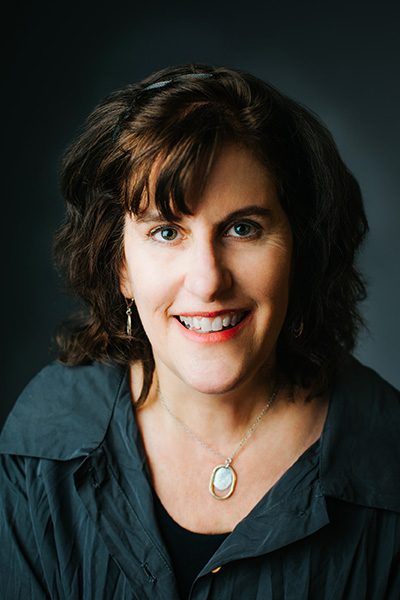
Helen Gillet

See Helen Gillet, a “whirling dervish of the cello,” in concert on Friday, June 28 at 8 p.m. in Bemis Hall. Gillet is a cellist, singer, composer, and master improviser who grew up in Belgium, Singapore, Illinois and Wisconsin. Calling New Orleans home since 2002, she is a jazz festival favorite who regularly performs on stages all over the world. Her solo shows are an eclectic mix of styles including French chansons, Belgian folk sung in Walloon, contemporary jazz, North Indian blues and classical. She combines acoustic cello with voice, percussion and live looping and layering technology to explore and push the boundaries of sound and rhythm. See videos of her performing here. Free; sponsored by the Bemis Free Lecture Series.

Coming up at the library

Kids’ Comic Workshop with LJ Baptiste
Monday, July 8 from 7–8 p.m., Tarbell Room
ids ages 7+ are invited to join Boston cartoonist and comic artist LJ-Baptiste for a three-week workshop on Monday nights in July to learn how comics are made. You will also create your own comics and original characters using techniques from pros in comics and manga as well. All supplies will be provided by the library. Registration required; participants are encouraged to register for all three workshop sessions. Register here.

Ricardo Frota

Ecology of Sound: Ricardo Frota
Wednesday, July 10 from 11 a.m.–noon, Tarbell Room
Join us for a performance by Ricardo Frota that inspires children and parents to absorb the rhythms, sound and music from different global cultures and the natural world that surrounds them. Ricardo entertains and educates while playing multicultural songs and improvising with Earth elements. His interactive performances use traditional rhythm instruments, and instruments made of recycled materials and also objects found in nature. All ages welcome; no registration required.

Dungeons and Dragons: A Library Campaign
Thursday, July 11 from 4–5 p.m., Tarbell Room
Come play Dungeons and Dragons in the library with DM Nikolas Metcalf. Registration required; for ages 11+. Register here.

Donate art supplies to Lincoln hospice house

Lincoln resident Stacey Sawyer-Mackie, who volunteers with the Care Dimensions hospice house in Lincoln, is collecting adult coloring books, colored pencils, thin-tipped markers and similar items to have available for family members and visitors at the hospice house. If you can donate such items or easy word search, simple crossword puzzle books or other similar items, email her at slsweet830@aol.com.

Category: acorns, arts Leave a Comment

Art sales pull in funds for Boston Bridges Initiative

May 30, 2024

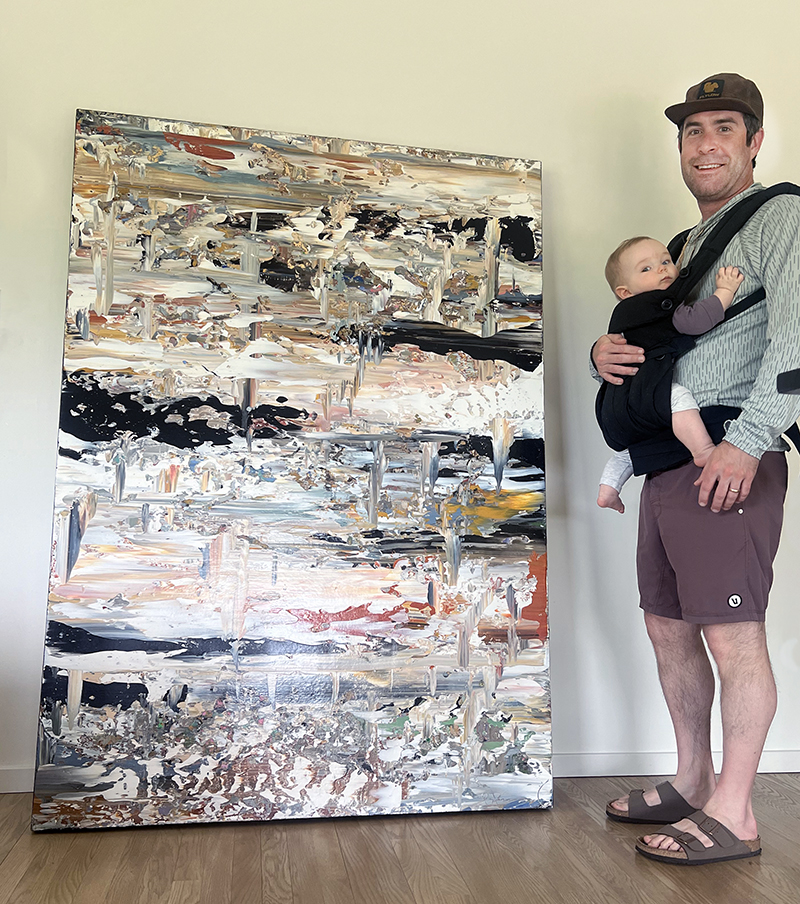
The Schrader-Johnson family of Lincoln with their new painting. 

The Schrader-Johnson family of Lincoln are the proud new owners of an original painting titled “Changes” by James Leonard. They purchased the painting at a recent event hosted by Boston Bridges Initiative (BBI), a nonprofit that facilitates cultural exchange and meaningful social interaction between city and suburban families in the greater Boston area.

The art sale was a fundraiser through BBI’s Downsize for Diversity program, which accepts donations of artwork and sells it at greatly reduced prices — and whose earlier iteration resulted in this 2022 book. The sale focused on art donated by the global consulting firm McKinsey & Co.

Framed paintings and photographs from this collection are still available along with hundreds of additional pieces of art at a home gallery in Lincoln. If you’re interested in purchasing art at discount prices for a good cause, contact Joanna Schmergel at owenjoanna@yahoo.com or 617-645-9059.

Category: arts, charity/volunteer, news 1 Comment

Exhibit celebrating the life of Gerald Foster starting June 4

May 29, 2024

Gerry Foster

An exhibit celebrating the life and work the late Lincoln artist, architect, and author Gerald Lee Foster will be on displayed from June 4 through July 13, 2024 at The Gallery at Villageworks (525 Massachusetts Ave., West Acton).

Foster passed quietly in his sleep on June 25, 2023 in Lincoln at the age of 86. Contributions in his memory may be made to Mass Audubon, 208 South Great Road, Lincoln, MA 01773. Burial arrangements were handled by the Dee Funeral Home. See his full obituary and online guestbook. 
 
The exhibit is organized by Foster’s children Mark Foster, Ryan Foster, and Shelby O’Neill. Contact Shelby (shelbymfoster@gmail.com) for further information.
 

Category: arts, news, obits Leave a Comment

TEDx Walden Pond is the talk of the town

November 6, 2023

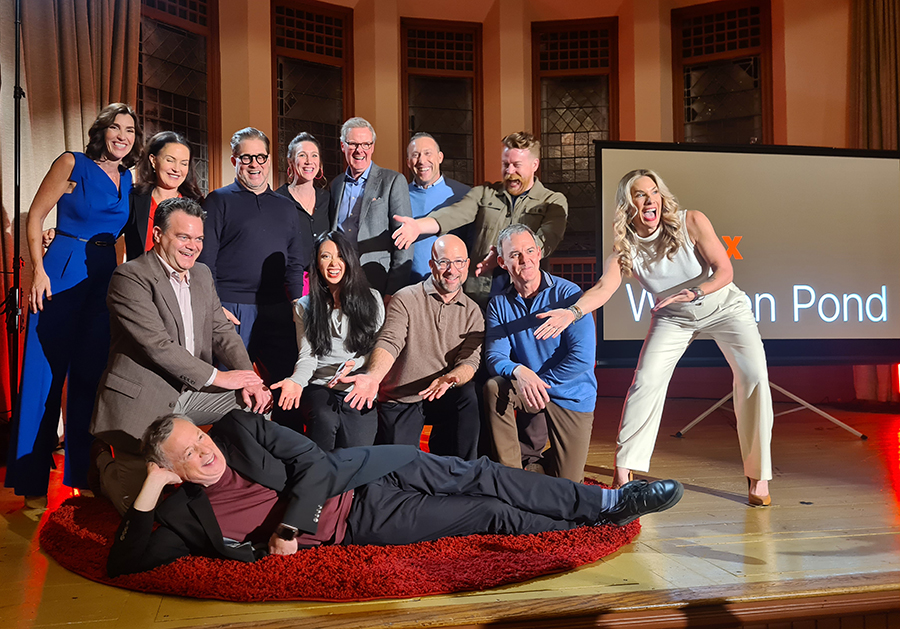
TEDx WaldenPond speakers were (back row, left to right) Trish Kendall, Wendy Murphy, Rick Chavez, Rebecca Heiss, Eric McNulty, Jared Cox, Graham Lutz, Corinne Hancock Scott. Front row: Charley Blandy, Lauren Chaby, Seth Ettenberg, Tim Washer. Nick Morgan is lying on the rug. (Missing: Raj Sharma, Martin Moore, Gerami Groover-Flores)

A Lincoln couple recently hosted the town’s first TedX event, TedX Walden Pond, which showcased 15 speakers as well as two artistic performances.

Co-organizer Nick Morgan said he’s been a longtime fan of TED Talks, where “ideas are front and center, new voices can be heard, and the opportunity to debate interesting topics was there.” TEDx (the “x” indicates independently organized) is an offshoot program that enables local communities to host TED-like events. They’re usually named after the host town, but “TEDx Lincoln” was already taken by Lincoln, Neb.

Anyone can host a TEDx event in their hometown as long as they get approved and licensed by TedX, so Morgan and his wife Jessica Cooper started the application process a year ago and got the green light in August for the November 1 event held at the First Parish stone church. Morgan is a public speaking coach with Public Words Inc. and Cooper is a voice teacher. 

He and Cooper put out the word to their networks for potential speakers. Since the TedX brand is quite prestigious, “you immediately get overwhelmed with people who want to give talks — selecting the most promising is tough,” Morgan said. His theme was “Ripples of Thought,” which was “deliberately ambiguous,” he said. 

“The audience particularly liked Gerami Groover-Flores’ talk about the origins of the Hamilton-Garrett Center for Music & Arts in the music of the Black church in America, Trish Kendall‘s deeply moving talk on success, and SNL veteran Tim Washer‘s funny closing talk, ‘Follow the Fear,’ on self-acceptance,” Morgan said. The other speakers were:

  • Charley Blandy, expert on negotiation and corporate social responsibility and a professional singer, on our response to climate change
  • Dr. Jared Cox on shame
  • Dr. Lauren Chaby, director of scientific strategies at ALZpath, on new developments in Alzheimer’s research
  • Rick Chavez, partner at Oliver Wyman, on lessons he learned from 25 years in the technology business
  • Dr. Seth Ettenberg, chief scientific officer at BlueRock Therapeutics, on regenerative medicine
  • Dr. Rebecca Heiss on how men struggle to find their roles in modern society
  • Graham Lutz on the importance of allowing ourselves to embrace mistakes
  • Eric McNulty on the importance of working together as a community on difficult issues such as climate change
  • Martin G. Moore, producer of the “No Bullsh!t Leadership” podcast, on handling conflict
  • Wendy Murphy, adjunct professor of sexual violence law at the New England School of Law, on how women are denied equal protection under the law
  • Storyteller and educator Graham Lutz on the importance of allowing ourselves to embrace mistakes
  • “Chaos coach” Corinne Hancock Scott
  • Raj Sharma, head of The Sharma Group and a director of the Boston Foundation, on choosing wealth management as a career

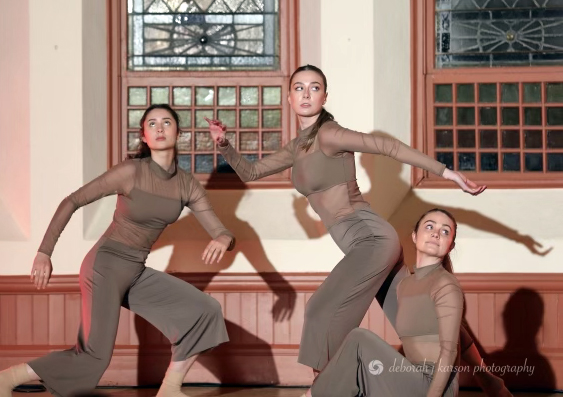
Urbanity Dance performers Zoe Carey, Clare Naughton, and Josephine Schneider. Photo by Deborah J. Karson (@DeborahJKarsonPhotography on Instagram)

A highlight of the evening was “Ripples: gathered,” a performance choreographed specially for “Ripples of Thought” by Urbanity Dance, whose mission it is to bring contemporary dance to the Boston landscape. Classical guitarist Aaron Larget-Caplan also performed “moving still,” an original composition, resulting in “a potpourri of people and topics, which is what TEDx wants,” Cooper said.

TED Talks are limited to 18 minutes and TEDx to just 10 minutes — a departure from when Morgan started coaching public speakers when “a 90-minute lecture was not unusual,” he said. TED Talks were “a bellwether of the times” to encourage a variety of shorter speeches in one session. 

TedX Walden Pond should be available for viewing on YouTube by the end of the year once the event company has finished editing, Morgan said.

Category: arts, educational Leave a Comment

Read the latest issue of the Lincoln Chipmunk!

September 25, 2023

The latest issue of the Lincoln Chipmunk, the quarterly arts companion to the Lincoln Squirrel, has just been published. See what your friends and neighbors have created, and start working on your own submissions — the next deadline is December 11. Questions? Call editor Alice Waugh at 617-710-5542 or email lincolnsquirelnews@gmail.com. 

chipmunk.lincolnsquirrel.com

Category: arts Leave a Comment

A Q&A with Lincoln’s Elizabeth Graver on her new novel, “Kantika”

May 2, 2023

Elizabeth Graver

Lincoln author Elizabeth Graver and Judy Bolton-Fasman (author of Asylum: A Memoir of Family Secrets) will discuss Graver’s latest novel, Kantika, on Wednesday, May 17 from 7–8:30 p.m. in the Lincoln Public Library’s Tarbell Room. Kantika is a Sephardic multigenerational saga that moves from Istanbul to Barcelona, Havana, and New York, exploring displacement, endurance, and family as home, inspired by the story of Graver’s grandmother, Rebecca née Cohen Baruch Levy. Copies of the book will be sold at the event by the Concord Bookshop.

Graver’s fourth novel, The End of the Point, was long-listed for the 2013 National Book Award in Fiction and selected as a New York Times Notable Book of the Year. Her other novels are Awake, The Honey Thief, and Unravelling. Following is a Lincoln Squirrel Q&A with Graver.

Let me start by asking about your previous historical novels, The End of the Point and Unravelling. They have very different settings and time periods. What inspired them?

With Unravelling, I was in graduate school studying American studies and cultural history and read a book that made a big impression on me about the Lowell textile mills and ended up actually having a dream in which I, or some version of myself, was a mill worker. And woke up and had this voice in my head. The End of the Point was loosely inspired by a spit of land into Buzzards Bay where my husband’s family had, across some generations, a summer house. That one took me into the kind of things that Kantika is also interested in, which have to do with the 20th century and the intersections of big history with individual lives.

The End of the Point had a very tight lens. It covered a lot of time, but the place was really small. I was interested in what happens when a family owns property and can come back over and over and again across generations to the same small place. The place is almost like a crucible where a lot happens and it’s very distilled. I think I needed to write The End of the Point to have the confidence to write Kantika, which involved even more research — this time about lives, languages, and countries that are farther away from me, even though it’s my family’s story. I grew up in New England, but my mother was a first-generation American who grew up in Queens and my dad was second-generation American who grew up in the Bronx. This was an odd book in that I use real photos from my family and real names, and there’s a little girl towards the end called Suzanne, and that’s my mother.

What percentage of Kantika is factual versus fiction?

The central characters in the family are all inspired by real people with the proper birth orders, the main geographical events all happened, you know, the moves from Turkey to Spain to Cuba to New York. But all the interiority I had to make up — it’s fiction, right? There are the stories my grandmother narrated blow by blow on tapes that I have, and there are some things she told me that didn’t make it in, but it’s an incredible melange. There were so many different ways I was grabbing material. I interviewed people at the Sephardic Home for the Aged in Istanbul, and I read articles and I corresponded with scholars and I wandered the streets.

One of the characters I loved writing about, but who really surprised me in terms of my urge to take on his point of view, is Alberto, which was the real name of my great-grandfather, but I never met him, my mother never met him. He died a terrible death in Spain during the Spanish Civil War. I knew about four facts about him: I knew that he was a terrible businessman and loved to garden and was an intellectual and was much older than his wife. That’s about it. But that was kind of enough. In some ways, it’s almost easier to imagine a character when you don’t have too much because people are incredibly complicated. I initially thought of writing this book as nonfiction, but I didn’t have enough material. And I love writing fiction — I love emotion and psychology and inner life.

Writing can be so solitary, but the research for this book connected me to my own past and my own family. I did a lot of interviewing of not just my grandmother decades ago, and my uncles and my mother, but also lots of people who were preserving and making art out of this world, which has been really fun.

Did you learn any Ladino growing up?

Teeny little things at the beginning of a meal, but no, not really. My grandparents would speak it over my head. They were of that immigrant generation when assimilation was very much what needed to happen, maybe even especially for Sephardic Jews who were so different from the majority of other Jews in this country. My mother actually has memories of her father saying to her at one point, “You can’t call me Papa any more. You have to call me Dad.” And they wouldn’t let her pierce her ears because that seemed too foreign. My grandmother just didn’t care. She was so singular — she just was never trying to blend in exactly. But they were working very hard as first-generation immigrants to help their kids make it in American society.

From your standpoint, how did the Sephardic experience differ from the Ashkenazi experience in America?

My father’s family actually didn’t know what to make of my mother at first. They ended up adoring her, but she didn’t eat the same food as they did. She didn’t know Yiddish. Growing up, I was very struck by the differences. My father had a harder childhood as an only child whose father died when he was very young. My mother’s family didn’t have a lot of money [in America]; they had plenty of struggles, but it was a very, abundant family, filled with food and music and joy and very Mediterranean. The Sephardic culture has a lot more flow, from what I’ve seen. There weren’t the same sorts of ghettos. It’s not that it was easy — the Sephardim were welcomed into the Ottoman Empire after the Spanish Inquisition but they didn’t have full rights. So none of it is a totally rosy picture, but they also traveled a huge amount, which led to a quite expansive culture. Some of this was forced crossings around diasporic expulsion, but some of it wasn’t. Some of it was trade.

My Ashkenazi and Sephardic grandparents would spend some time together, and they became friends. And my grandmother, Rebecca, in my novel and in real life, was part of a Jewish community in Queens that was mostly comprised of Ashkenazi Jews. She became good friends with people at her temple, but I think she always felt a bit foreign. I have a scene in my book right at the end, where she’s doing a concert at her little synagogue, and one of the people who’s organizing it asks her to sing a song in Ladino because she thinks it’ll be exotic. In real life, my grandmother was kind of happy to take on that role —she was colorful, she liked attention, but at the same time I think there was a real sorrow and sense of not fully belonging.

It was complicated because there were significant Ottoman Sephardic communities in New York, but they were not of her social class. She started out rich and my grandfather, who was her second marriage, grew up very poor. He had quite a bit of family in the United States, but they didn’t much like her, and she didn’t much like them. I started to tease some of this out and turn it into fiction about the different ways in which people were connected or divided. And social class was one of them, which also really interested me in The End of the Point.

Rebecca wanted to own a house, she wanted to have a garden. They didn’t have a lot of money, so they ended up in the far reaches of Queens because that’s where they could do that. And she had a good friend across the street who was Cuban and Catholic, because she could speak Spanish with him. My grandmother in her old age in Florida became friends with a reverend. In Istanbul, she went to Catholic school. It’s funny because I teach at a Jesuit university. So she was really pluralistic in all these ways. And at the same time, she was deeply Jewish. She had her Star of David earrings and she always went to synagogue. And I was raised culturally very Jewish but totally secular.

How does Kantika track with your work as a professor of creative writing and literature at Boston College?

I’ve been teaching a paired course with a colleague and close friend of mine called “Roots and Routes: Reading Identity Migration and Culture.” That course is intended for advanced English language learners, so many of the students have their own really interesting migration stories. I’ve had them do things like interview an immigrant and often it’s a parent or a grandparent. I feel like everybody has a story and so I encourage my students to gather them, too.

I think I wrote Kantika partly in response to the worldwide refugee crisis and the fact that I was reading so much incredibly powerful literature and teaching by immigrants, so having this story intertwine or sit alongside some of those other stories feels important to me. I had a feeling that this is a story that’s rich and beautiful and painful and has many different pieces and has not been told as much as it might.

Category: arts Leave a Comment

First Parish music director is a multidisciplinary artist

April 2, 2023

Miranda Loud

In the choir loft at the First Parish in Lincoln, music director Miranda Loud moves between roles, sitting to play the organ and then standing to conduct the choir — but doing more than one thing at a time is nothing new to this interdisciplinary musician, artist, photographer, and educator.

As one would expect, Holy Week is an especially busy time, when music at the church will range “from meditative and introspective to celebratory and full of trumpet fanfare,” Loud said. The Good Friday service at 7 p.m. will be predominantly music and poetry; the choir will sing Puccini’s Requiem, and soprano Ann Moss — another Lincoln native from a musical family — will sing several pieces.

Loud became the church’s music director in December 2022 after serving as acting director for almost a year. She’s been working to develop a sense of camaraderie as well as strong performances from the choir, which has quadrupled in size from seven to 28 members during her tenure.

“The most fun part of the job is working with the choir and feeling part of a community again. As a freelance organist for about seven years and doing visual art and photography, I’ve missed a sense of community and seeing the same people and building relationships with them,” she said.

Loud has filled in as a sub occasionally at First Parish over the years but has also held worked as a music director and organist for over 30 years in various churches, including two in New York City — St. James’ Episcopal Church Madison Avenue and the Church of St. Ignatius Loyola Park Avenue — and then in the Boston area at St. Peter’s Episcopal Church in Weston, where she founded and developed a large and diverse concert series.

Coming back to the First Parish is like coming home for Loud. She grew up in Lincoln, and her father Rob Loud and grandmother Mary Loud both worked in the church’s music program in the 1960s. After earning music degrees from Wellesley College and the University of Rochester’s Eastman School of Music, she focused on becoming a professional singer in her 30s and has been singing alto with the Handel & Haydn Chorus since 2011.

Working at the First Parish in Lincoln “gives me much more leeway in terms of what kind of music I can do,” she said. In recent services, she’s played jazz by John Coltrane and George Shearing and conducted the choir in a Renaissance piece, a Civil Rights Movement marching song, and songs from Cameroon with drums. The wide range of music reflects the religious and social diversity of the congregation, which includes Jews, evangelicals, Quakers, agnostics, and everything in between.

“I’m excited to be learning new repertoire by living composers, women composers, and composers of color,” she said. “It’s so important to try to bring in excellent music-making from different perspectives.”

Loud’s own artistic perspectives have been just as varied. In the 2000 and 2010s, she created multimedia concerts and films for NatureStage, a group she founded that uses the emotional power of art and film to explore human relationships with other species and inspire action to become global stewards. More recently, she’s immersed herself in the visual arts as a professional photographer and self-taught watercolor painter and designer, learning techniques from YouTube videos and refining them in her home studio. Trying something new is a recurring theme for her.

“We all have hidden talents,” Loud said. “I think a lot of people in midlife have urges to do something different but think they can’t start as a beginner in their 40s or later… I always loved visual art but was a musician and never had time to do that. It didn’t even occur to me that I would have this whole other iteration as a painter — it just kind of snuck up on me.” She’s earned part of her living from selling her photographs, paintings, and gifts with her designs through websites she built (mirandaloudphotography.com and mirandaloudartist.com) as well as teaching sketchbook workshops.

“It’s wonderful to have the [part-time] First Parish job because it takes the pressure off to always wonder ‘Will someone buy this?’ But right now my focus is on the church and getting in a rhythm with the music and the new ministers and not spreading myself too thin,” she said. Nonetheless, despite (or perhaps because of) her varied pursuits, “I feel much more comfortable in my own skin. I’m doing the best I can and constantly trying to learn.”

Category: arts 6 Comments

Indoor exhibit space at deCordova to close for at least two years

March 2, 2023

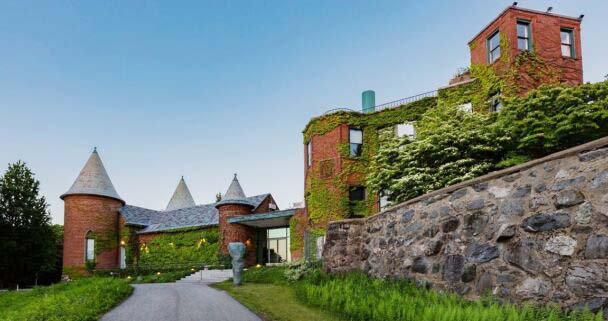
The deCordova Museum side entrance (image courtesy of the Trustees of Reservations)

The Trustees of Reservations announced in a statement that it will suspend indoor exhibitions at deCordova Sculpture Park and Museum for two to three years beginning in mid-March. The sculpture park will remain open and no other facilities, programs, events, or operations at the deCordova will be affected.

The temporary indoor closure will allow The Trustees to upgrade the museum’s HVAC and climate control systems to ensure that the exhibition spaces meet museum industry’s stringent standards. During this time, curatorial and other Trustees staff will engage in focused and intensive planning for future exhibitions, programs, and educational offerings that explore the intersection of art, nature, and climate. They will also continue to bring new commissions, acquisitions, and exhibitions to the sculpture park.

The indoor exhibition program will be suspended on March 12 at the conclusion of its current exhibitions, New Formations, Downstream, and Carolina Caycedo: Apparitions/Apariciones.

The Trustees became custodians of deCordova after a 2019 integration. In 2022, they began a planning process for the renewal of deCordova’s accreditation and to assess and fund upgrades to the museum facilities. As the assessment and recommendations from that process were being finalized, concerns about the consistency of climate controls in the main building emerged, and The Trustees concluded that the temporary suspension of indoor exhibitions was warranted.

“While we will miss welcoming the public to indoor exhibitions during this time, the temporary suspension will allow us to fast-track important improvements and focus our creative energies on developing the exciting vision for art and nature that initially brought our two organizations together,” said Nicie Panetta, Trustees interim president and CEO.

“We have a hugely ambitious program for the sculpture park and for exhibitions across the state of Massachusetts. We believe doing this necessary work in the galleries will ensure our ability to deliver an exciting and comprehensive vision centered around artists engaging with the environment for generations to come,” said Jessica May, deCordova’s vice president for art and exhibitions and artistic director.

Art programming at deCordova will feature a more robust outdoor exhibition schedule, and the property will continue to host lectures, concerts, dining, summer camp, weddings and other event rentals, and other public and community engagement activities. The decision also will have no impact on the Lincoln Nursery School, which operates on deCordova grounds.

This spring and summer, the Fruitlands Museum in Harvard (also owned by the Trustees) opens two exhibitions with textile artist Rachel Hayes. The first, opening March 11, is called Transcending Space and showcases several large, color-block fabric hangings alongside a new body of work that combines dried flower bouquets with patches of vibrant fabric. A new outdoor commission, Rachel Hayes, The Edge of Becoming, opens June 21 and features bright colors that both relate to Shaker textiles found in the museum’s collection and evoke a sense of optimism sought by the site’s Transcendentalist founders.

Category: arts Leave a Comment

Artwork by Lincoln’s Selvage adorns new MBTA station

February 22, 2023

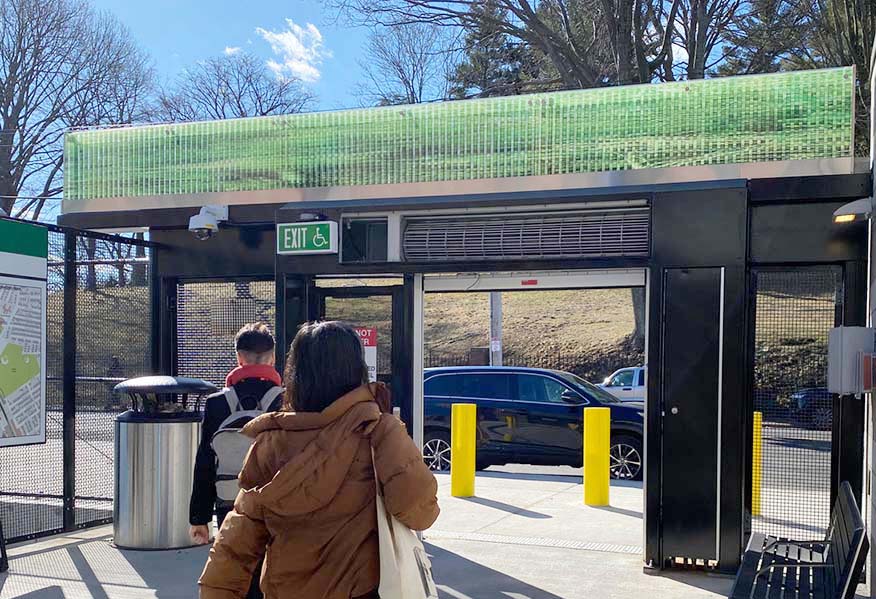
Commuters approach “Speeding Green Line” at the new Medford/Tufts MBTA station.

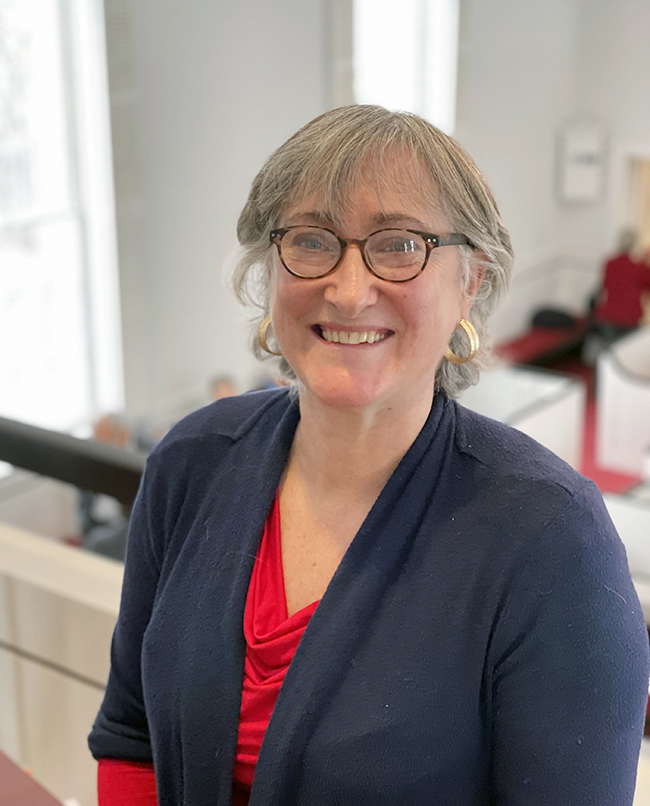
By Maureen Belt

While thousands of commuters impatiently waited years for the MBTA to extend its Green Line to the Tufts campus in Medford, Lincoln resident Nancy Selvage was at home shaping the art to characterize the new station.

Her contribution to GLX (the MBTA’s Green Line Extension project) took more than seven years from the day she was granted the commission. It finally saw the light of day (actually predawn) at 4:40 a.m. on Dec. 12, 2022, when the Medford/Tufts station opened to large crowds and great fanfare including a ribbon cutting. In a later interview with the Lincoln Squirrel, she pulled up a Twitter post of then-Gov. Charlie Baker, Sen. Elizabeth Warren, and other dignitaries flashing big smiles while cutting a ribbon at the inauguration. One of Selvage’s newly installed pieces, “Speeding Green Line,” was a prominent backdrop.

“I’m not a Twitter follower myself,” she remarked. “Someone forwarded this to me.”

“Speeding Green Line” and the station’s wayfinder signs — platform indicators that give commuters information — are now part of Selvage’s public art work portfolio, which includes an installation at the Google building lobby in Cambridge and at the Canyon Rim in Arizona, among others. Selvage incorporates location, environment, and usage into all of her work.

In an earlier plaza design that was later scrapped due to budget cuts, the purpose of the GLX art was to camouflage unsightly ductwork and to compensate for the lack of landscaping. The current purpose is to simulate the visual effect of trees speeding past a moving train.

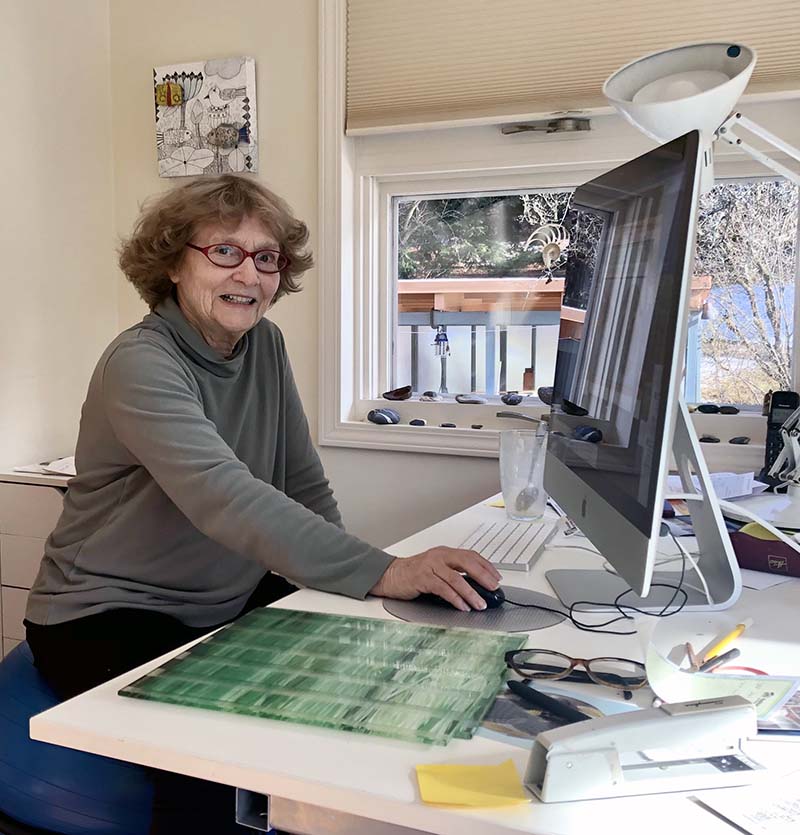
Nancy Selvage at her desk.

“Speeding Green Line” consists of two 22-foot-long, 120-pound backlit glass panels placed over the Medford/Tufts entrance. Selvage made complex blueprints and engineered a design to ensure the finished art would hold up to New England weather and the expected hustle and bustle of a long-overdue light-rail station. Aesthetically, she meticulously designed it to reflect light and, though static, give the appearance of motion as one passes by.

“The piece is activated by the view of movement,” said Selvage. 

On the station platform, the artwork suggests a correspondence between commuters and honeybees in a sequence of four panels: setting forth (flying off), finding sustenance (foraging), returning to nourish a community (back home), and sharing news of the journey (waggle dance). The images were created digitally by collaging and warping photographic details of Selvage’s perforated metal sculptures.

She was unaware at the time that Tufts University was the first urban campus in Massachusetts to be certified in the Bee Campus USA program. Selvage is also a Tufts alumna — she holds an MFA in sculpture from the School of the Museum of Fine Arts/Tufts University as well as a BA in art history from Wellesley College. Gardens maintained by the Tufts Pollinator Initiative at four sites on campus contain native plants to feed a diversity of pollinators, according to a December 2022 article about Selvage’s work in TuftsNow.

“It’s about coming and going and finding your way,” she said, comparing her images of bees on their journey of finding nectar to “commuters finding sweetness in the city.” (Click here to see detailed proof images.)

Selvage’s creativity is only one of the ingredients that are essential to her multilayered work. She also needs plenty of patience, trust in others, the ability to work within budget constraints and, in the case of public art, a tolerance for multiple bureaucratic meetings.

As with any major project, challenges cropped up. When sketching ideas for “Speeding Green Line,” she wanted natural shades of green. She toyed with iPhone photos of local summer foliage, but the images became blurred when enlarged using Photoshop. She then hired a photographer with a high-resolution digital camera, so images of individual pine needles and oak leaves remained vivid.

Once digitally expanded across 22 feet, she captured the green abstract lines she sought. Intentionally, she added a thin colorless vertical stripe every few inches, necessary to give the effect of motion. Selvage then delivered her files to a fabrication company with expertise in printing and a kiln to fuse her images onto hurricane-proof glass. Despite that precaution, installers broke one of the panels during the installation. It had to be refabricated and installed a few weeks after the opening.

Selvage’s honeybees hover about curved blossoms, also of her creation, on the 4-foot by 18-foot wayfinder signs. The blossoms, which look like calla lilies, are actually warped and altered photographs of a variety of Selvage’s metal sculptures.

The same photographer was hired to take high-resolution photos of the pieces. Selvage Photoshopped the images into cartoonish flowers. She made the bees from details of other 3-D pieces, then worked to proportion each bee to a flower. One oversized bee performs a waggle dance, a rhythmic, geometric succession of rapid movements performed to announce they’ve found the cache. 

“It took forever to do these bees,” Selvage said. “It just took forever.”

Once the honey bees were situated, the MBTA outsourced her work to a factory for printing the images on metal panels. Unhappy with the results, the agency shopped around for other niche companies. “The only thing I could say is that the yellows are too orange,” Selvage said. But the second time was the charm. 

After factoring in supplies, payments to vendors and other expenses, Selvage barely broke even on her predetermined design fee. But she isn’t in it for the money. Interactive art is a passion she turned into a lifelong career. Other public installations by Selvage in the Boston area include “Hydro” in Lowell and “Water Wall” in Trolley Square in Cambridge, and she’s excited about a project to sculpt an interactive gathering place for children in Virginia.

“I’m totally comfortable in three dimensions,” Selvage said. “There’s nothing better than a big empty space. On the other hand, there’s nothing worse than a blank canvas.” 

Category: arts Leave a Comment

  • « Go to Previous Page
  • Page 1
  • Page 2
  • Page 3
  • Page 4
  • Interim pages omitted …
  • Page 48
  • Go to Next Page »

Primary Sidebar

Upcoming Events

Mar 21 Sat
12:30 pm - 3:00 pm

Craft Supply Swap

Mar 21 Sat
1:00 pm - 3:00 pm

Film: “Memories Flow Beneath It: From Valley to Quabbin”

Mar 27 Fri
12:30 pm - 1:30 pm

Lincoln’s Invaluable Vernal Pools

View Calendar

Recent Posts

  • Water bills to go up by 13% March 5, 2026
  • News acorns March 5, 2026
  • Property sales in January 2026 March 4, 2026
  • My Turn: Unraveling the Hanscom misallocation March 3, 2026
  • Police log for Feb. 19–25, 2026 March 3, 2026

Squirrel Archives

Categories

Secondary Sidebar

Search the Squirrel:

Privacy policy

© Copyright 2026 The Lincoln Squirrel · All Rights Reserved.